How A Pricing Rule Gets Created
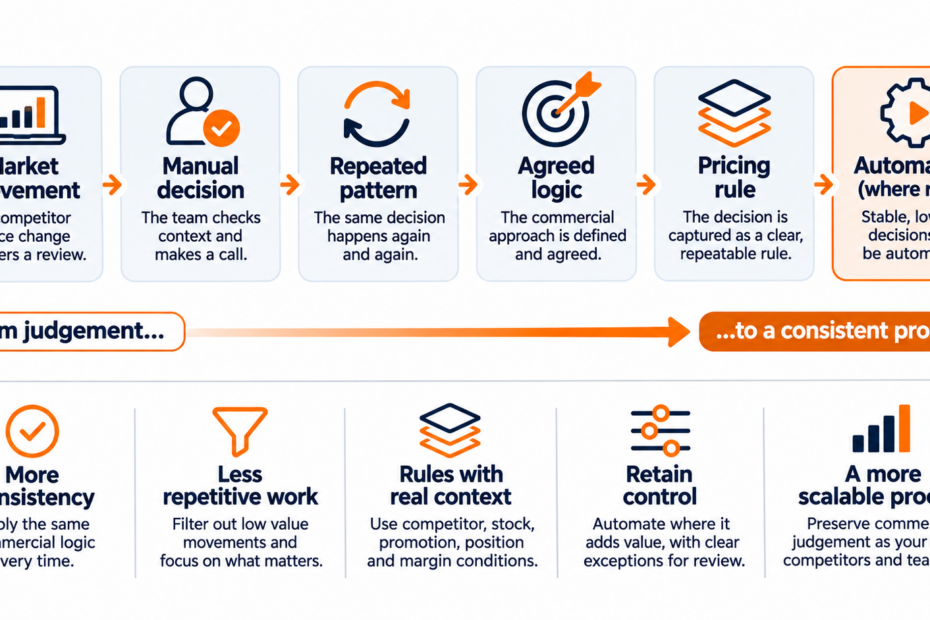
Most pricing rules do not start life as rules. They usually start with the same commercial decision being made manually, again and again. A competitor…

Most pricing rules do not start life as rules. They usually start with the same commercial decision being made manually, again and again. A competitor…
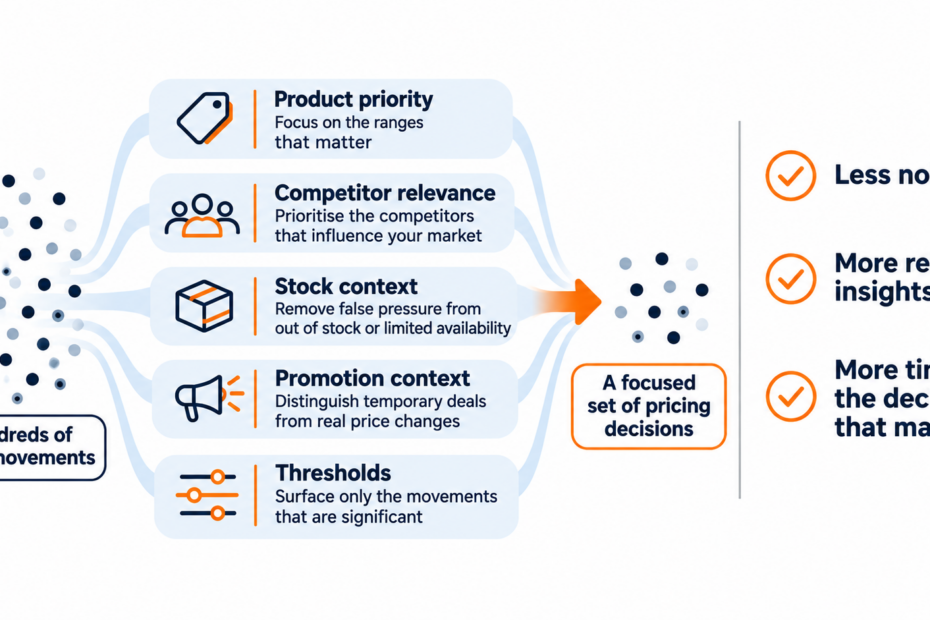
Pricing teams do not always need more competitor data. Sometimes the bigger improvement comes from reducing how much of that data demands attention. A customer…
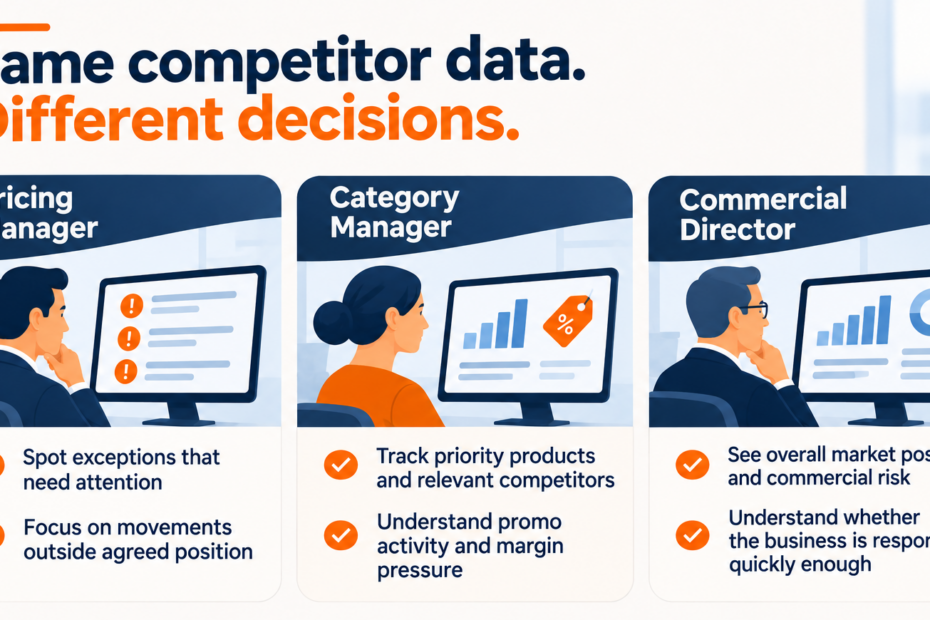
One thing I have seen repeatedly is that the same competitor data can mean something very different depending on who is looking at it. A…

Retail pricing teams do not usually suffer from a lack of information. The bigger problem is knowing what deserves attention. A competitor price change on…

One thing I have noticed over the years is that the customers who get the most from price intelligence during peak are usually the ones…
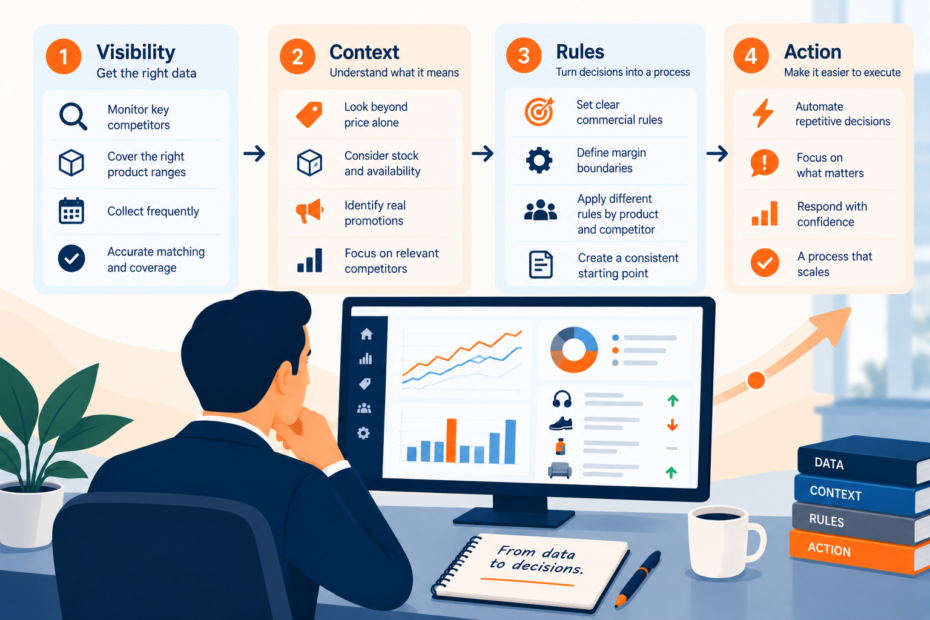
One thing I have noticed with long standing customers is that the questions they ask tend to change over time. At the beginning, the questions…
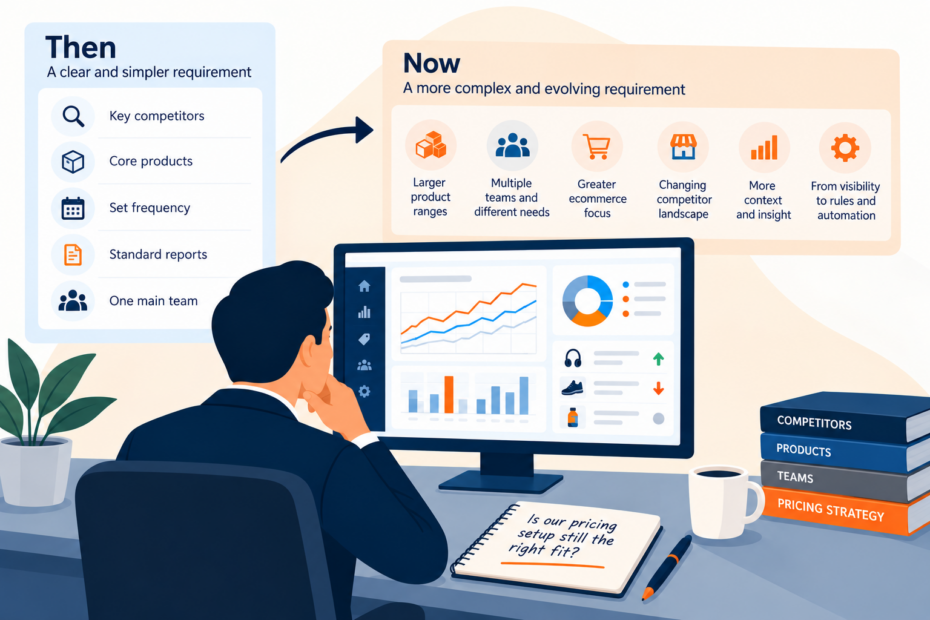
Retail pricing requirements rarely stay the same for long. The competitors that matter can shift, product ranges become more complex, and different teams begin using…
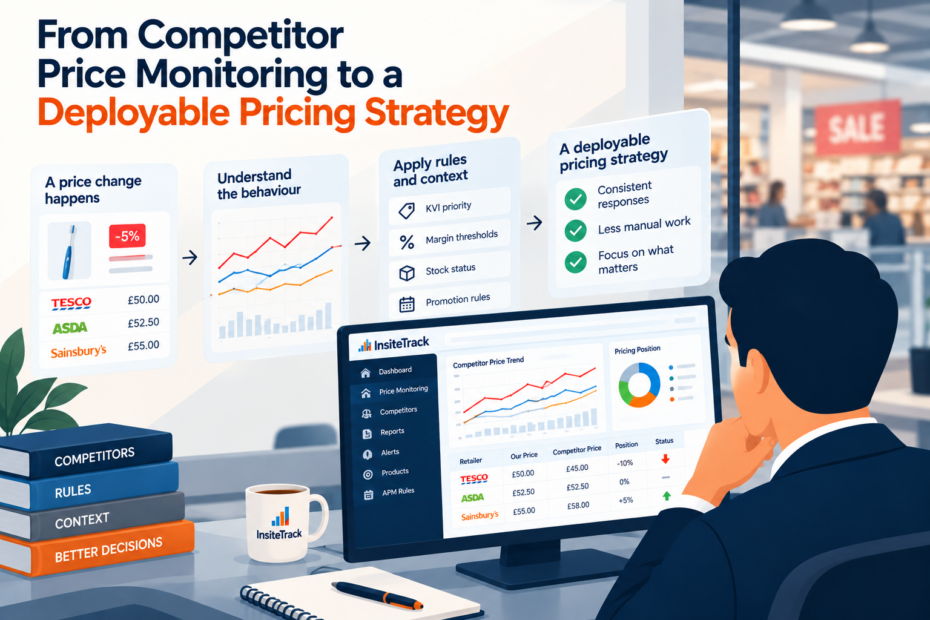
Most competitor pricing workflows begin in the same place. A competitor changes price, the movement is detected, someone checks the context and the team decides…
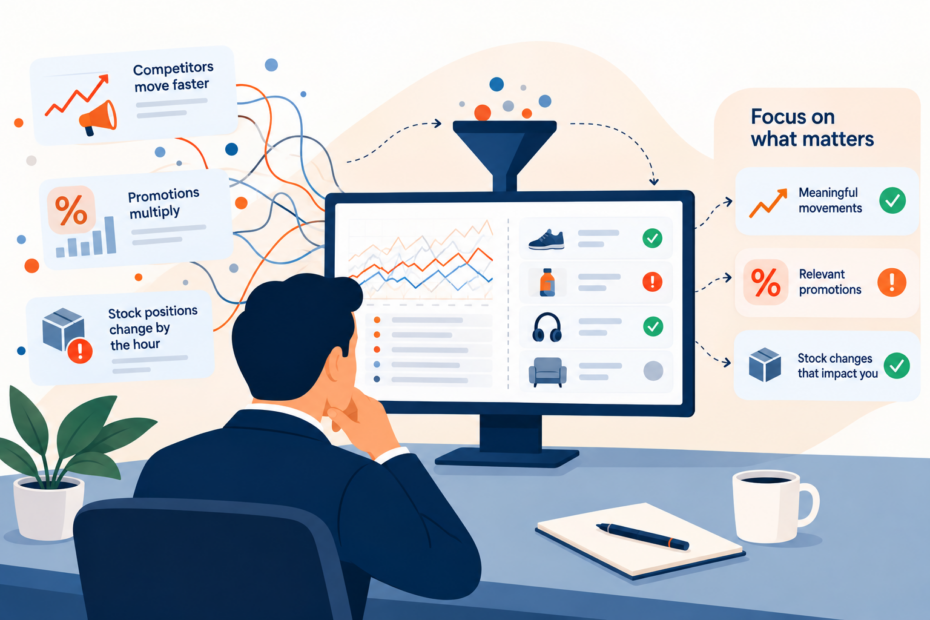
Peak trading creates a difficult combination for pricing teams. Competitor activity increases, promotions become more frequent, stock positions move quickly and commercial pressure rises at…