From Competitor Price Monitoring to a Deployable Pricing Strategy
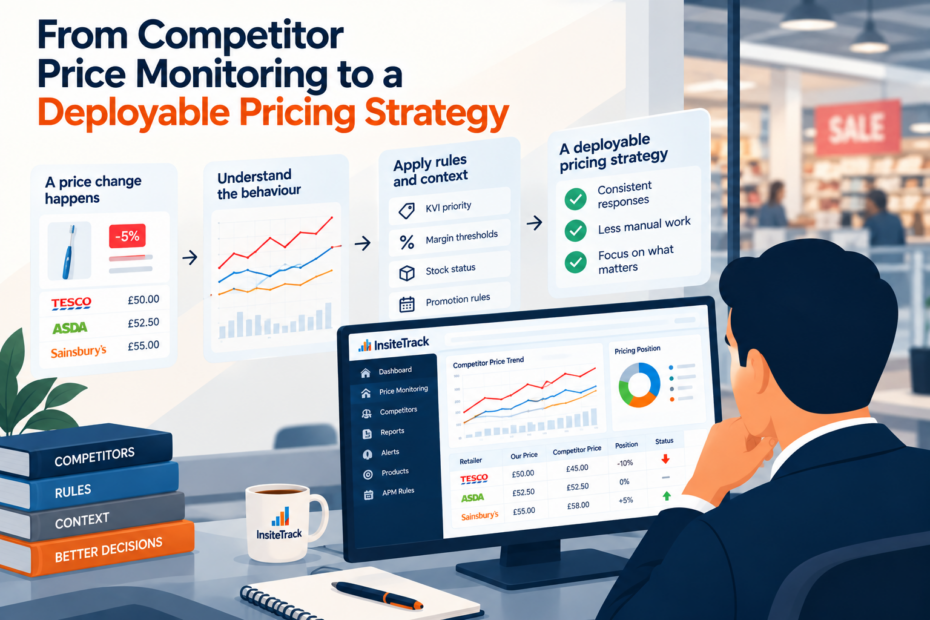
Most competitor pricing workflows begin in the same place. A competitor changes price, the movement is detected, someone checks the context and the team decides…

Most competitor pricing workflows begin in the same place. A competitor changes price, the movement is detected, someone checks the context and the team decides…
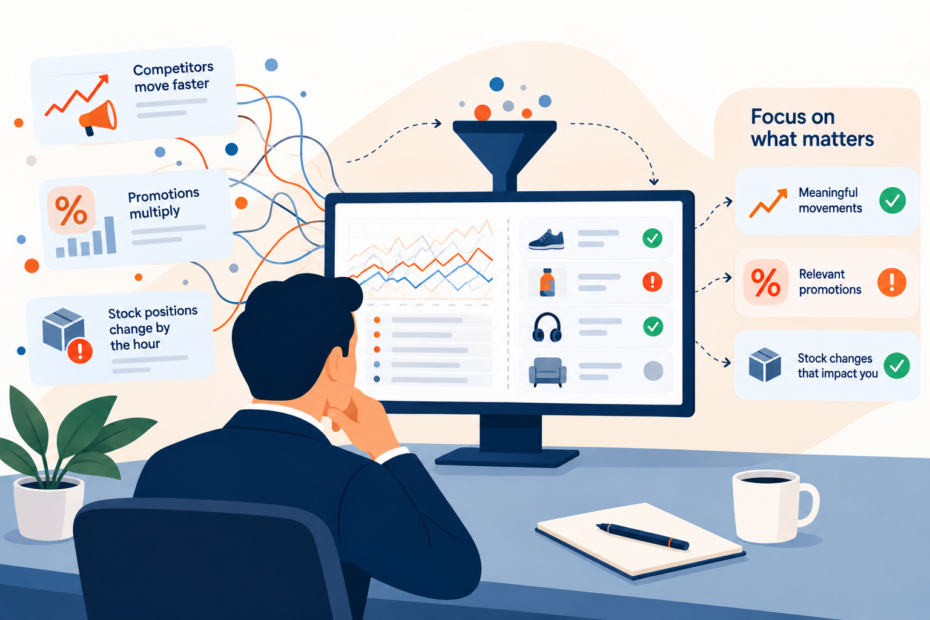
Peak trading creates a difficult combination for pricing teams. Competitor activity increases, promotions become more frequent, stock positions move quickly and commercial pressure rises at…
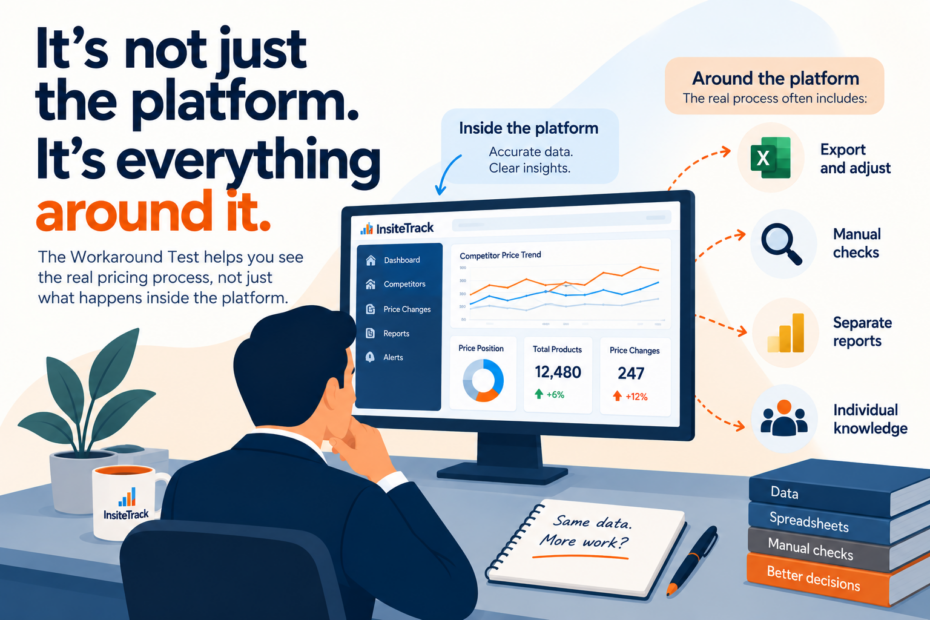
Most retailers would probably judge a pricing platform by what happens inside it. Does it collect the right competitor prices? Are the reports accurate? Can…
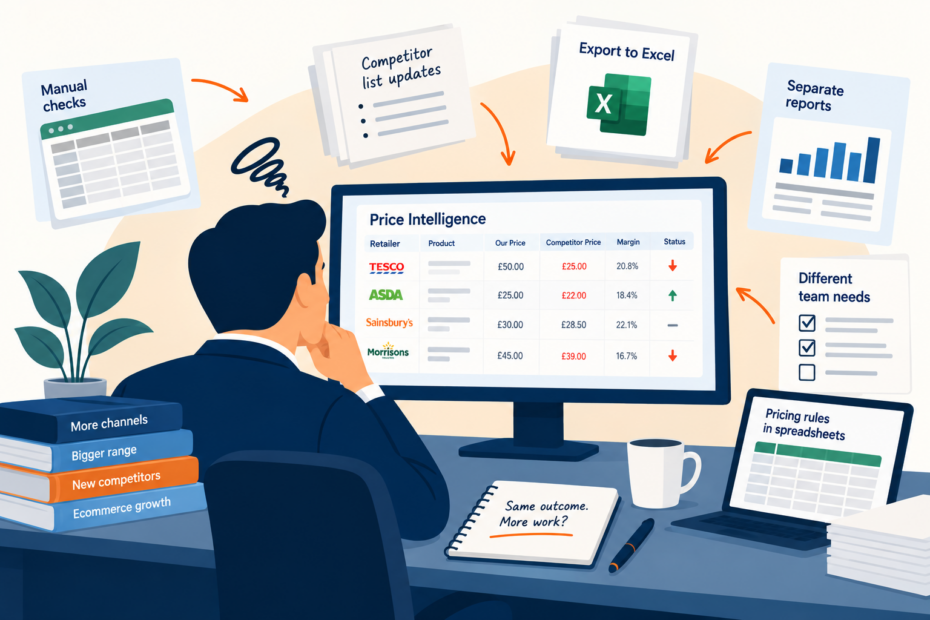
There is usually an obvious point at which a business starts questioning a technology provider. The data becomes unreliable, service levels deteriorate, important requirements cannot…
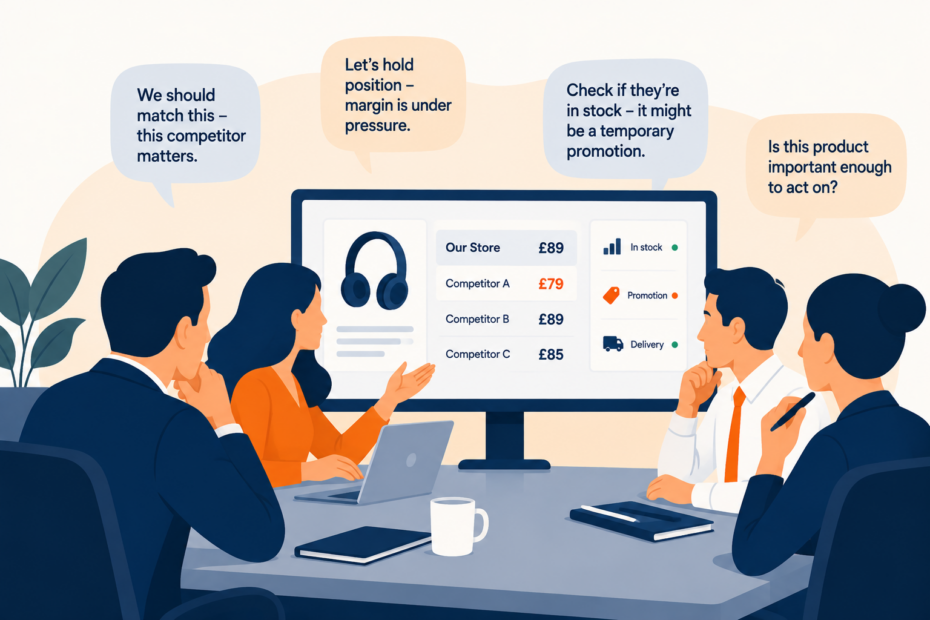
Most retailers have a pricing strategy. The harder question is whether that strategy is applied consistently when hundreds of day-to-day decisions need to be made.…
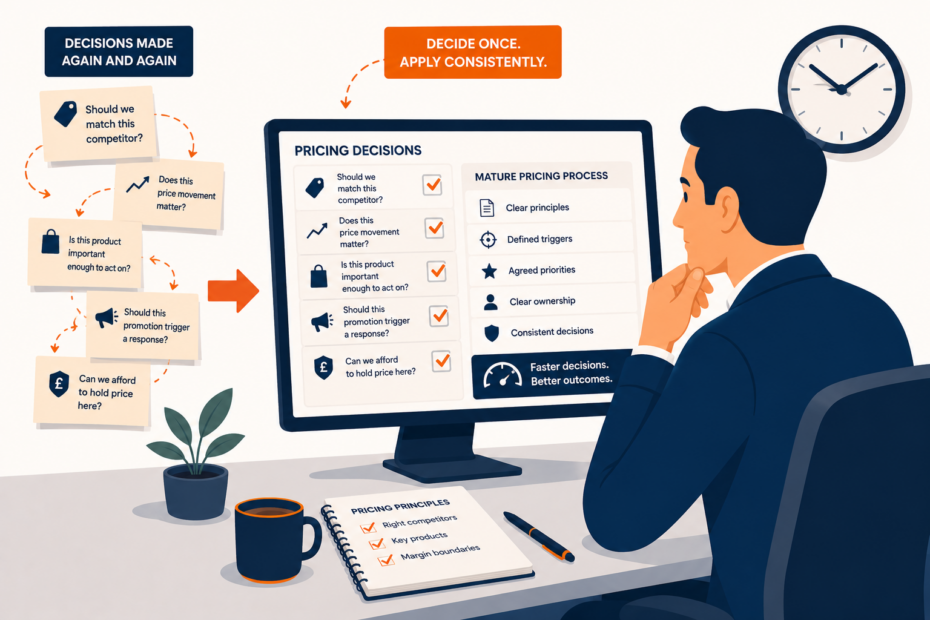
Pricing teams make hundreds of decisions, but many of them are really the same decision appearing in a slightly different form. Should we match this…
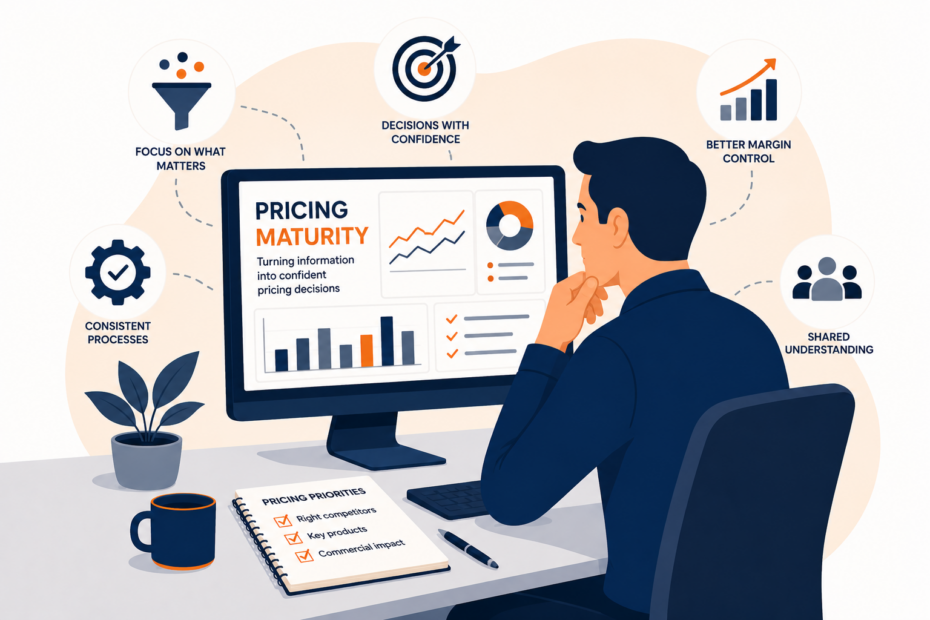
Retailers often assume pricing maturity comes from better software, more competitor data or a larger pricing team. Those things can help, but they do not…
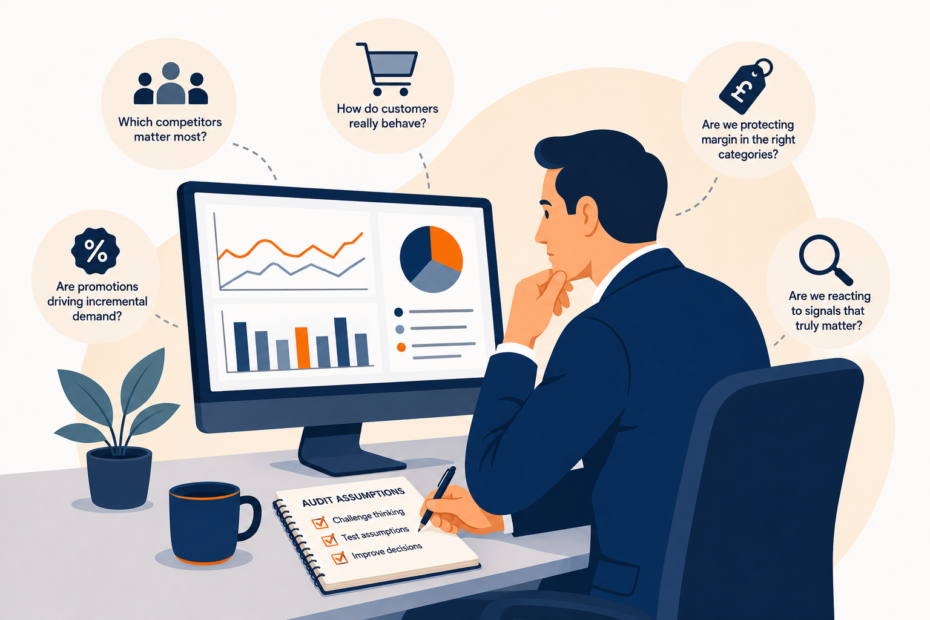
Most retailers regularly review their prices. They compare competitors, analyse margins, monitor price indexes, assess promotional performance and identify products that may need to change.…
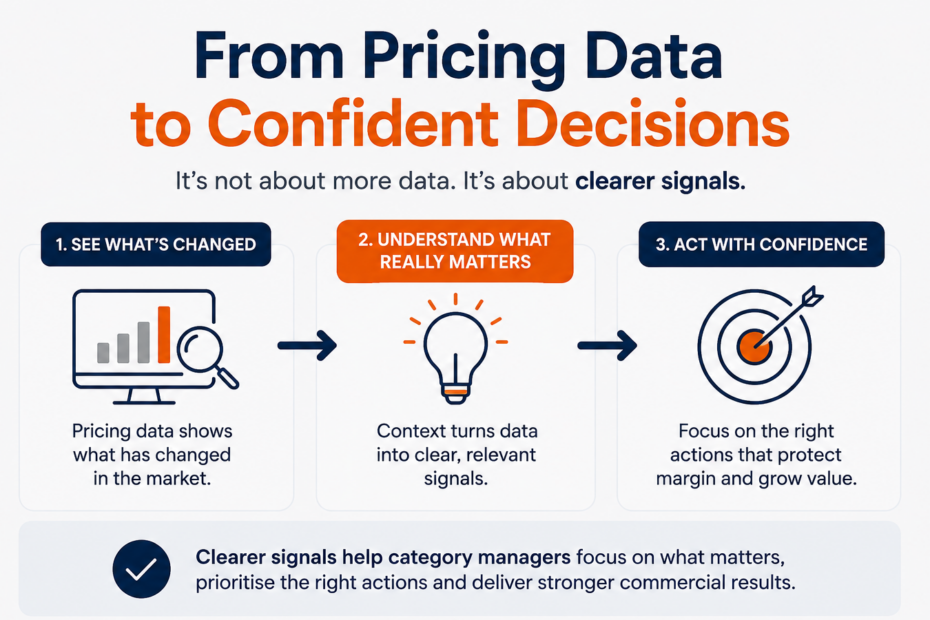
Category managers are not short of information. Competitor prices, promotional activity, sales performance, margin pressure, stock availability and wider category performance are already part of…