
One thing I have noticed over the years is that the customers who get the most from price intelligence during peak are usually the ones who make a few deliberate changes before the market gets busy.
Their underlying setup may already work perfectly well throughout the year. The data is reliable, the competitor set is established and the reporting gives the team what it needs day to day. Black Friday, Christmas and the January sales create a very different trading environment, though. Prices move faster, promotional activity increases, stock positions change more quickly and the amount of market movement can rise almost overnight.
In my experience, the answer is rarely to replace everything or introduce a completely new process. It is usually about adapting the capability that is already there so it works harder during the weeks that matter most.
Peak Changes What the Business Needs to Know
A normal trading week and a peak trading week place very different demands on a pricing team. During quieter periods, teams may be comfortable reviewing competitor activity at a regular cadence and working from a familiar set of reports. During peak, that same approach can become difficult to manage because the volume and speed of market activity increase.
The questions therefore become more focused. Which products deserve closer attention? Which competitors are most likely to influence the category? Which promotions are genuinely important? Which price gaps should trigger action, and which movements can safely be ignored?
Some of our better prepared customers revisit those questions before peak begins. The important point is that they are not waiting until Black Friday week to decide what matters. They are doing some of that thinking while there is still time to adjust the setup around it.
Historical Data Can Help Refine KVI Priorities
One of the first places to start is with the information already collected from previous peak periods. Historical data can reveal which products repeatedly attracted strong competitor activity, which lines became particularly price sensitive and where price movements appeared to have the greatest commercial relevance.
That can be useful when reviewing KVIs. A business may find that a relatively small group of products deserves much closer monitoring during November and December than it does during the rest of the year. Those products can then be given more prominence in reports, monitored more frequently or placed behind tighter alert thresholds.
This does not mean treating the rest of the range as unimportant. It means recognising that attention is limited and using previous market behaviour to decide where it is likely to be most valuable.
Competitor Priorities Can Shift During Peak
The same principle applies to competitors. A retailer may have an established competitor set that works well throughout the year, but those competitors do not necessarily behave in the same way during peak.
Some become much more promotional. Others focus aggressively on particular categories or products. Marketplace sellers may appear more frequently at the lower end of the market, while certain retailers may become less relevant because stock levels or fulfilment deteriorate.
We have seen customers temporarily change the importance they place on specific competitors during peak. A retailer that normally sits further down the priority list may suddenly become much more influential in a particular category because it is leading promotional activity. In another part of the range, a competitor may appear very aggressive on headline price but have little practical influence because the product is repeatedly unavailable.
The objective is not to monitor more competitors. It is to make sure the competitors influencing a decision are the ones that genuinely matter at that point in the trading calendar.
Collection Frequency Can Be Increased Where It Adds Value
For some customers, one of the most practical changes is to increase collection frequency on selected products.
There is little value in collecting every price more frequently simply because peak is approaching. If most of the catalogue is relatively stable, that can create additional data without improving the decision. The situation can be very different for KVIs or high pressure categories where prices are moving several times during the day.
In those cases, a standard collection schedule can leave the team responding to information that is already out of date. Some customers therefore increase frequency temporarily around selected products or categories and then return to the normal schedule once the market settles down.
That flexibility is often far more useful than treating every product in exactly the same way.
Peak Specific Reporting Can Make the Important Signals Easier to See
Reporting is another area that often changes before peak. A year round report may be doing its job perfectly well, but the information a team needs during Black Friday or Christmas can become much more specific.
During peak, the focus may shift towards overnight KVI movements, new competitor promotions, availability, significant price gaps or products that have moved outside agreed thresholds. In those situations, creating a temporary report around the decisions the team expects to make can be much more useful than relying exclusively on the standard view.
I like this approach because it treats reporting as something that should support the commercial situation rather than remain fixed for convenience. There is little reason for a November report to look exactly like a March report if the questions being asked are different.
The report does not need to become permanent. It only needs to make the busiest period easier to manage.
Price Alone Often Tells Only Part of the Story
Peak also creates more situations where the headline price can be misleading.
A competitor may suddenly appear significantly cheaper, but the product is unavailable. Another may be running a short term promotion that does not justify a permanent response. A third may look cheaper at first glance, but the wider customer offer is less attractive once delivery or availability is considered.
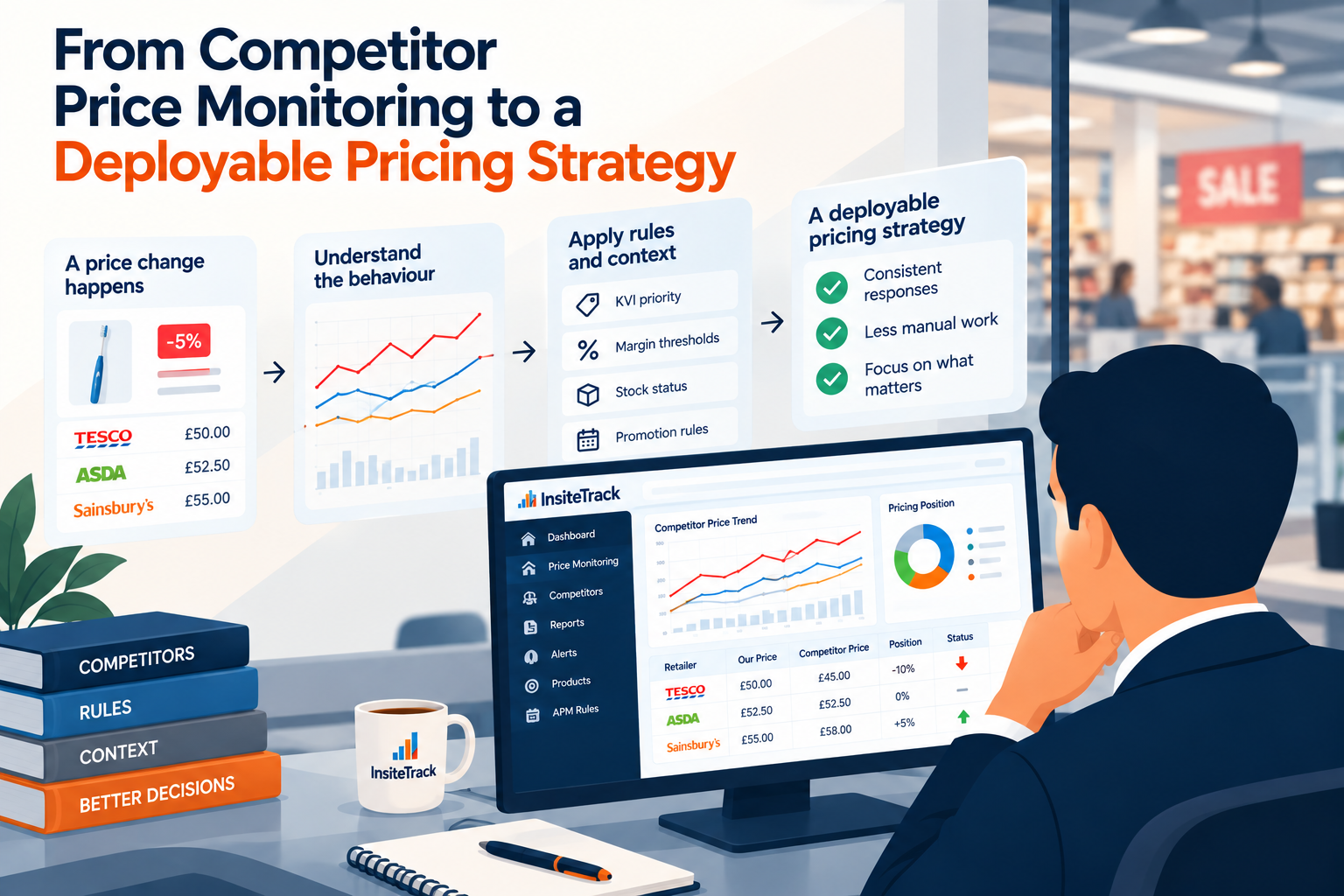
This is where promotion and stock context becomes particularly useful. We have seen customers place greater emphasis on these signals during peak because reacting to price in isolation can create unnecessary margin pressure.
Sometimes the right decision is to follow the competitor. Sometimes the stronger commercial decision is to hold position. Good price intelligence should help make that distinction clearer rather than encourage a reaction to every lower price.
Alerts Should Become More Relevant, Not Simply More Frequent
Peak can create a great deal of noise very quickly. If alerts are too broad, the team can end up spending more time reviewing changes than acting on the movements that genuinely matter.
That is why some customers use the run up to peak to review thresholds. They may narrow alerts to priority products, change the size of movement required before something is flagged or make sure only the most relevant competitors are triggering notifications.
For me, this is a good example of how a fairly small adjustment can have a significant operational impact. The objective should not be to produce more alerts because the market is busier. It should be to improve the likelihood that every alert deserves somebody’s attention.
Peak Is a Bad Time to Rebuild the Same Pricing Decision
Rules are another area that can become much more valuable during peak.
If a team already knows how it generally wants to respond when a particular competitor moves on a defined group of products, there is little benefit in debating that decision from the beginning every time it happens. The same applies to temporary promotions, out of stock competitors or accepted price gaps.
Some customers use the period before peak to turn those repeated decisions into clearer pricing rules. This is not about removing judgement from the process. It is about removing repetitive judgement from situations where the answer is already broadly understood.
The more of that thinking that happens before activity increases, the more time the team has to focus on the exceptions where genuine commercial judgement is still required.
The Best Peak Setup Is Usually an Adapted Version of What Already Works
This is probably the most important point.
For many retailers, getting ready for peak does not require a completely new price intelligence system. The foundation is already in place. The opportunity is to adapt that foundation around a different commercial environment for a relatively short but important period.
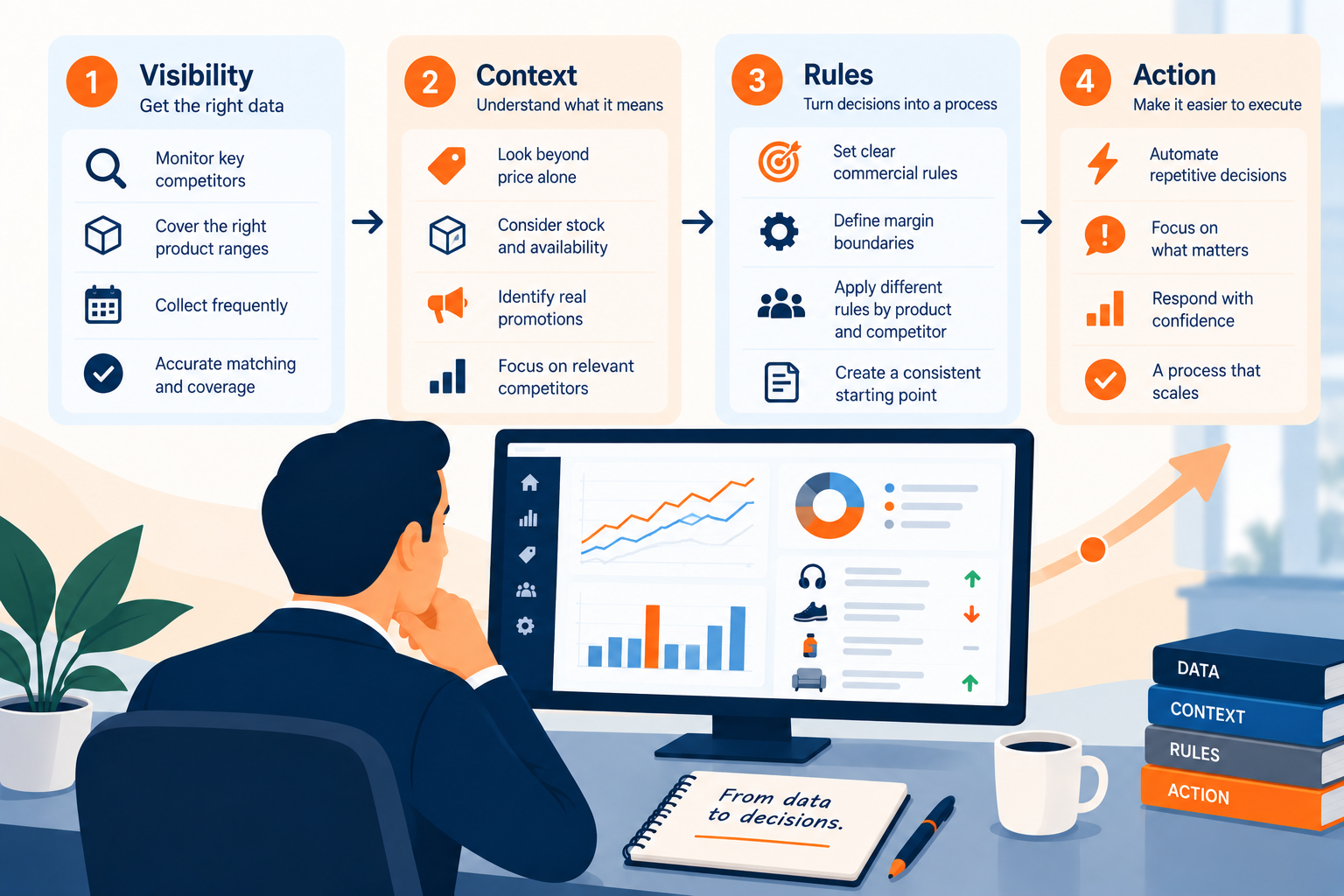
That might mean reviewing KVIs using previous peak data, changing competitor priorities, increasing collection frequency on selected lines, creating a temporary report, tightening alerts or introducing clearer rules.
None of those changes is particularly dramatic in isolation. Taken together, however, they can make the existing setup far more useful during a six to ten week period where the volume and speed of decisions increase significantly.
A Good Price Intelligence Setup Should Move With the Trading Calendar
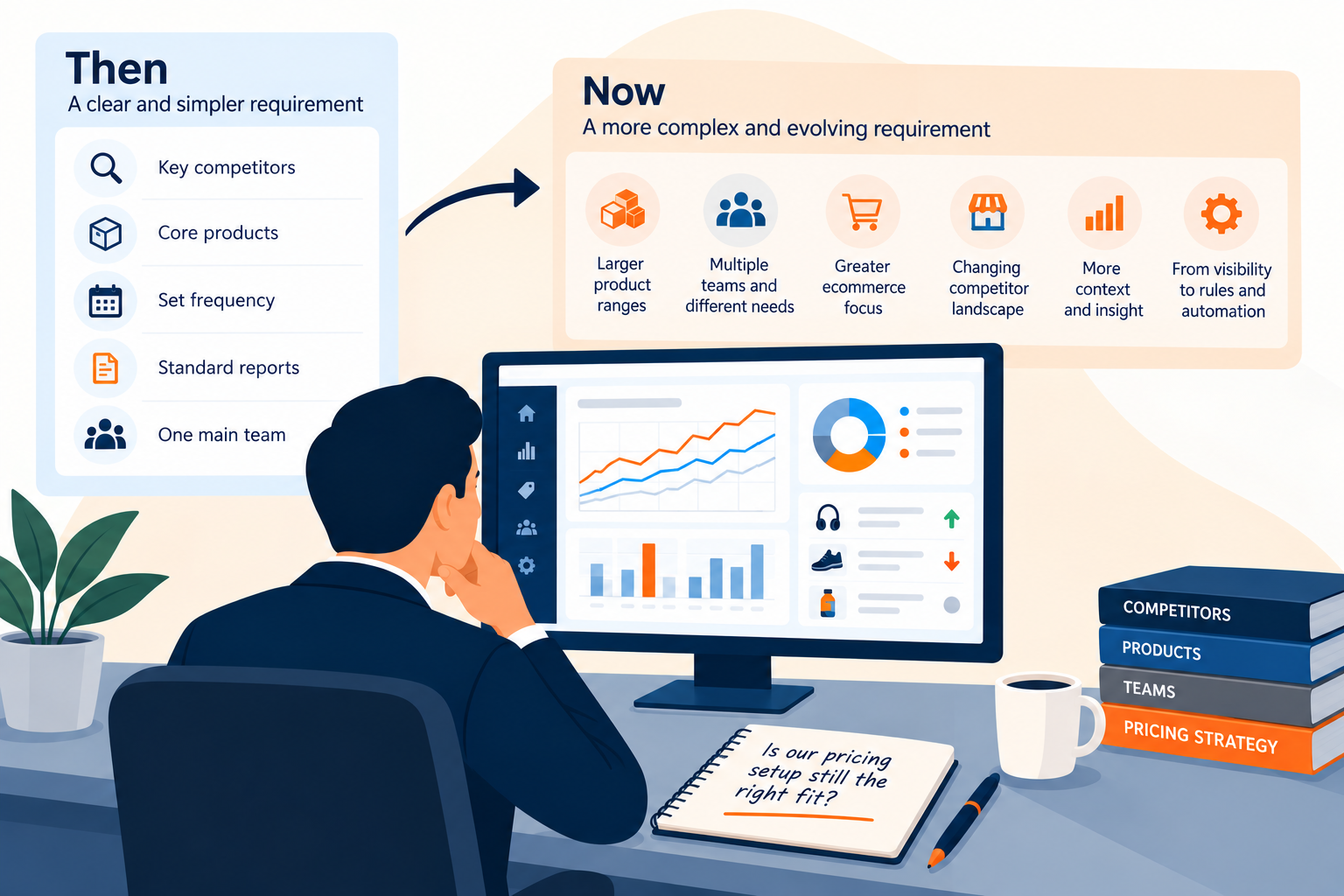
A pricing setup should not remain completely static if the market around it is changing.
Black Friday, Christmas and the January sales create different pressures from the rest of the year. The products that matter can change, competitors can behave differently and the speed of decision making can increase considerably.
That does not mean the normal setup is wrong. It means the business is using it more deliberately.
In my experience, the customers who handle peak best are not necessarily the ones with the most technology or the largest amount of data. They are the ones who have thought about what they are likely to need before the pressure arrives and then made sure their price intelligence setup is ready to support those decisions.