Retail pricing teams do not usually suffer from a lack of information. The bigger problem is knowing what deserves attention.
A competitor price change on its own tells you that something moved. It does not tell you whether that competitor matters, whether the product is commercially important, whether the competitor can actually fulfil the order, or whether reacting would improve the commercial outcome.
That is where price intelligence becomes more useful. The challenge is no longer simply seeing what changed. It is understanding which changes deserve a decision and which can safely be left alone.
Not Every Competitor Move Carries the Same Weight
Two price changes can look identical in a report and have very different commercial implications.
If a relatively minor competitor reduces a slow moving product by £5, that may deserve very little attention. If a key competitor makes the same £5 move on a high volume product that customers compare closely, the situation is completely different.
The data point is the same, but the commercial importance is not.
This is where teams can become overwhelmed if every movement is presented with roughly the same urgency. Once that happens, pricing teams spend too much time working through activity that was never likely to matter in the first place.
Competitor Relevance Should Come First
A useful first question is whether the competitor actually matters for that product.
Competitor relevance is rarely consistent across an entire range. A retailer may have several obvious market competitors, but only a small number may genuinely influence a particular category. One competitor may matter heavily on entry level products, while another is more important at the premium end. A marketplace seller may influence customer perception in one area but have very little relevance elsewhere.
We have seen situations where the original competitor set was entirely sensible when it was first created, but the market moved over time. Some competitors became less relevant while others became more important. The data continued to arrive as expected, but the commercial weighting behind it had not evolved at the same pace.
That is why a useful pricing process should not stop at identifying who changed price. It should help establish whether that competitor matters enough to influence the decision.
Product Importance Changes the Meaning of the Signal
The next question is whether the product itself deserves attention.
Not every SKU has the same influence on sales, margin or customer price perception. Some products are highly visible and heavily compared. Others drive traffic, protect margin or sit within strategically important categories. Many others may be commercially less significant even if competitor prices move frequently.
One client example illustrates this well. A category team was receiving a large volume of daily competitor changes and, at first glance, the level of activity looked significant. Once the range was segmented by product importance, the picture became much clearer.
A large proportion of the movements were taking place on low volume, lower priority products. The genuinely important movements were a much smaller subset.
The value in that situation did not come from collecting more competitor data. It came from reducing the amount of data that required human attention.
Availability Can Completely Change the Decision
A cheaper competitor does not always represent a genuine competitive threat.
Imagine a retailer is selling a product at £120 and a competitor reduces its price to £110. On the surface, that looks significant and may trigger an immediate review.
Now add the fact that the competitor is out of stock.
The commercial picture changes immediately. The lower price still exists in the data, but customers cannot actually buy the product from that competitor at that moment. The pressure to respond is therefore much weaker than the headline comparison suggests.
We have seen examples where adding stock context changed what initially looked like an obvious pricing decision. Without that information, a retailer could easily have reduced its own price and sacrificed margin unnecessarily.
The more useful question is not simply who is cheapest. It is who is cheapest and actually able to sell the product.
Promotions Should Not Be Treated Like Permanent Price Changes
Promotions create another common source of noise.
A competitor moving from £100 to £90 for a three day promotion should not necessarily be interpreted in the same way as a permanent move to £90. If the team is only looking at the price change, however, both movements can appear identical.
We have seen clients get caught in repeated cycles where a competitor launches a short promotion, the retailer reacts, the promotion ends and the retailer then has to decide whether to reverse the move. The original response may have created additional work, margin pressure and internal discussion even though the competitive signal was temporary.
A stronger process adds context before the decision is made. Is the competitor genuinely repositioning its price, or is this a short term promotion? Does it affect an important product? Is the promotion significant enough to influence customer behaviour?
Those questions make the same underlying price movement much more commercially useful.
Market Position Matters More Than the Movement Itself
Another mistake is focusing too heavily on the competitor movement without considering the retailer’s existing position.
Suppose a competitor moves from £99 to £97. That may look like something worth reacting to. However, if your own price is already £95, your relative market position has not materially worsened.
The reverse can also be true. If a competitor increases its price, the opportunity may be to hold your own position rather than move with them.
The important question is not simply whether somebody changed price. It is whether that movement has actually changed where you sit in the market.
That means bringing your own commercial context into the decision. What is our current price? What position are we trying to maintain? What margin are we protecting? Has the competitor movement altered any of those things enough to justify action?
Sometimes the Best Decision Is to Hold
Good price intelligence should not simply create more reasons to change price. It should also help teams understand when not to act.
One client situation involved a high profile competitor making a noticeable move on an important product. The initial reaction was that the price needed reviewing immediately. Once the wider context was considered, the competitor was running a temporary promotion, stock was limited and the retailer was still comfortably within its intended market position.
The final decision was to hold price.
That was not indecision. It was a deliberate commercial choice based on the wider context.
In some situations, the strongest use of pricing intelligence is protecting the business from a response that would have given away margin without creating any meaningful competitive advantage.
The Real Challenge Is Prioritisation
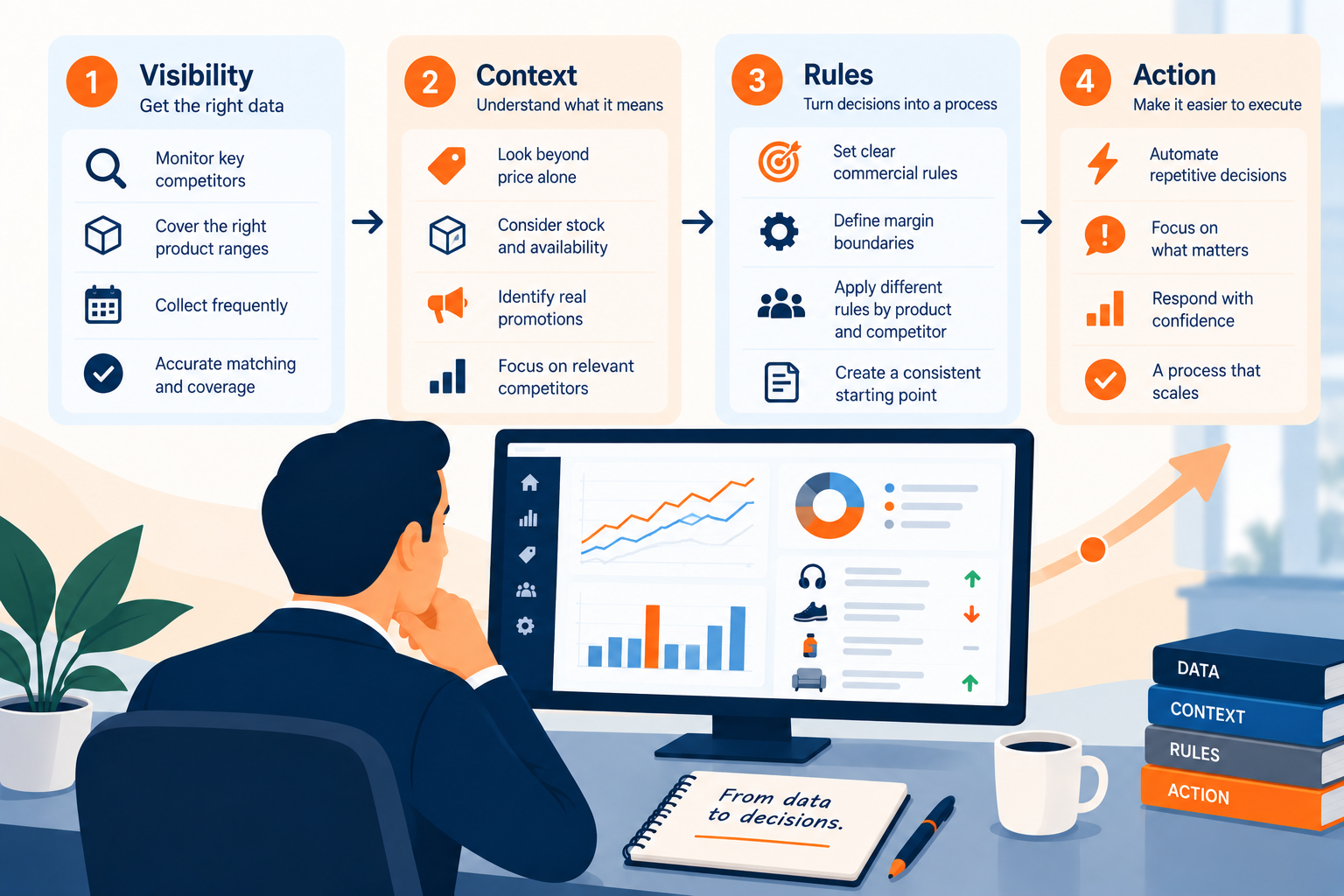
This is where the role of price intelligence has changed.
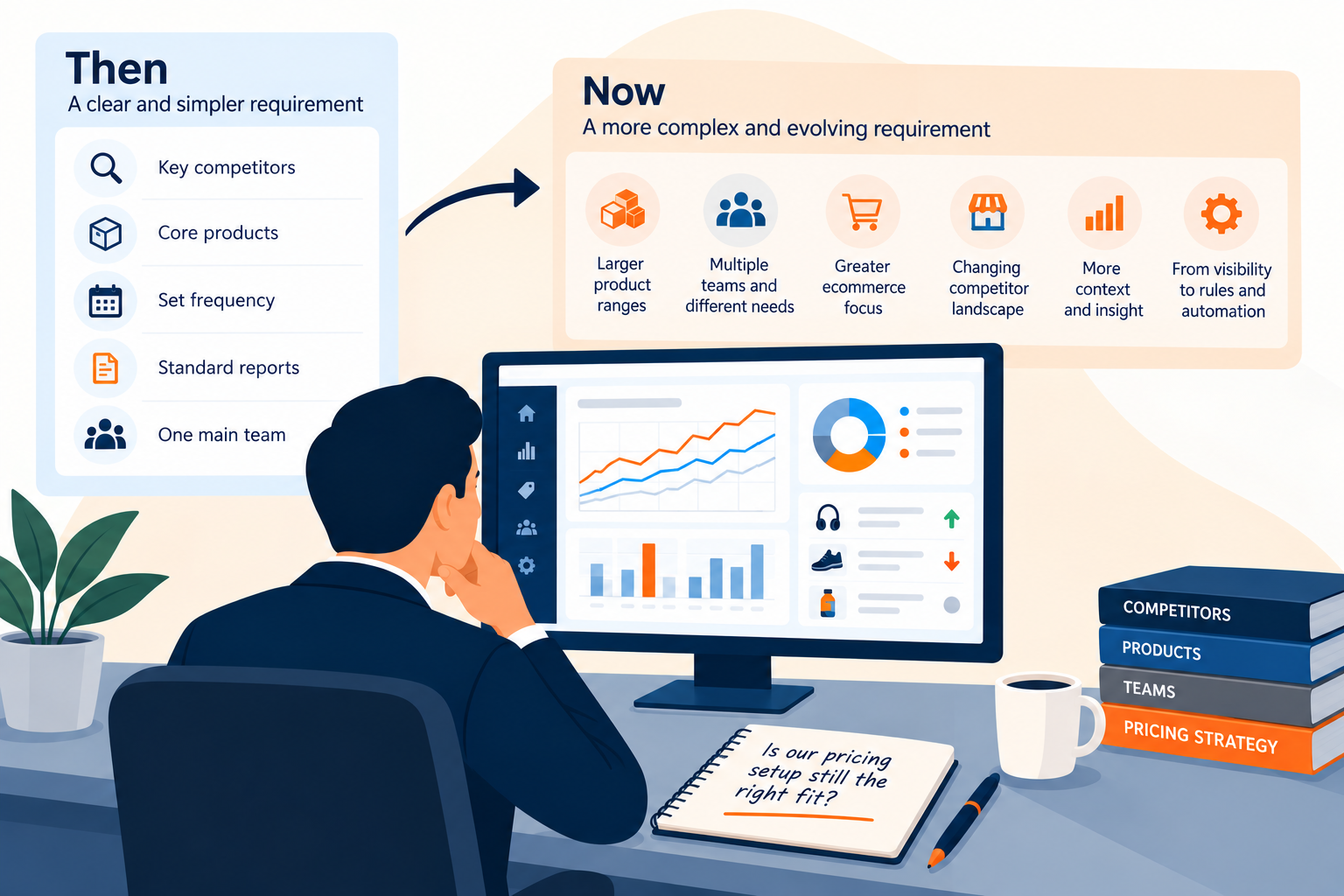
For many retailers, basic visibility is no longer the main problem. They can already see competitor prices and receive regular reporting or alerts. The harder question is what to do with the volume of information that comes back.
Out of everything that changed today, which movements came from competitors that genuinely matter? Which products deserve attention? Which competitors are actually available? Which movements are promotional? Which changes have altered the market position enough to justify action?
Those questions move the process from competitor monitoring into prioritisation.
The aim is no longer simply to know more. It is to make the important signals easier to identify.
Attention Is a Commercial Resource
One thing I think is easy to underestimate is the value of attention.
Pricing teams have limited time. Category teams have limited time. Commercial leaders also have limited capacity to review exceptions and make decisions.
If every market signal is treated as important, those teams can spend too much of their time working through low value activity.
A better pricing process filters, prioritises and adds context before the information reaches the person expected to act on it. Where the same type of decision is being made repeatedly, clearer rules can also reduce unnecessary manual judgement.
The objective should not be to create more alerts. It should be to improve the quality of the signals that reach people.
From Competitor Change to Commercial Action
The most useful pricing processes do not stop when a competitor moves.
A more useful journey looks like this:
Competitor change → relevance → context → prioritisation → decision → action
For example, a competitor reduces a product by £10. Before reacting, the team establishes whether that competitor is relevant to the category, whether the product is a priority, whether the competitor has stock, whether the movement is promotional and whether the retailer’s own market position has actually changed.
Only then does the pricing decision become meaningful.
Accuracy, coverage and collection frequency still matter. They are essential foundations. The commercial value appears when that information helps the team decide what deserves attention and what should happen next.
The Question Worth Asking
When a competitor changes price, the first question should not automatically be, “Should we react?”
A better starting point is:
Does this change matter enough to deserve a decision?
That question forces the right context into the conversation. Who moved? On what product? Are they relevant? Are they in stock? Is the movement promotional? Has our market position actually changed?
Once those questions have been answered, the pricing decision becomes much clearer.
That, in my view, is where competitor pricing data stops being simply informative and starts becoming commercially useful.