Retail pricing requirements rarely stay the same for long. The competitors that matter can shift, product ranges become more complex, and different teams begin using the same pricing intelligence in different ways. Ecommerce may need faster signals, while commercial leadership wants a clearer view of margin and market position. What does not always change at the same pace is the price intelligence setup supporting those decisions.
A retailer may still be working with a configuration designed several years ago around a different competitor set, a smaller range and a simpler decision process. The technology may still function perfectly well and the data may still be arriving accurately. That does not necessarily mean the setup is still right for the business as it operates today. The more useful question is whether the pricing process has evolved alongside the business.
Pricing Requirements Rarely Stay Still
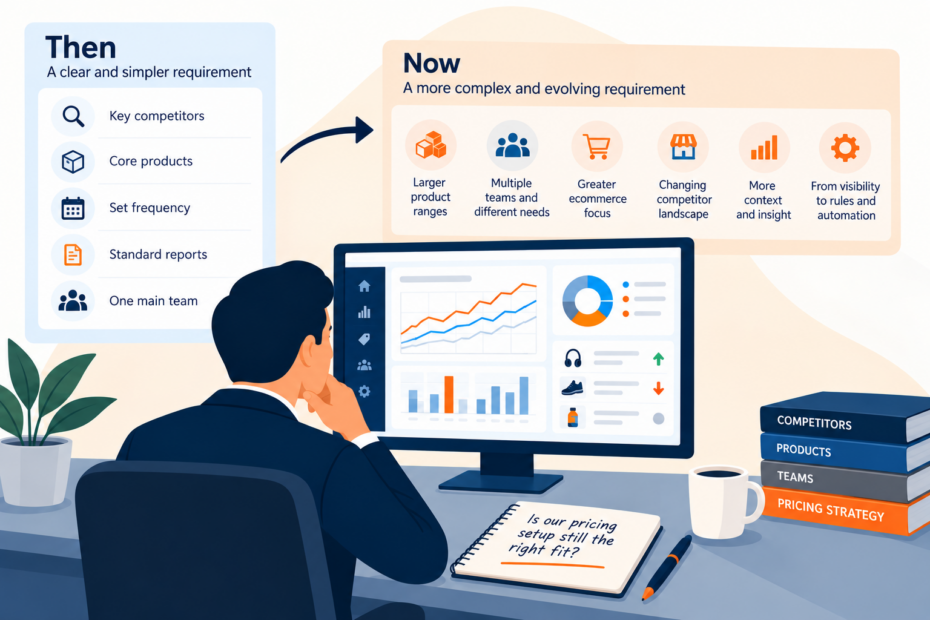
When a price intelligence solution is first introduced, the requirement is usually relatively clear. The business decides which competitors should be monitored, which products matter most, how frequently prices should be collected and which reports different teams need. At that point, the setup may fit the business extremely well. The challenge is that those requirements rarely remain unchanged.
Over time, new categories may be introduced, product ranges may grow and marketplace activity may become more important. Ecommerce teams may need faster visibility, while Category and Trading teams may want different levels of detail. Commercial leaders may also begin asking different questions about margin, competitor behaviour and market position. The original requirement gradually becomes only one part of what the business now needs.
A Stable Setup Is Not Always the Right Setup
One of the easiest mistakes to make is to confuse consistency with suitability. A system may continue to deliver the same reports every day, collect competitor prices accurately and appear completely stable. From a technical perspective, there may be nothing obviously wrong. Commercially, however, the setup may be becoming less aligned with the way the business now operates.
If the retailer now trades across more channels, manages more products and involves more teams in pricing decisions, the process is likely to have become more complex as well. Different categories may need different competitor sets, some products may require closer monitoring and Ecommerce may need faster signals than a central commercial team. Senior leaders may want summary visibility, while operational teams need much more detail. The setup should reflect those different requirements rather than assuming that one view still works for everyone.
Competitor Relevance Changes Over Time
Competitor relevance is one of the clearest areas where a pricing setup can date quickly. When a solution is first configured, the competitor set usually reflects the market as it exists at that point. Several years later, the competitive picture may look very different. New entrants may have become more important, while established competitors may have reduced their presence in certain categories.
Marketplace sellers can also influence customer perception in ways they did not previously, and some competitors may only matter on particular products or channels. If the competitor set remains static, the business can spend time monitoring activity that has become less relevant while missing newer sources of pressure. That does not mean the original setup was poor. It simply means competitor relevance is not permanent.
Product Growth Can Outpace the Original Pricing Logic
Range growth creates a different challenge. A retailer that originally monitored 5,000 products may later be managing several times that number, and the technology may be perfectly capable of handling the additional volume. The difficulty is that the decision process around that volume does not always scale as easily. More products create more signals, but they should not automatically create the same increase in manual attention.
If every movement is treated equally, low value changes can receive the same attention as products that have a much greater influence on volume, margin or customer price perception. More mature setups tend to become increasingly selective as the range grows. Key products receive closer attention, competitor relevance becomes more specific and commercial thresholds become clearer. The objective is not simply to monitor more products, but to become better at identifying which movements actually matter.
Different Teams Need Different Pricing Intelligence
Price intelligence is also shaped by the people using it. A reporting structure that worked well when pricing sat with one central team may become less suitable when Category, Ecommerce, Trading and Commercial teams all need to use the same intelligence differently. Each function is trying to answer a different commercial question. That difference should be reflected in the way information is delivered.
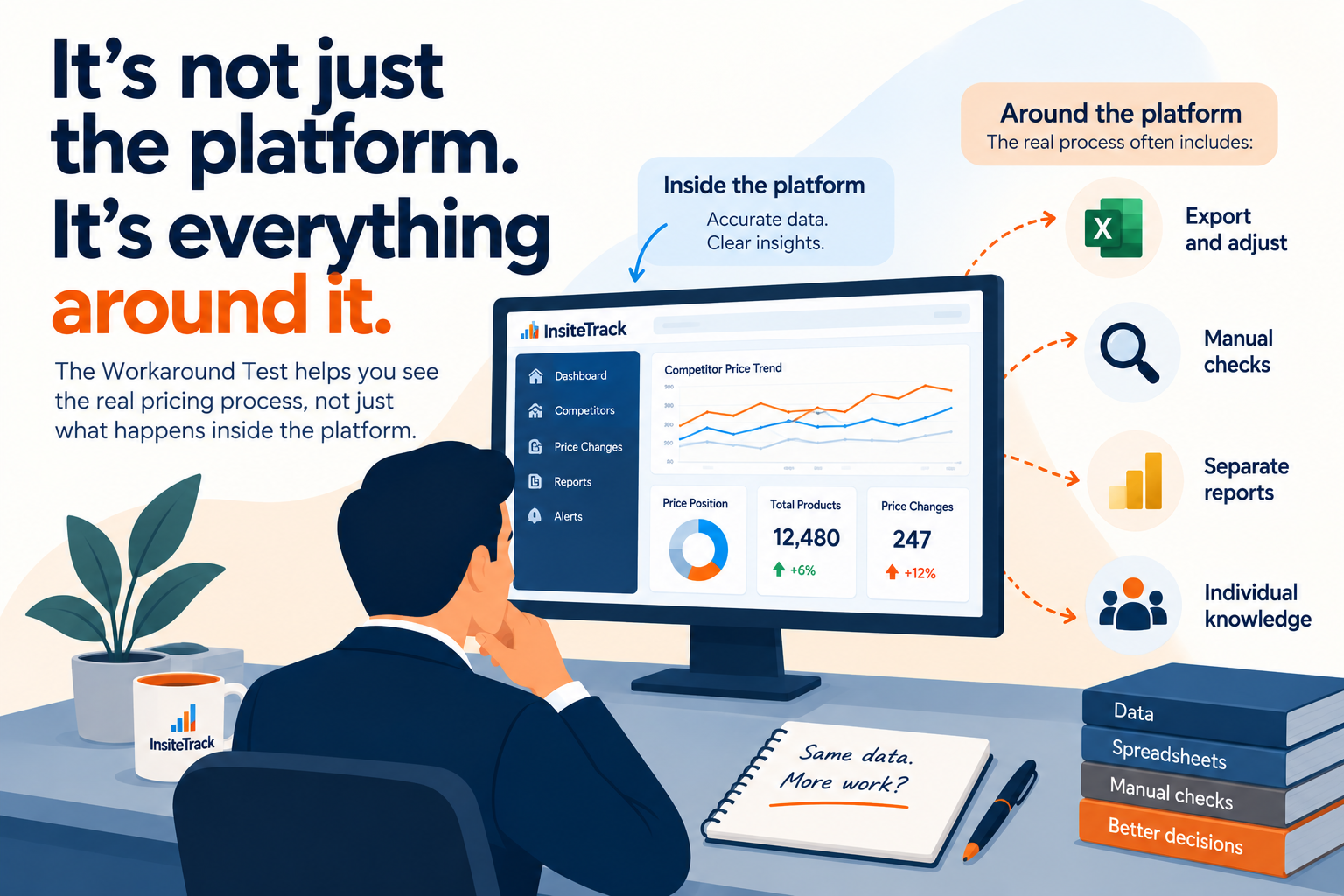
A Category Manager may want to understand which movements matter within a specific range, while an Ecommerce team may care more about speed, availability and online competitiveness. Trading may want to understand whether a movement is promotional or likely to require a response, while commercial leadership is more interested in margin exposure and overall market position. If every audience continues receiving the same information in the same format, teams often begin adapting the process themselves. That is usually where exports, spreadsheets and separate analysis start to appear.
Pricing Intelligence Should Develop With Pricing Maturity
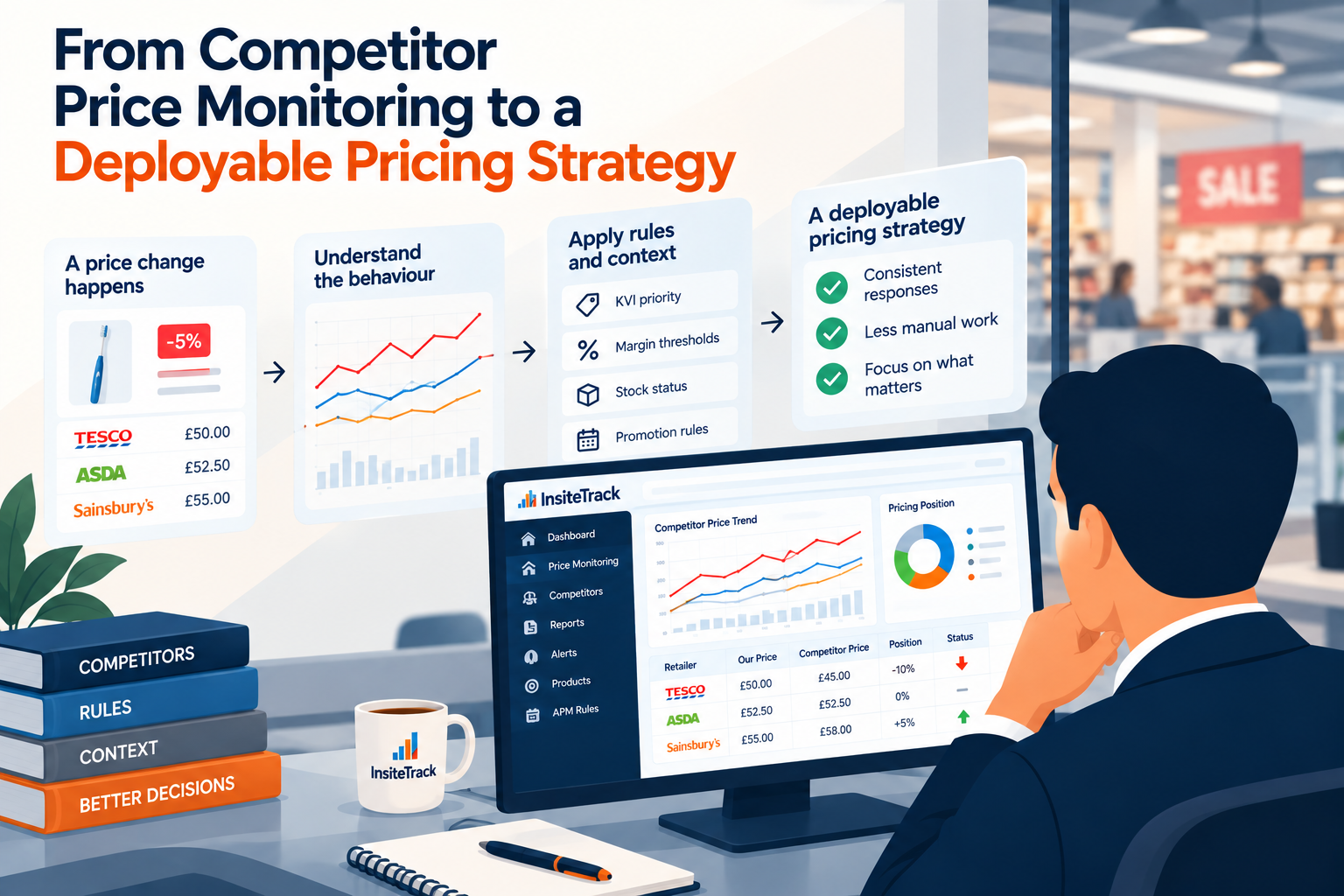
There is a natural progression in what retailers expect from price intelligence. At an earlier stage, the priority may simply be visibility and confidence in the underlying data. The business wants reliable competitor prices and a clearer understanding of where it sits in the market. Once that foundation is established, the questions usually become more sophisticated.
Teams begin asking which movements actually matter, which competitors deserve the most attention and what action should follow. They may want stronger context around promotions and stock, clearer pricing rules and closer integration with existing workflows. Eventually, some predictable decisions may be suitable for automation within agreed commercial boundaries. The pricing capability is maturing, so the supporting setup should mature with it.
The Provider Relationship Should Evolve Too
This is not only a technology question. A strong price intelligence relationship should include regular discussion about whether the current setup still reflects the business. The provider should be helping the retailer question whether the same competitors remain commercially relevant and whether the reporting still supports the right decisions. That review should happen before major problems appear.
It is worth asking whether teams are still using the reports being produced and whether alerts are genuinely helping people prioritise. New categories, channels or trading priorities may require a different approach, while additional work happening outside the core setup can indicate that requirements have moved on. The strongest provider relationships are not based on delivering the same configuration indefinitely. They are based on understanding how the retailer is changing and adapting the service accordingly.
When Did the Pricing Setup Itself Last Change?
The useful question is not when the software was last updated or when a new dashboard was introduced. It is when the pricing setup itself last changed because the business had changed. That could mean reviewing competitor priorities, redefining product importance or changing the way different teams use the information. It could also mean refining alerts or adjusting workflows around how pricing decisions are actually made.
If the answer is difficult to remember, it may be worth looking more closely at the assumptions behind the current process. A competitor set, product hierarchy or reporting structure created several years ago may still be operating quietly in the background. The question is whether those assumptions still reflect the commercial reality of the business today. A setup can remain technically functional long after parts of its original logic have become outdated.
Small Friction Can Be the First Sign of Misalignment
A pricing solution does not need to fail before it deserves review. In many cases, the warning signs are much smaller. A report needs to be adjusted manually, a competitor is checked separately, or a spreadsheet is used to add context that is missing elsewhere. An alert may still be produced even though nobody pays much attention to it.
Individually, each workaround may seem insignificant. Over time, they can indicate that the business has evolved further than the process supporting it. A rule that exists in somebody’s head rather than within the wider pricing process is another example of that gap. These small pieces of friction often appear before a more obvious problem becomes visible.
The Pricing Setup Should Keep Moving With the Business
Retailers change, markets change and commercial priorities change. A price intelligence setup should be expected to evolve in response rather than remaining fixed around the requirements that existed when it was first introduced. Accurate competitor data will always matter, but accuracy alone does not guarantee that the wider process is still supporting the right decisions.
The important question is not whether the current setup still does what it was originally designed to do. It is whether it still helps the business prioritise the right signals, support the right teams and make pricing decisions in the way it needs to today. That is the difference between a price intelligence setup that simply continues to operate and one that continues to fit the business.