There was a time when access to competitor pricing data was a genuine advantage. Retailers that could see competitor prices faster than the market often held a meaningful edge because visibility itself created opportunity. Most businesses simply did not have access to reliable competitor intelligence at scale, which meant even basic pricing visibility could create a competitive advantage.
That environment no longer exists.
Today, most retailers already have some form of competitor monitoring in place. Prices are scraped automatically, dashboards are populated daily, and reports circulate constantly across pricing, trading, and commercial teams. Competitor visibility has become far more accessible, and in many categories it is now considered standard operational infrastructure rather than a differentiator.
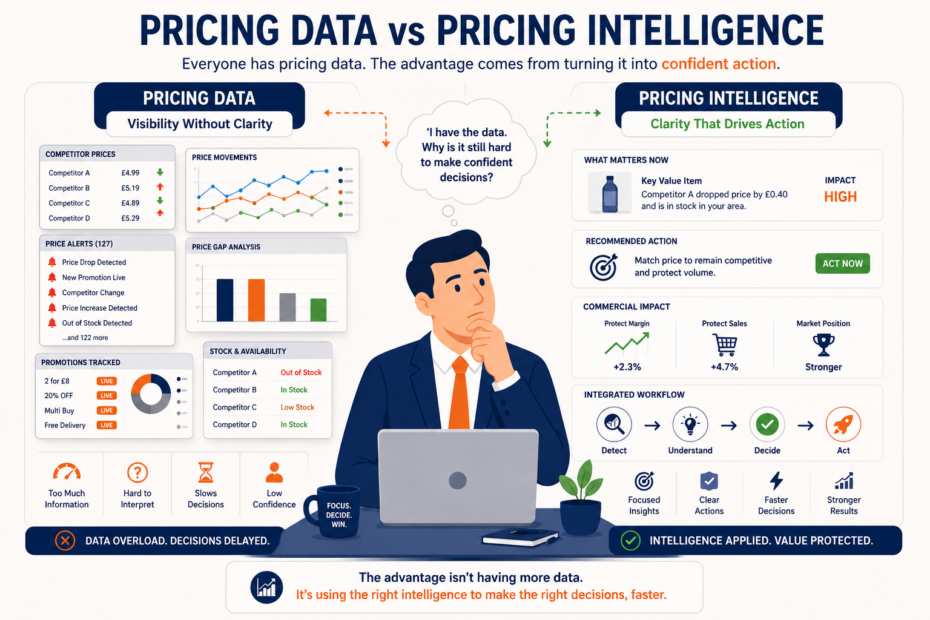
And yet, despite all of this visibility, pricing decisions still feel slower than they should. Teams hesitate before acting, pricing reviews require layers of interpretation before confidence is reached, and internal debate slows execution even when the competitor movement itself is visible immediately.
That raises an uncomfortable but important question. If everyone already has pricing data, why are some retailers still consistently faster and more confident in the way they react to the market?
The answer is that the advantage is no longer access to pricing data itself. The advantage now comes from having pricing intelligence that actually works inside the way the business makes decisions.
Data Is No Longer the Differentiator
Competitor pricing data has become commoditised. Most retailers can buy feeds, most platforms can scrape competitor prices, and marketplaces expose pricing instantly. Competitor visibility is more accessible than ever before.
But visibility alone rarely improves pricing capability.
In many organisations, the increase in pricing data has simply created more operational complexity. Teams are now managing more dashboards, more alerts, more reporting layers, and more data outputs than ever before. Instead of simplifying decisions, the process of interpreting information has become another operational burden.
The issue is no longer whether the information exists. It is whether teams can actually use it confidently and efficiently.
That is the real shift happening in retail pricing right now. Competitive advantage is no longer created by who can access the data. It is created by who can operationalise it effectively.
The Gap Between Visibility and Action
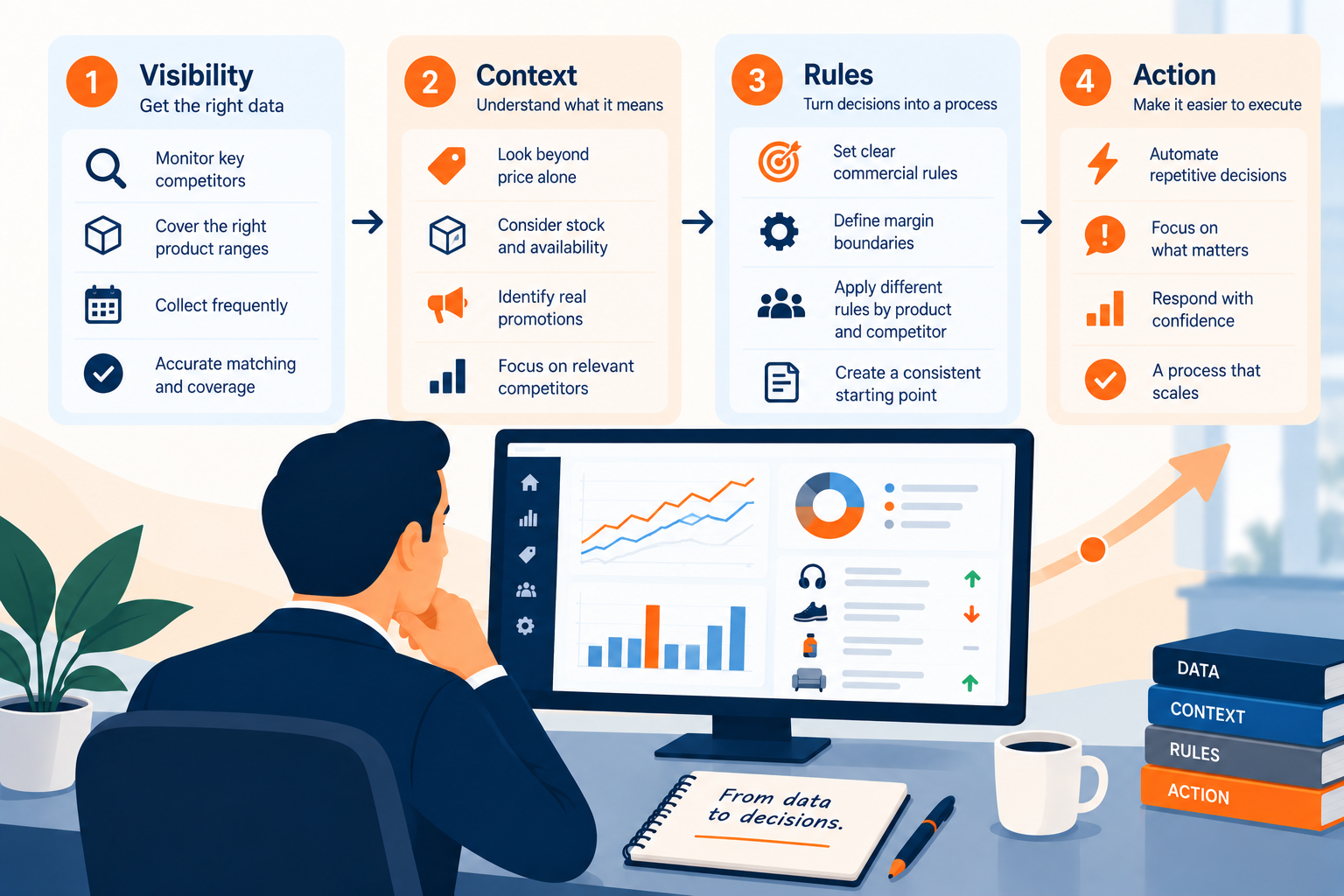
One of the biggest misconceptions in retail pricing is that better visibility automatically leads to better decisions. In reality, visibility is only the starting point.
Pricing teams, category managers, trading teams, and senior leaders do not simply need to know what changed in the market. They need to understand why it matters, whether action is required, where the commercial risk sits, and how the signal fits into wider business priorities.
That is where many pricing environments quietly begin to struggle.
The data exists, but the operational process around it does not. As a result, pricing intelligence becomes observational rather than operational. Teams can see competitor movement, but they still struggle to translate visibility into fast, confident execution.
This is often why retailers continue to feel reactive despite having more competitor pricing data than ever before. Visibility has improved, but the workflow surrounding the intelligence has not evolved at the same pace.
Why Generic Dashboards Often Fall Short
Many pricing tools are designed primarily around reporting rather than decision-making. They surface competitor movements, highlight price gaps, and generate alerts. On paper, this appears useful because the visibility problem has technically been solved.
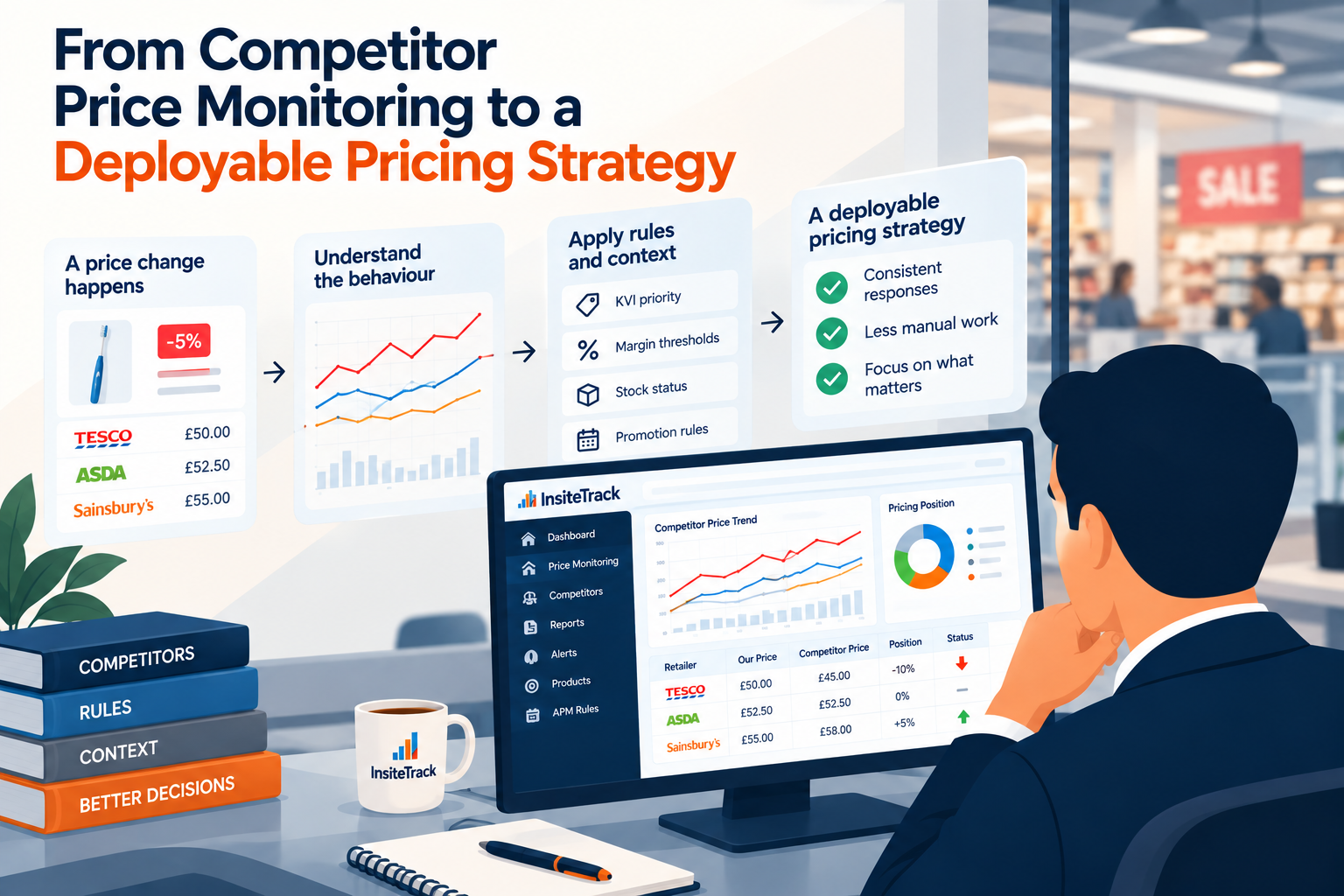
But in practice, teams are often left asking the same operational questions afterwards. Is this movement actually significant? Should we react? Is the competitor even in stock? Does this impact a Key Value Item? Is this part of a wider promotional strategy or simply short-term market noise?
Without context, dashboards create interpretation work, and interpretation slows decisions.
This is where many retailers become trapped. They invest in greater visibility but unintentionally create more operational friction at the same time. Teams spend longer analysing information instead of acting on it because the intelligence has not been structured around the decisions that need to happen next.
The issue is not visibility alone. It is whether visibility has been translated into a working commercial process.
Pricing Intelligence Has to Fit How Decisions Actually Get Made
This is where the real difference between pricing data and pricing capability starts to appear.
Strong pricing intelligence does not simply deliver information. It fits the operational reality of the retailer using it. That means the intelligence needs to be trusted, contextualised, aligned to workflows, and structured around commercial priorities rather than generic reporting structures.
Because pricing decisions rarely happen in isolation.
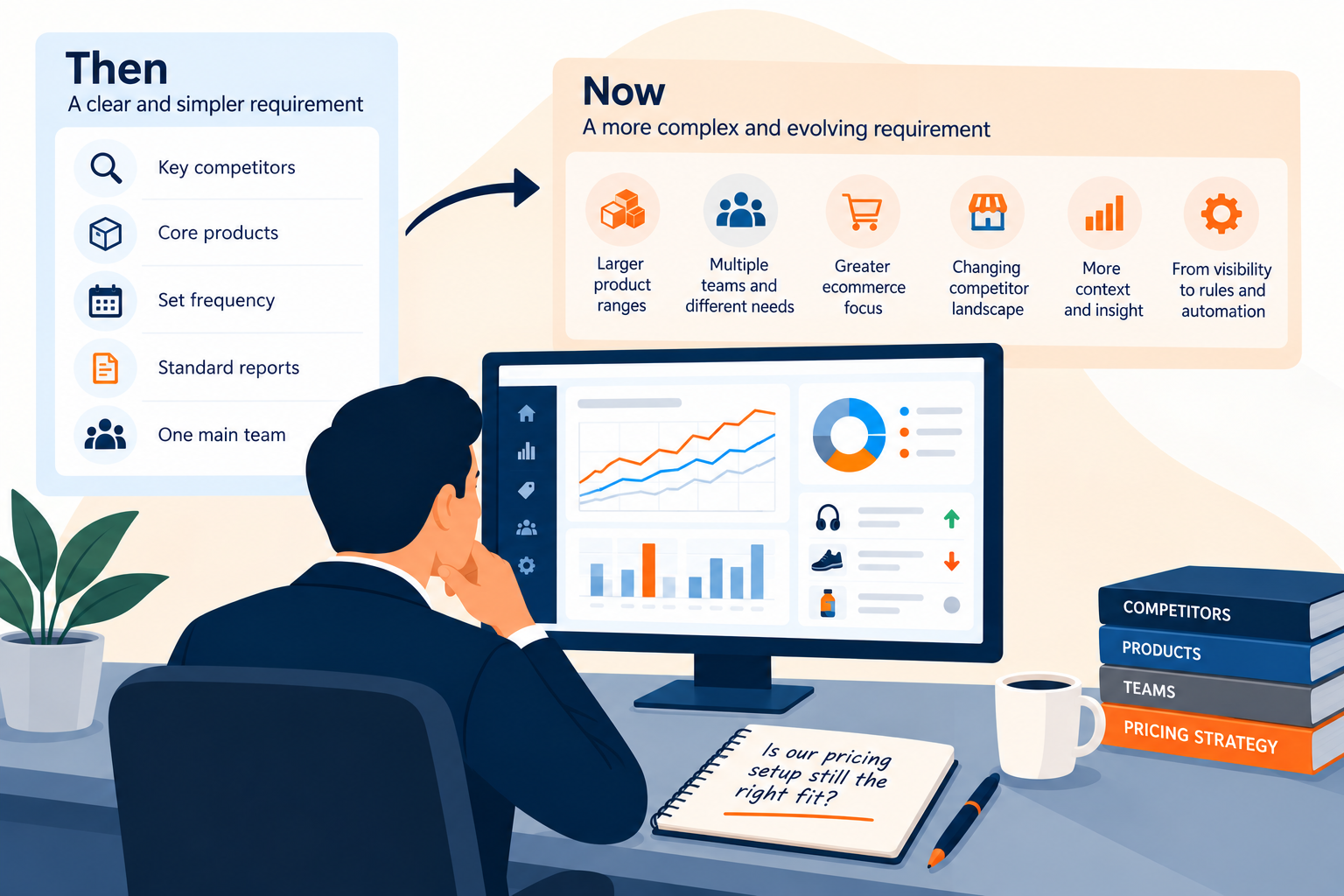
Category managers think differently from trading teams. Commercial leaders require different visibility from pricing analysts. eCommerce teams work differently from store operations teams. Each group needs different levels of detail, different types of context, and different operational outputs.
This is why one-size-fits-all reporting structures rarely work equally well for everyone inside a retail business.
The most effective pricing environments are usually the ones where the intelligence feels embedded naturally into the way teams already operate. The data supports decision-making instead of creating another layer of interpretation work.
The Best Pricing Environments Feel Operational, Not Analytical
When pricing intelligence is embedded properly, something important changes.
Pricing stops feeling like constant analysis and starts feeling operational.
Teams understand which signals genuinely matter, which products require immediate attention, where margin risk actually exists, and when competitor behaviour is commercially meaningful. That clarity reduces hesitation, not because decisions become reckless, but because confidence improves.
The strongest pricing environments are not necessarily the ones with the highest volume of alerts or the largest number of dashboards. They are the ones where teams understand what action is expected and can move quickly without constantly rebuilding context from scratch.
That is often the real difference between reactive pricing environments and mature ones.
Why Support Matters More Than Retailers Expect
Another issue retailers often underestimate is how much pricing capability depends on operational understanding, not just technology.
Pricing intelligence is rarely just a data challenge. It is also a workflow challenge, a commercial challenge, and often a behavioural challenge as well.
This is why support matters.
Not generic customer support, but commercial support from people who understand how retail pricing decisions are actually made internally.
Because the challenge is rarely just collecting data. The real challenge is turning pricing visibility into repeatable commercial behaviour that teams trust and can act on consistently. That requires more than dashboards. It requires partnership.
The Real Question Retailers Should Ask
Many retailers still evaluate pricing providers based on data volume. How many competitors can be tracked. How many products can be monitored. How many alerts can be generated.
But those are no longer the most important questions.
The better question is much simpler.
Does this intelligence actually help teams make better decisions faster?
Because if pricing outputs still require heavy interpretation, manual validation, or long internal debate before action happens, then the underlying problem has not really been solved. The business simply has more visibility into the same friction.
The Shift From Data to Capability
Retail pricing is entering a new phase. The competitive gap is no longer created by who can access pricing data. It is created by who can operationalise it most effectively.
That means building pricing intelligence that is embedded into workflows, aligned to decision-making, trusted across teams, structured around commercial priorities, and flexible enough to reflect how the business actually operates.
That is the difference between having pricing data and having pricing intelligence that works.
And increasingly, that difference is what separates reactive retailers from confident ones.