When retailers look back on a pricing mistake, attention usually falls on the decision itself.
A price was reduced too aggressively. A promotion continued for longer than planned. Margin was sacrificed unnecessarily. A competitor’s move was misjudged.
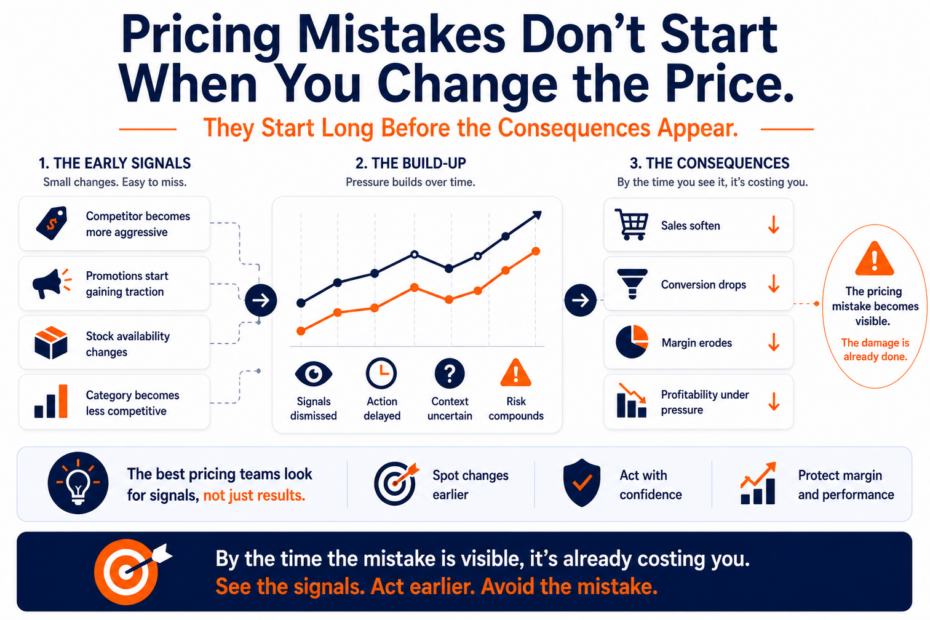
The impact becomes obvious once it appears in the results. Sales begin to soften, conversion rates decline, margins erode, and profitability comes under pressure.
However, the pricing decision is rarely where the mistake actually begins.
In most cases, the conditions that lead to poor pricing decisions have been developing for days, weeks, or even months before anyone changes a price. By the time the consequences appear in reporting, the real issue has already taken hold.
That is what makes pricing mistakes so difficult to identify. The price change is often the final symptom rather than the original cause.
The Warning Signs Usually Appear Long Before the Outcome
One of the biggest misconceptions in retail pricing is that mistakes happen at the point of action.
In reality, the earliest warning signs usually appear well before anyone decides to adjust a price. A competitor may become increasingly aggressive on a small group of high-visibility products. Promotional activity across the market may begin to increase. Stock availability may change the competitive landscape, or a category may slowly become less competitive without immediately attracting attention.
Individually, these developments rarely create immediate concern. They often appear too small or too temporary to justify action.
Collectively, however, they create the commercial pressure that eventually forces pricing decisions.
The challenge is that many retailers focus on the outcome rather than the build-up. They notice the decline in margin, sales, or conversion, but overlook how long the warning signs were visible beforehand.
Why Pricing Problems Often Develop Quietly
Pricing issues rarely arrive as a single event.
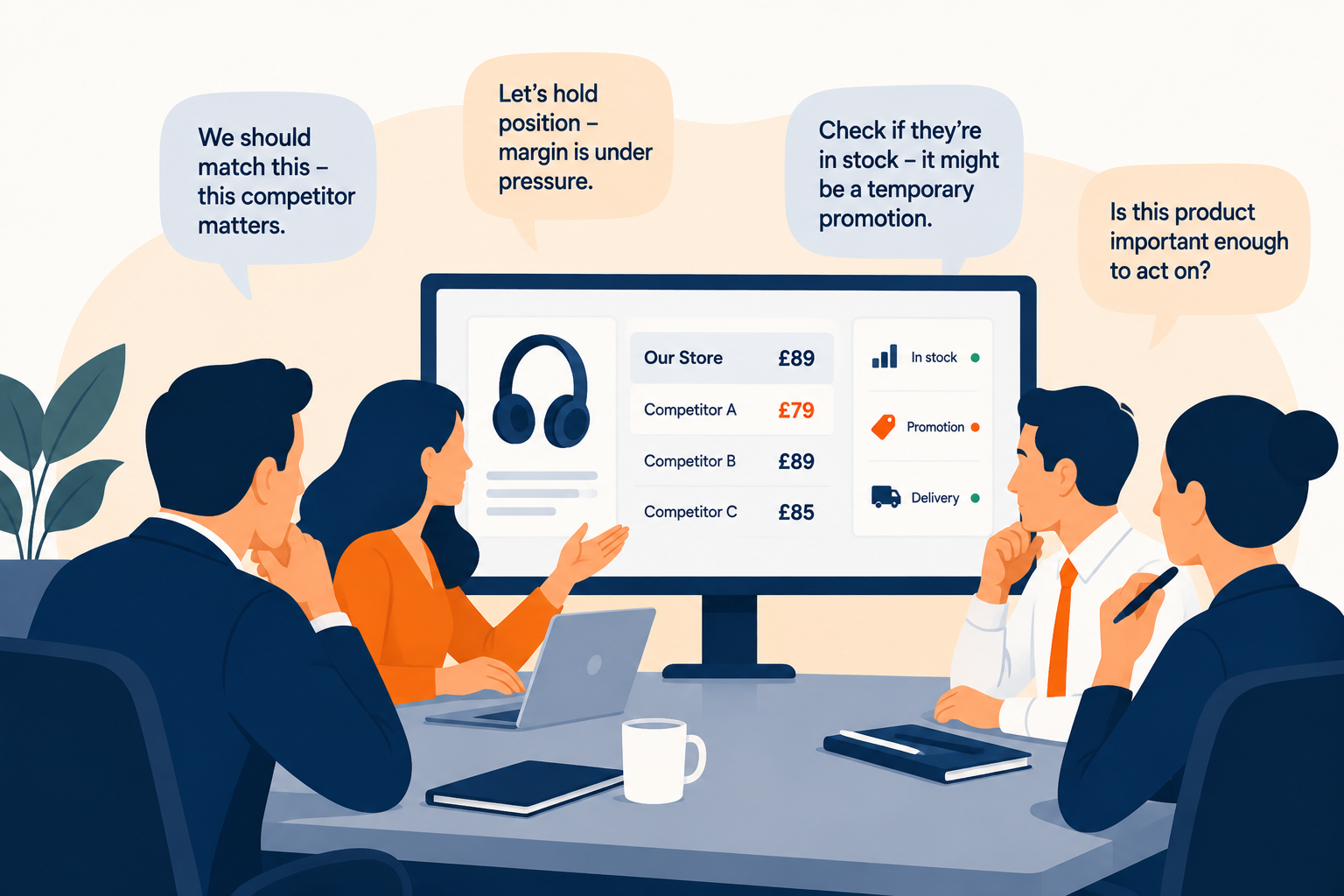
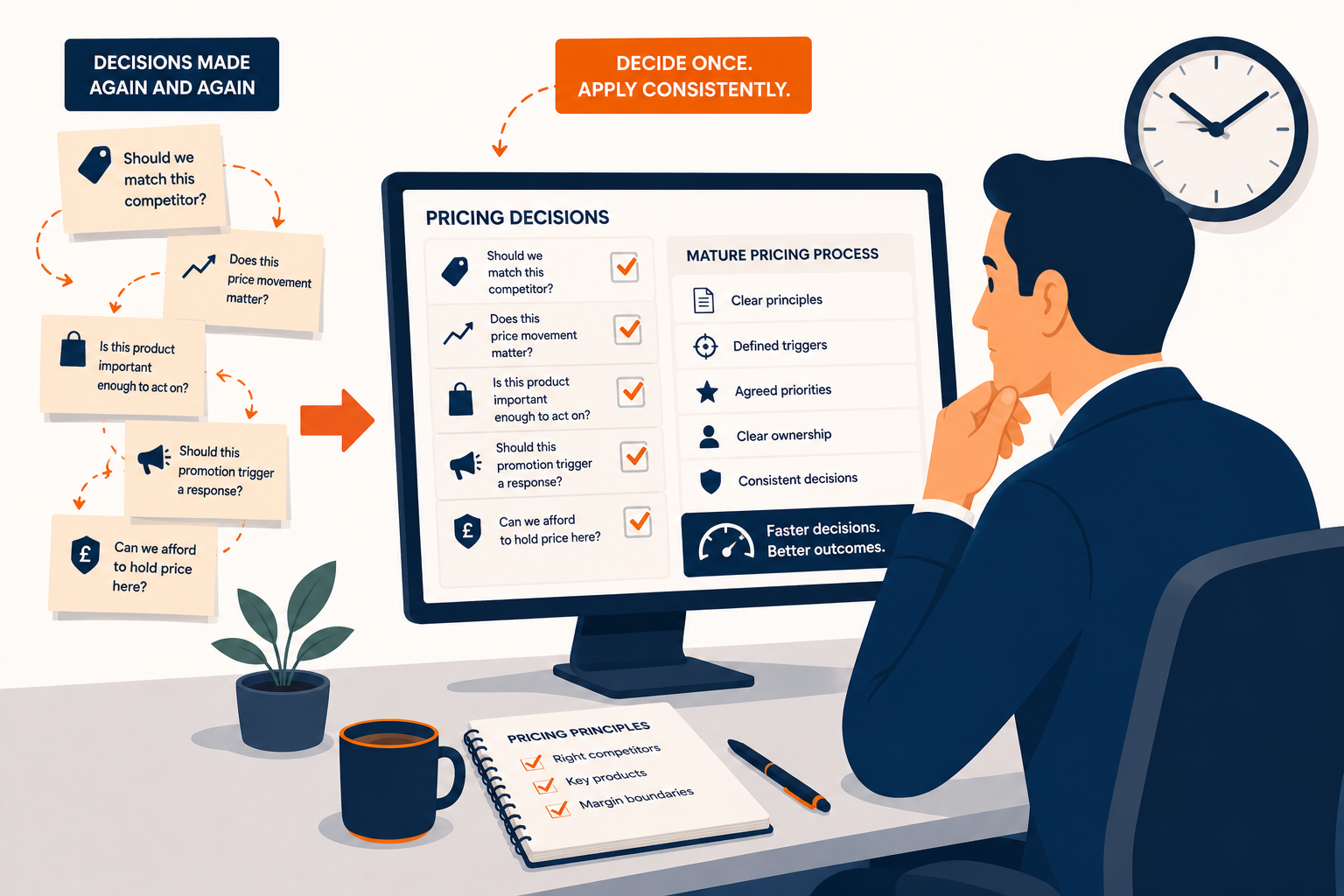
Instead, they emerge through a series of small changes that gradually reshape the competitive environment. A competitor undercuts a handful of key products. A promotion quietly continues beyond its original timeline. Pricing rules are applied inconsistently across categories. Teams hesitate because competitor signals lack sufficient context or confidence.
None of these situations feels significant enough to trigger immediate concern.
Over time, however, they compound.
By the time commercial performance begins to change, the underlying issue has often been building for much longer than anyone realises. Leadership teams may believe the pricing environment is stable because headline performance still looks healthy, while the market has already started moving around them.
The Hidden Cost of Hesitation
Not every pricing mistake is caused by acting too quickly.
Many are caused by waiting too long.
Retailers naturally want confidence before making commercial decisions, particularly when pricing directly affects profitability. However, caution has its own cost when the market is moving faster than the business.
If competitor activity requires repeated validation, if teams spend days debating whether a signal matters, or if confidence in the available data is low, pricing decisions inevitably slow down.
The market does not.
Competitors continue adjusting prices. Promotional activity continues to influence customer expectations. Market conditions continue to evolve regardless of how quickly internal decisions are made.
By the time agreement is reached, the opportunity to respond may already have passed.
In many organisations, this is not a data problem.
It is a confidence problem.
The Mistakes That Happen Before the Mistake
Many pricing decisions are influenced by earlier opportunities that were overlooked.
A competitor signal may have been dismissed because it appeared temporary. A promotion may have been considered too small to matter. Stock availability may have shifted competitiveness without attracting attention. A product may have quietly become a Key Value Item without anyone recognising its growing importance.
Individually, none of these represents a pricing mistake.
Collectively, they create the conditions that allow pricing mistakes to happen later.
This is why the strongest pricing teams spend as much time monitoring emerging market signals as they do reviewing commercial results. They understand that preventing mistakes is often easier than correcting them.
Visibility Alone Is Not Enough
Many retailers respond to pricing challenges by increasing visibility.
Additional dashboards are introduced. More reports are produced. Competitor coverage expands. Alerts become more frequent.
While greater visibility is valuable, it is rarely enough on its own.
Modern retail generates enormous amounts of pricing information every day. The challenge is no longer finding signals. It is recognising which signals deserve attention and which are simply background noise.
Without that ability, teams either become overwhelmed by information or overlook the early indicators that genuinely require action.
Neither outcome improves pricing decisions.
Strong Pricing Teams Focus on Early Indicators
Retailers that consistently make better pricing decisions tend to approach pricing differently.
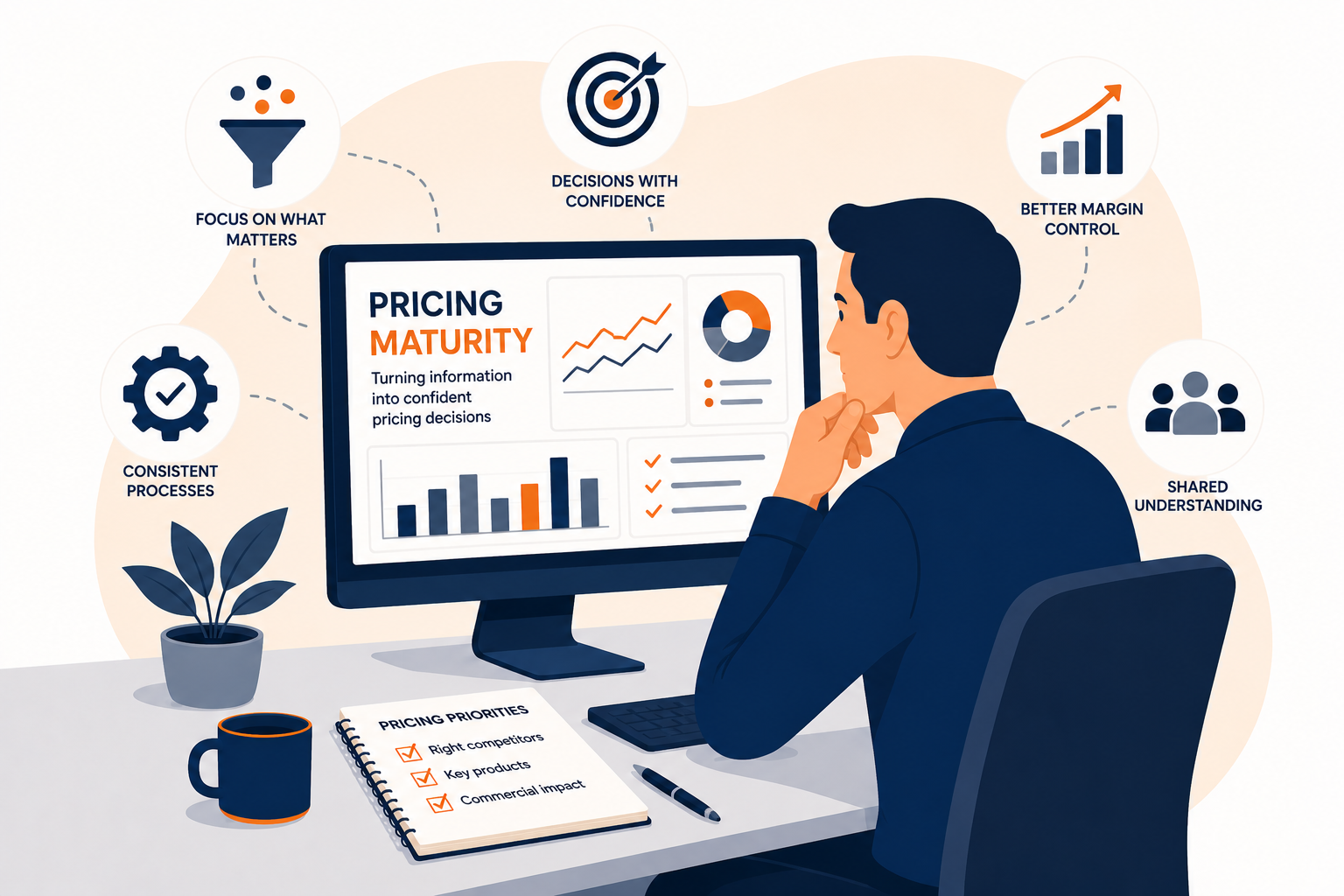
Rather than concentrating solely on the final outcome, they pay close attention to the conditions that create that outcome. They monitor competitor behaviour before sales begin to decline. They understand promotional activity before it creates market pressure. They recognise which products shape customer perception and watch them carefully. They identify changes in stock availability, competitor positioning, and category competitiveness before those changes appear in commercial reporting.
This allows them to move from reactive pricing to proactive pricing.
Instead of responding once performance changes, they are already responding to the market conditions driving those changes.
A Different Way to Think About Pricing Risk
Most pricing risk is not created by a single poor decision.
It develops through a series of small signals that go unnoticed, unchallenged, or unexplored.
That is why one of the most valuable pricing questions retailers can ask is not:
“Did we make the right pricing decision?”
Instead, the better question is:
“What were we missing before we made it?”
By the time a pricing mistake becomes visible in margin, conversion, or sales performance, the underlying issue has often been developing for some time.
The pricing decision simply marks the point where the consequences become impossible to ignore.
A Simple Question to Consider
If a pricing mistake was developing in your business today, would you recognise the warning signs before performance changed?
Or would you only discover the problem once it appeared in your sales, margin, or conversion reports?
For many retailers, the answer says more about their pricing capability than any pricing dashboard ever could.
The strongest pricing teams are not defined by how well they react to pricing mistakes.
They are defined by how early they recognise the conditions that create them.