For years, pricing has been treated as an important commercial function, but not always as a leadership-level capability. It has often sat somewhere between trading, merchandising, finance, and ecommerce. Closely monitored, regularly reviewed, and widely discussed, yet rarely given the same strategic attention as supply chain, digital transformation, or customer experience.
That separation is becoming increasingly difficult to justify.
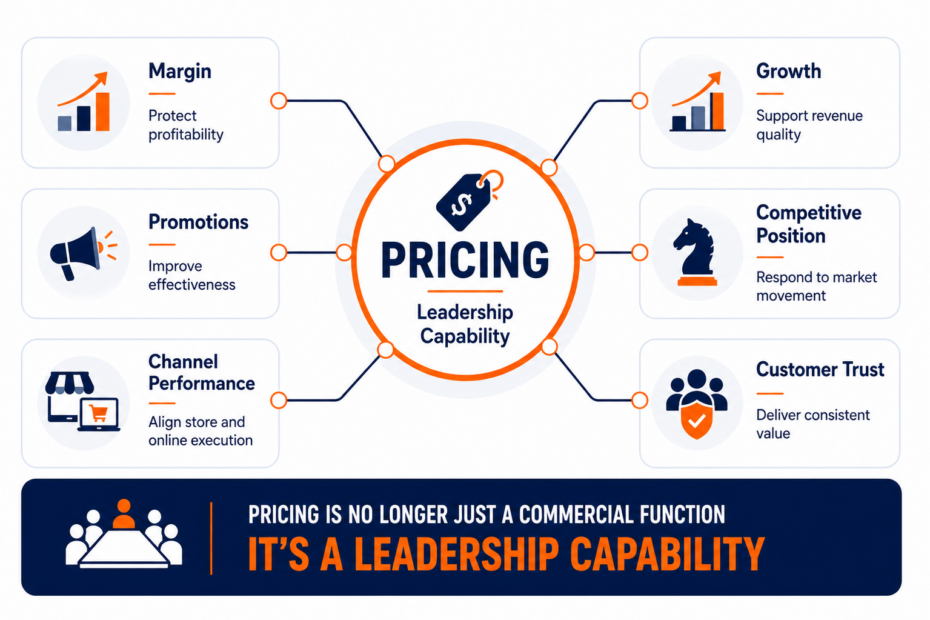
Pricing now influences almost every outcome leadership teams care about. Margin resilience, revenue quality, customer trust, promotional effectiveness, market competitiveness, and brand positioning are all shaped by how pricing decisions are made and executed. The question is no longer whether pricing matters. The question is whether pricing is integrated deeply enough into executive decision-making.
Pricing Is No Longer Just a Commercial Lever
Historically, pricing was often something retailers reviewed after the fact. Teams could assess sales performance, margin movement, competitor activity, and promotional outcomes, then make adjustments accordingly.
That approach no longer fits the pace of modern retail.
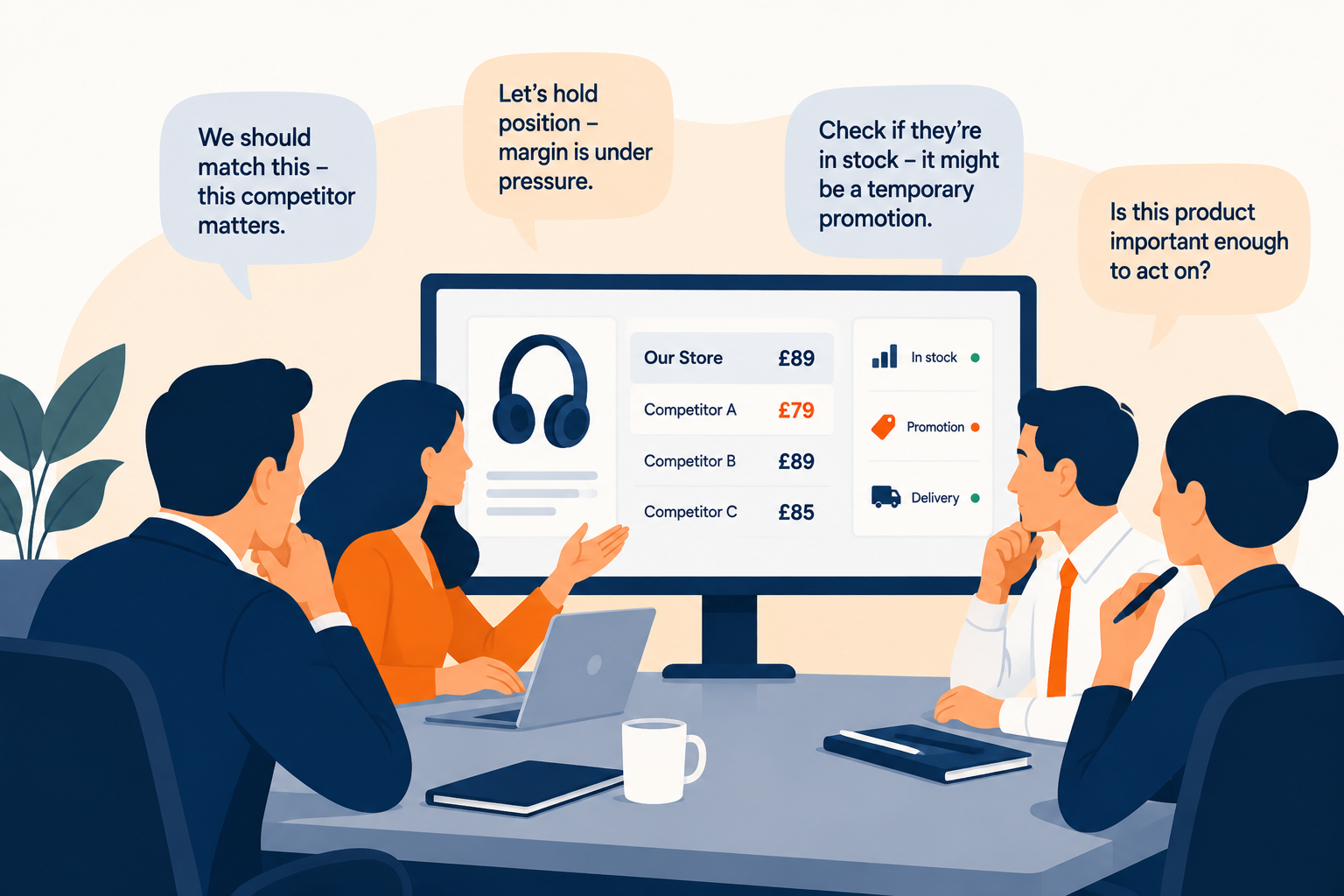
Competitors can move prices instantly. Customers can compare offers across multiple channels in seconds. Promotions can change market expectations faster than many internal reporting cycles can identify them. Small pricing decisions now compound across categories, channels, and customer touchpoints long before leadership teams have an opportunity to respond.
A delayed reaction to competitor activity may appear insignificant in isolation. A promotion that runs slightly longer than planned may seem manageable. A pricing inconsistency between store and online channels may initially look like an operational issue.
Collectively, however, these decisions influence profitability, customer perception, and competitive position. Pricing can no longer be viewed as a downstream execution function. It has become a strategic capability that shapes business performance in real time.
The Boardroom Needs Pricing Visibility Earlier
One of the biggest challenges in retail pricing is that leadership often sees the impact too late.
Margin erosion rarely appears as a single event. Promotional dependency develops gradually. Customer trust weakens before it becomes visible in performance reports. By the time pricing issues reach senior review, the business is often reacting to outcomes rather than influencing them.
This is where executive visibility becomes critical.
Leadership teams do not need to approve every pricing decision, but they do need access to the signals that influence commercial performance. Competitor price movements, promotional pressure, stock availability, local market exposure, channel inconsistency, and changes in customer value perception all provide early indicators of future performance.
Without visibility into these signals, pricing remains operational. With visibility, pricing becomes strategic.
Pricing Touches Too Many Functions to Sit in One Silo
Pricing decisions rarely stay within one department.
A pricing change influences margin performance. A promotion affects stock flow and profitability. Competitive positioning shapes customer perception. A Google Shopping pricing decision can impact marketing efficiency and conversion rates. Store-level pricing inconsistencies can affect customer trust and brand perception.
As a result, pricing now sits across multiple leadership priorities.
Finance teams care about margin protection and profit quality. Commercial leaders focus on revenue growth and competitiveness. Marketing teams are influenced by pricing’s effect on brand positioning and promotional messaging. Ecommerce leaders see pricing through the lens of visibility, conversion, and channel performance. Operations teams must ensure pricing is executed consistently across stores and regions.
When pricing is managed without this cross-functional perspective, decisions become fragmented. Individual teams optimise for their own objectives while customers experience the combined outcome. That is often where misalignment becomes costly.
Governance Matters More Than Control
Bringing pricing into the C-suite does not mean centralising every pricing decision.
In fact, excessive control often slows decision-making and reduces responsiveness.
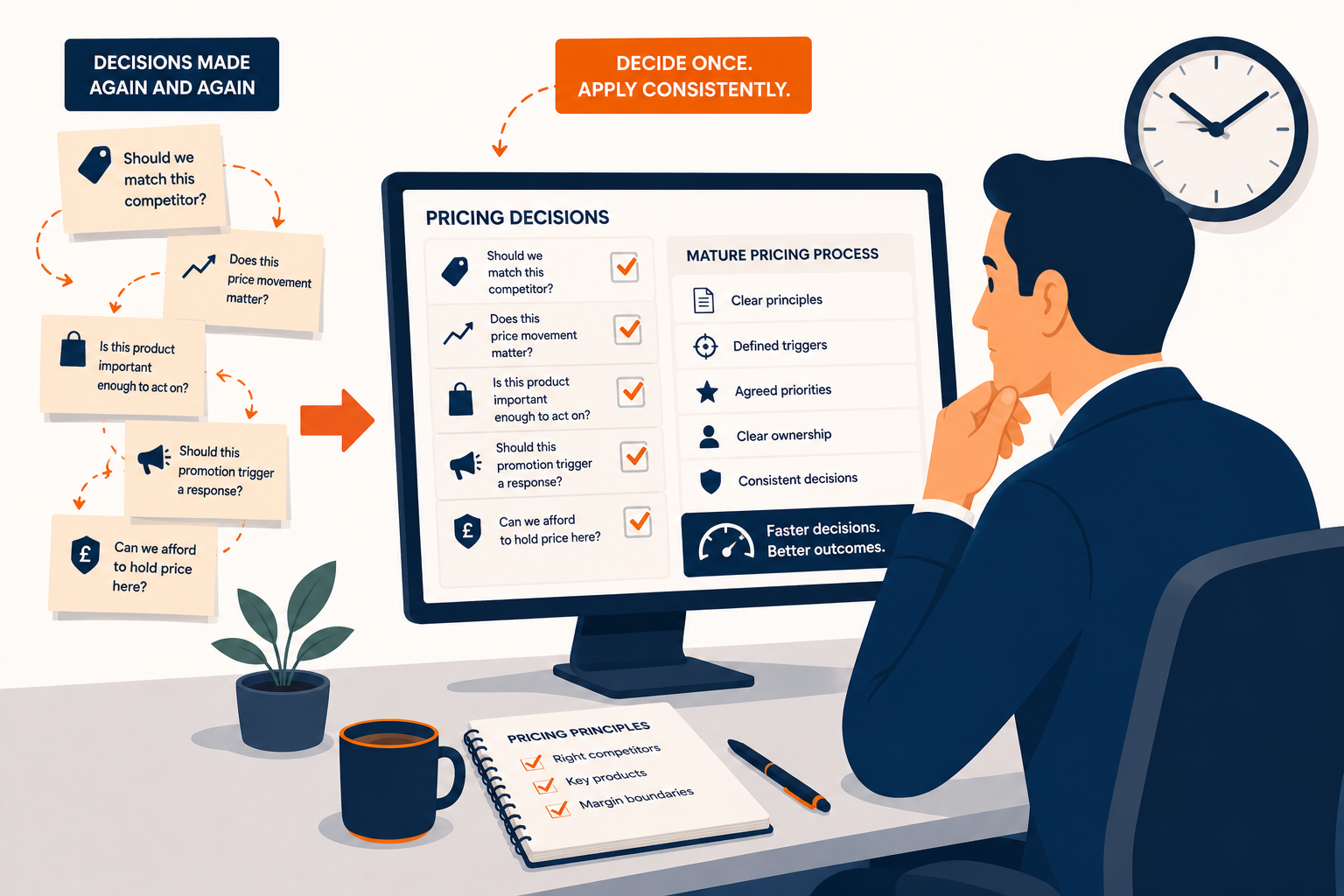
The role of executive ownership is not to manage every pricing action. It is to establish the framework that allows teams to make confident decisions within clearly defined boundaries.
Effective pricing governance defines escalation points, decision ownership, margin guardrails, and commercial priorities. It provides clarity on where teams can act independently and where leadership oversight is required.
As pricing cycles continue to accelerate, governance becomes increasingly important. Without governance, speed creates risk. With too much control, speed disappears altogether.
The strongest retailers find the balance between the two. Teams are empowered to move quickly, but within a framework that protects profitability, customer trust, and brand position.
Technology Alone Will Not Solve the Pricing Problem
Most retailers already have access to more pricing data than ever before. Competitor prices are monitored continuously, dashboards are widely available, and pricing technology has become increasingly sophisticated.
Yet many businesses still struggle to translate visibility into action.
Technology can surface competitor movements, identify price gaps, and generate alerts. What it cannot do on its own is create pricing capability.
Many organisations now have greater visibility than ever before, but decision-making remains slow. Teams hesitate because ownership is unclear. Reports explain what changed but not necessarily why it matters. Alerts highlight activity but fail to provide the context needed for confident action.
This is why pricing requires executive integration.
Technology works best when leadership provides the commercial framework around it. Decisions become easier when teams understand what the business is trying to achieve, which trade-offs matter most, and how pricing should support broader strategic goals.
Without that clarity, pricing technology becomes another reporting tool. With it, technology becomes part of a wider operating model.
Pricing Needs to Be Connected to Business Strategy
A mature pricing function should do more than answer the question, “What should this price be?”
It should help answer broader strategic questions.
Where does the business want to compete aggressively? Where should margin be protected? Which products shape customer value perception? Which competitors matter most? Which promotions generate genuine incremental value? Where are the emerging risks before performance begins to decline?
These are strategic questions because they influence how the business chooses to compete.
Pricing is no longer simply a mechanism for reacting to market conditions. It has become a tool for shaping competitive strategy. Decisions of this nature cannot sit entirely within operational teams. They require executive intent and leadership alignment.
Customer Trust Has Made Pricing a Leadership Issue
Customers pay more attention to pricing than many organisations realise.
They notice when promotions feel unclear. They notice inconsistencies between channels. They notice when discounts become constant. They notice when value feels different online, in-store, or across regions.
While these moments may appear operational internally, customers interpret them as signals about fairness, consistency, and trust.
That makes pricing a customer experience issue as much as a commercial one.
When pricing decisions are aligned, customers experience a coherent value proposition. When pricing becomes fragmented, trust begins to erode. The impact is rarely immediate, but over time it becomes increasingly difficult to maintain confidence and loyalty.
Once customers begin questioning value, the business faces a much larger challenge than a simple pricing adjustment can solve.
What Leadership Pricing Integration Looks Like
Pricing does not need to become a standing agenda item in every board meeting. However, it does need to be integrated into the way leadership reviews performance and manages commercial risk.
In practice, this means connecting pricing visibility to margin management, promotional planning, competitive strategy, customer experience, and channel performance. Leadership teams should be able to identify emerging pricing risks before they appear in financial results and understand how pricing decisions support wider business objectives.
Strong pricing integration typically includes visibility into competitive position, margin exposure, promotional effectiveness, key value item performance, channel consistency, and pricing exceptions that require escalation.
The objective is not more reporting.
The objective is better decision quality.
The Shift From Pricing Function to Pricing Capability
The most significant change taking place in retail pricing is that pricing is no longer simply a function.
It is becoming a capability.
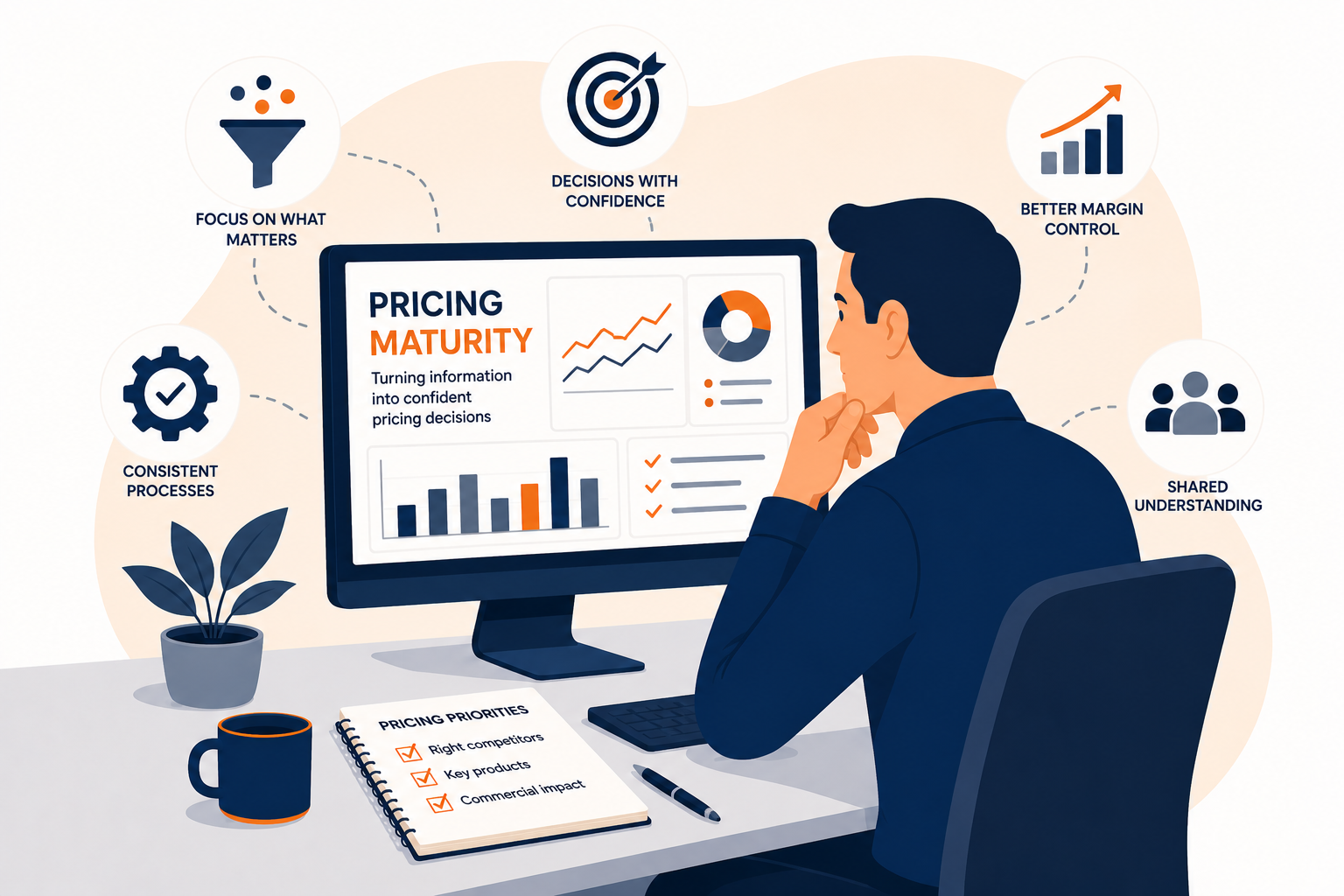
Capabilities require ownership. They require governance, investment, alignment, and leadership attention. Most importantly, they require organisations to focus on pricing before issues become visible in performance.
Retailers that make this shift will not necessarily change prices more often. Instead, they will make pricing decisions with greater confidence, stronger context, and clearer alignment to business goals. They will identify risks earlier, avoid unnecessary promotional pressure, respond to competitors more effectively, and create a more consistent customer experience.
That is what happens when pricing evolves from an operational activity into an executive capability.
Pricing does not need to be controlled from the boardroom.
But it does need to be understood there.
The retailers that continue to view pricing as a tactical lever will often find themselves reviewing its impact after the fact. The retailers that integrate pricing into leadership decision-making will use it to influence margin, growth, customer trust, and competitive position before the consequences are embedded in performance.
The difference is not access to data.
It is leadership ownership.