Retailers often assume pricing maturity comes from better software, more competitor data or a larger pricing team. Those things can help, but they do not determine how mature a pricing capability actually is.
A retailer can have sophisticated technology, detailed reporting and access to large volumes of market information, yet still make slow, inconsistent or reactive pricing decisions. Another retailer may have fewer systems and a smaller team, but operate with clear priorities, trusted information and a repeatable decision making process.
The difference is not the amount of technology available. It is how effectively the business turns information into commercial action. That is what pricing maturity really measures.
Pricing Maturity Is Often Misunderstood
Pricing maturity is sometimes treated as a measure of technical sophistication. Businesses assess the number of reports they produce, the volume of competitor prices they monitor or the level of automation within their pricing function.
These capabilities can support better pricing, but they only create value when they improve the decisions being made. A pricing team may receive detailed competitor reports every morning, but if people still spend hours checking which changes matter, debating what action to take or waiting for approval, the reporting has not created a mature process. It has created greater visibility without greater confidence.
Pricing maturity is better understood through the behaviour of the organisation. How quickly can the team identify an important commercial signal? How consistently do different people respond to the same situation? Is there a shared understanding of which products and competitors matter most? Can the business explain why a price has changed, or why it has been held?
Those questions reveal far more about maturity than the number of systems being used.
More Data Does Not Automatically Create Better Pricing
Most retailers now have access to more pricing information than ever before. Competitor prices, promotions, stock availability, delivery costs and marketplace activity can all be monitored at scale.
The challenge is no longer simply seeing what has changed. It is deciding what matters.
Without a clear process, more data can create more work. Every competitor movement becomes another item to review. Every price difference requires an explanation. Every report creates another possible action. Teams become busier, but not necessarily more effective.
A mature pricing process filters information through commercial priorities. It helps teams understand which changes require immediate action, which should be monitored and which are unlikely to affect the customer or the wider business.
The value does not come from collecting every possible signal. It comes from acting consistently on the signals that matter.
Pricing Maturity Is About Decision Quality
The clearest measure of pricing maturity is the quality of the decisions a business makes.
Mature pricing organisations tend to make decisions with greater confidence because the information, ownership and decision criteria are clear. They are less dependent on individual judgement and less likely to repeat the same debate every time a competitor changes price.
They can respond quickly where speed is commercially important while also holding position when reacting would create unnecessary margin loss.
This improves consistency across categories and teams. Commercial discussions become more focused because people are working from a shared understanding of the market. Operational effort is reduced because teams spend less time validating information and revisiting previous decisions.
Pricing also becomes better connected to wider objectives such as margin protection, customer value, promotional strategy and category performance.
The result is not simply better reporting. It is better commercial control.
Company Size Does Not Determine Pricing Maturity
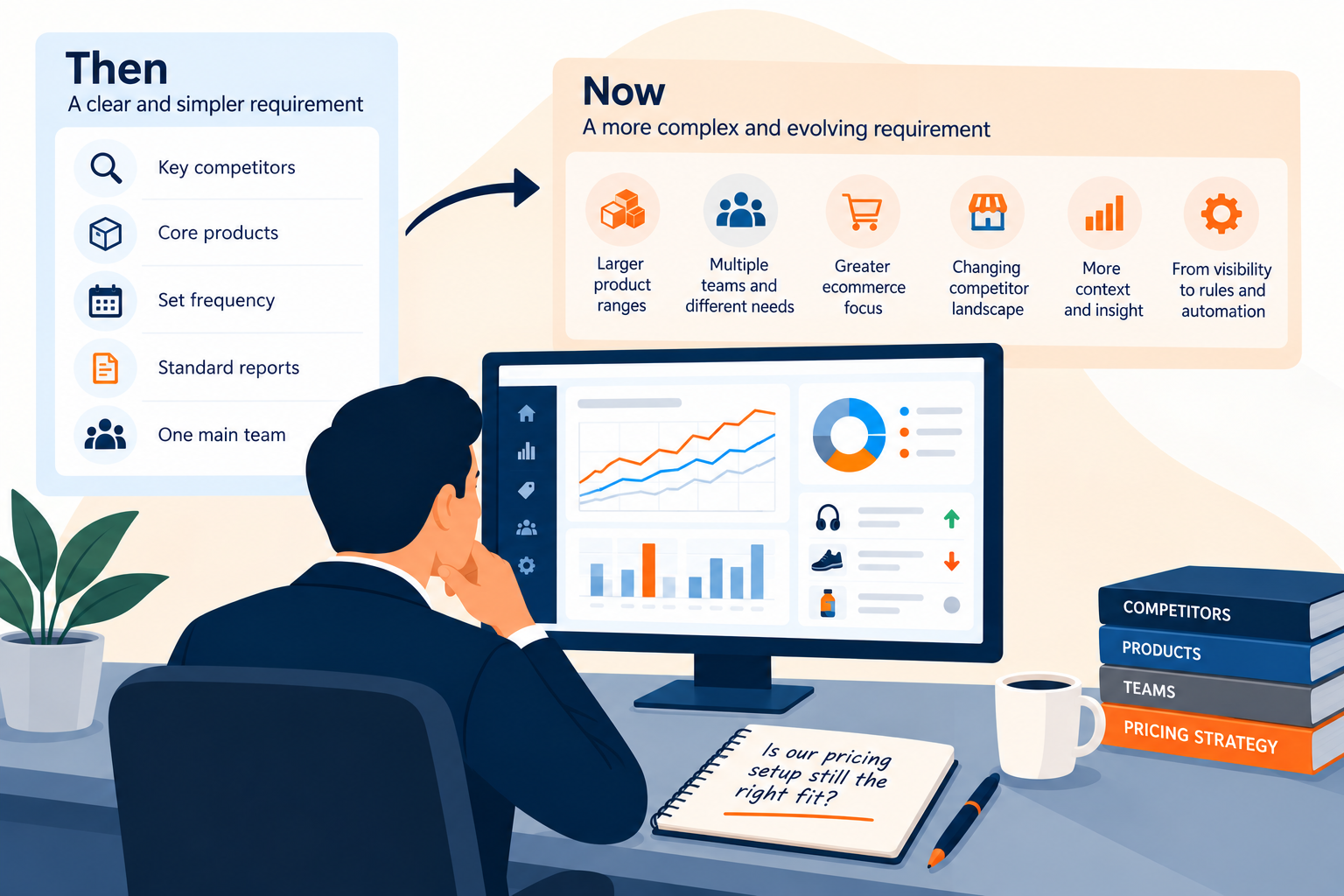
Large retailers often have access to greater resources, including specialist pricing teams, sophisticated systems and detailed governance structures. However, scale can also create complexity.
Decisions may pass through several departments. Ownership can become unclear. Different categories may apply different rules. Reports may be widely available but interpreted differently across the business.
A smaller retailer can sometimes operate more maturely because its decision making process is clearer. People know which competitors matter, understand the commercial role of each category and know which products have the greatest influence on customer price perception. They also know who has authority to act.
This does not mean smaller businesses are automatically more mature. It means maturity is not determined by headcount, turnover or technology spend. It is determined by how well the pricing process works.
Pricing Capability Develops Over Time
Retail pricing maturity is not a simple choice between being mature or immature. It develops over time.
At the earliest stage, pricing is often reactive. Decisions are driven by immediate pressure from competitor movements, sales changes or internal requests. Knowledge may sit with individuals rather than within an agreed process.
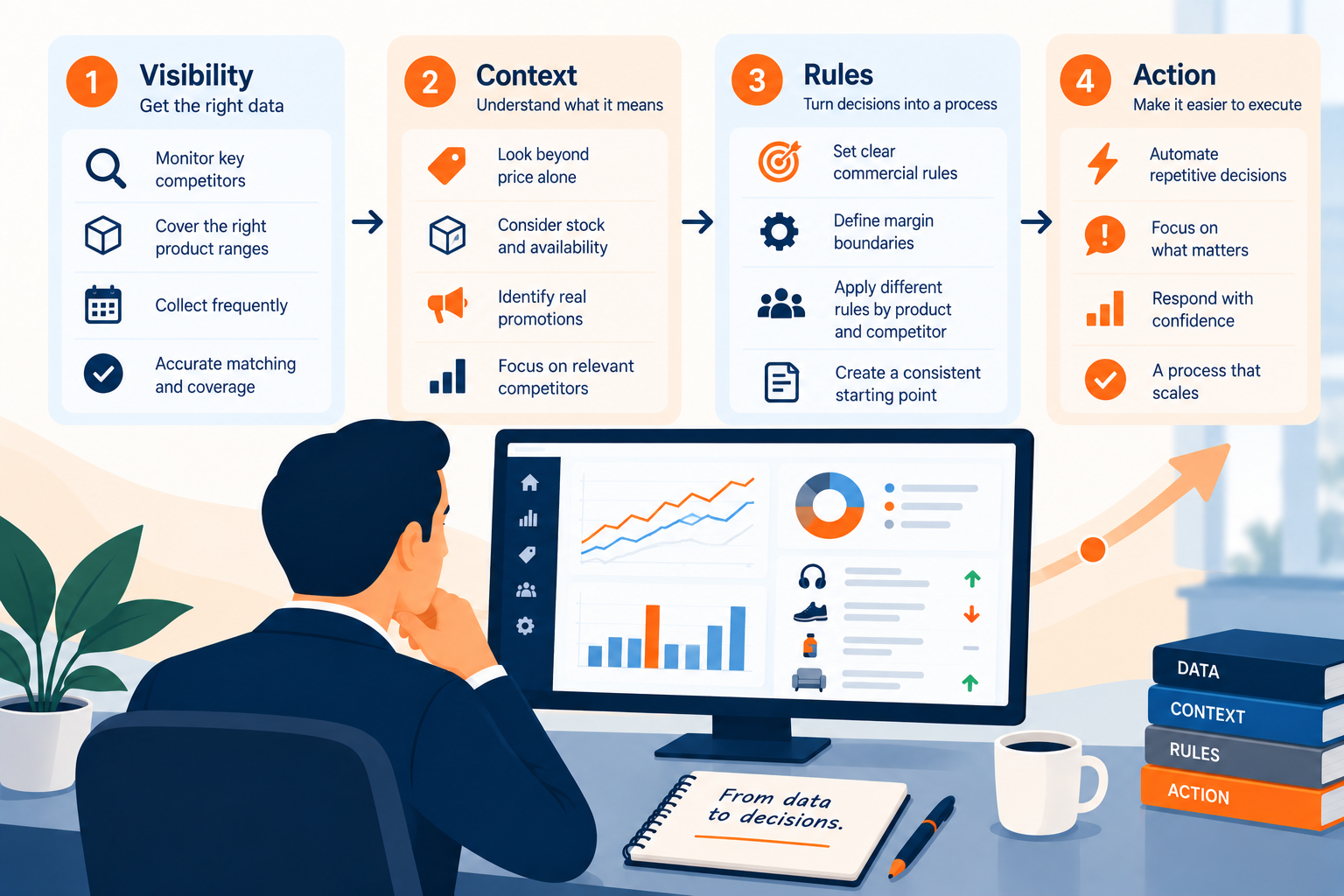
As visibility improves, the business begins monitoring the market more consistently. Reports become more structured and competitor activity becomes easier to identify. Teams can see more clearly what is happening, but may still struggle to determine what deserves action.
The next step is greater consistency. Teams begin applying shared priorities, decision rules and escalation processes. Information becomes easier to interpret because the business has agreed how it should be used.
As pricing becomes more integrated, it connects more closely with commercial planning, ecommerce, trading, category management and wider business objectives. At the most advanced level, pricing supports strategic decision making. Teams can respond quickly without becoming reactive because they understand the commercial meaning behind market movements and can adapt as conditions change.
Each stage represents an improvement in how information becomes action.
Why Retailers Become Stuck
Many retailers improve visibility but struggle to progress beyond it.
They invest in better monitoring and reporting, yet the decision making process remains largely unchanged. The team can see more competitor movements, but people still disagree about their importance. Pricing information becomes available faster, but approvals continue to slow action. New reports identify more opportunities, but ownership remains unclear.
This creates a gap between information and execution.
The business may appear to have a mature pricing capability because it has good data. In practice, teams can still rely heavily on spreadsheets, individual experience and repeated internal discussion.
Progress becomes difficult when the problem is treated mainly as a technology issue. The next step is often not another report or another source of data. It is improving the process around the information already available.
Progress Comes From Improving the Process
Retailers do not need to transform every aspect of pricing at once. Maturity develops through practical improvements.
A business may begin by reviewing whether it is monitoring the competitors that genuinely influence customer behaviour. It may define which products require the greatest pricing attention, agree when a competitor movement should trigger action and clarify who owns different types of decisions.
These changes can appear relatively small, but they reduce uncertainty and make decisions easier to repeat.
Over time, the benefits compound. Teams spend less time debating the same issues, pricing becomes more consistent and commercial decisions are made with greater confidence. The process also becomes less dependent on individual people and more resilient as the organisation grows.
Mature Pricing Reduces Reactive Decision Making
Reactive pricing often happens when teams lack context.
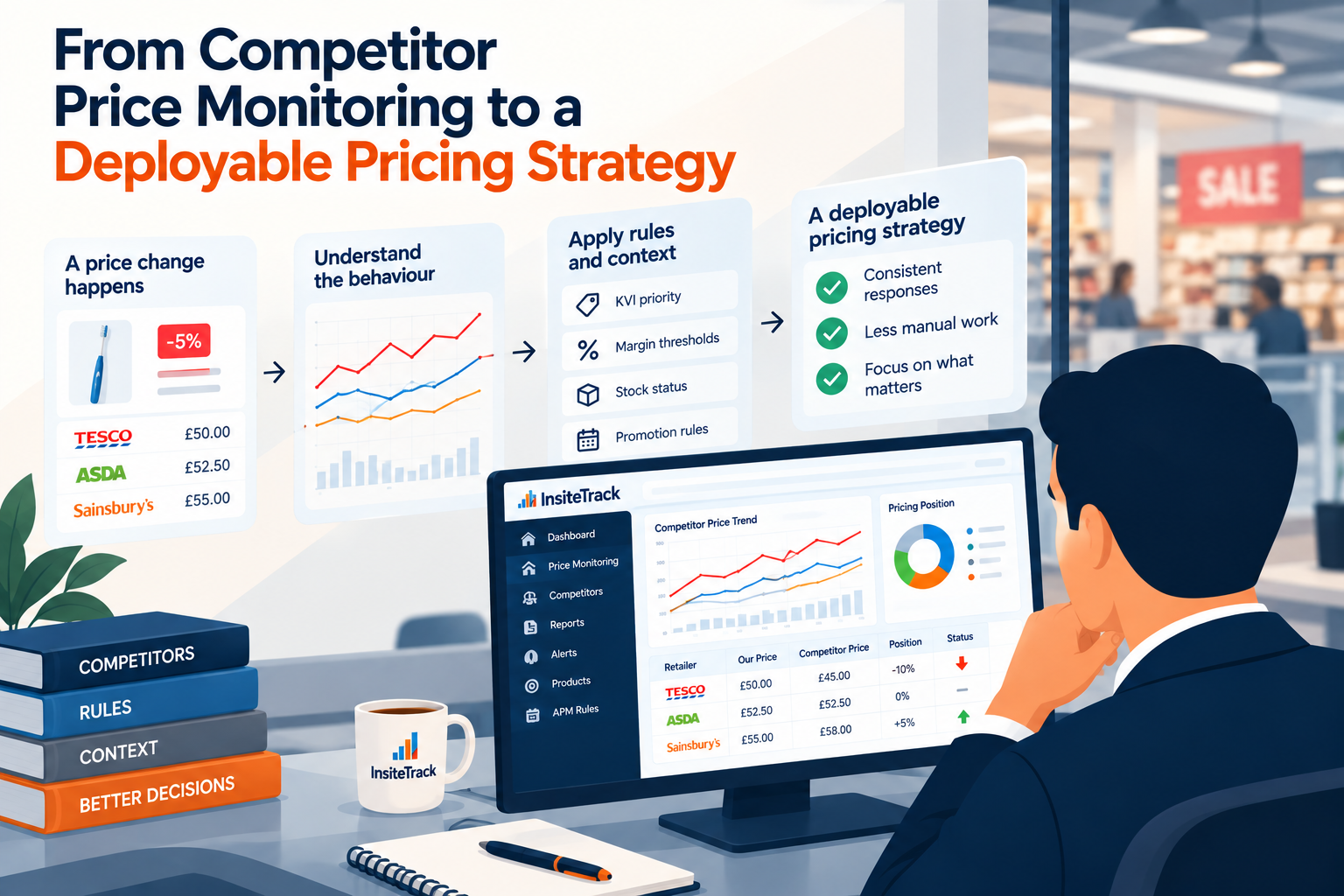
A competitor reduces its price, so the immediate instinct is to match. Sales fall, so a promotion is introduced. Conversion changes, so another pricing review begins.
Those responses may be appropriate. The issue is whether the business understands why it is acting.
A mature pricing process introduces enough structure to distinguish meaningful market movements from temporary noise. Teams consider whether the competitor is relevant, whether the product influences customer value perception and whether the movement is likely to affect demand.
They also take into account margin, stock availability, promotional activity and wider category performance.
This does not make the business slower. It makes the response more deliberate.
Knowing Your Current Position Matters
Retailers often begin improvement projects by deciding what they want to change. A better starting point is understanding how the current process actually operates.
Where does pricing information come from? How is it validated? Who decides what matters? How consistently are decisions made across teams? What causes delays? Which actions still depend heavily on individual knowledge?
Without this baseline, it is difficult to identify the right next step.
A retailer may invest in automation when the greater problem is unclear ownership. It may increase competitor coverage when teams are already struggling to prioritise the information available. It may add more reporting when the business really needs clearer decision rules.
Understanding the current level of maturity helps prevent improvement efforts from solving the wrong problem.
The Goal Is Progress, Not Perfection
Pricing maturity should not be treated as a score that businesses either pass or fail.
Every retailer operates somewhere on the journey, and different categories may even sit at different levels within the same organisation.
The objective is not to reach the most advanced stage immediately. It is to understand what is currently working, where friction exists and which improvement would create the greatest commercial value.
For one retailer, that may mean improving the reliability of competitor information. For another, it may mean creating more consistent pricing rules. For a more advanced business, it may involve connecting pricing more closely with commercial planning and execution.
The next step will be different for every organisation, but improvement becomes much easier once the starting point is clear.
The Pricing Maturity Assessment
Pricing maturity is not defined by how much information a retailer collects. It is defined by what the business can do with that information.
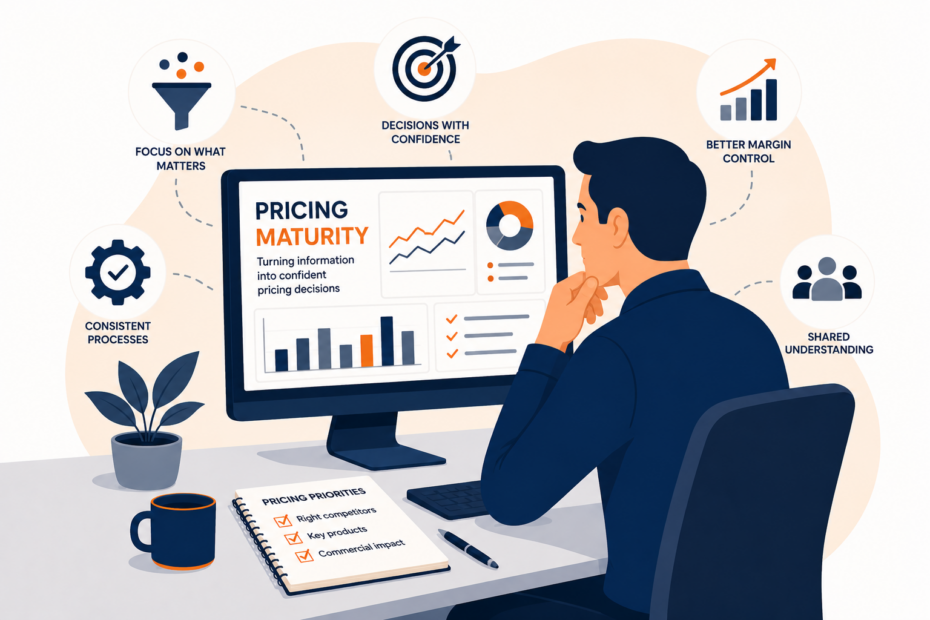
The strongest pricing organisations make decisions with confidence, consistency and commercial purpose. They know which signals matter, understand when to act and can explain why a decision has been made.
Technology can support every part of that process, but it does not create maturity on its own. Maturity comes from improving how people, information and processes work together.
If you have never considered where your pricing capability currently sits, the Retail Pricing Intelligence Maturity Assessment provides a practical place to start. It can help identify your current stage, highlight the areas creating friction and suggest where the next improvement may have the greatest impact.

How Mature Is Your Pricing Intelligence?
Take our 5-minute assessment to see how trusted, usable and embedded your pricing intelligence is today. You’ll receive a personalised summary with your maturity stage, key focus areas and practical next steps.