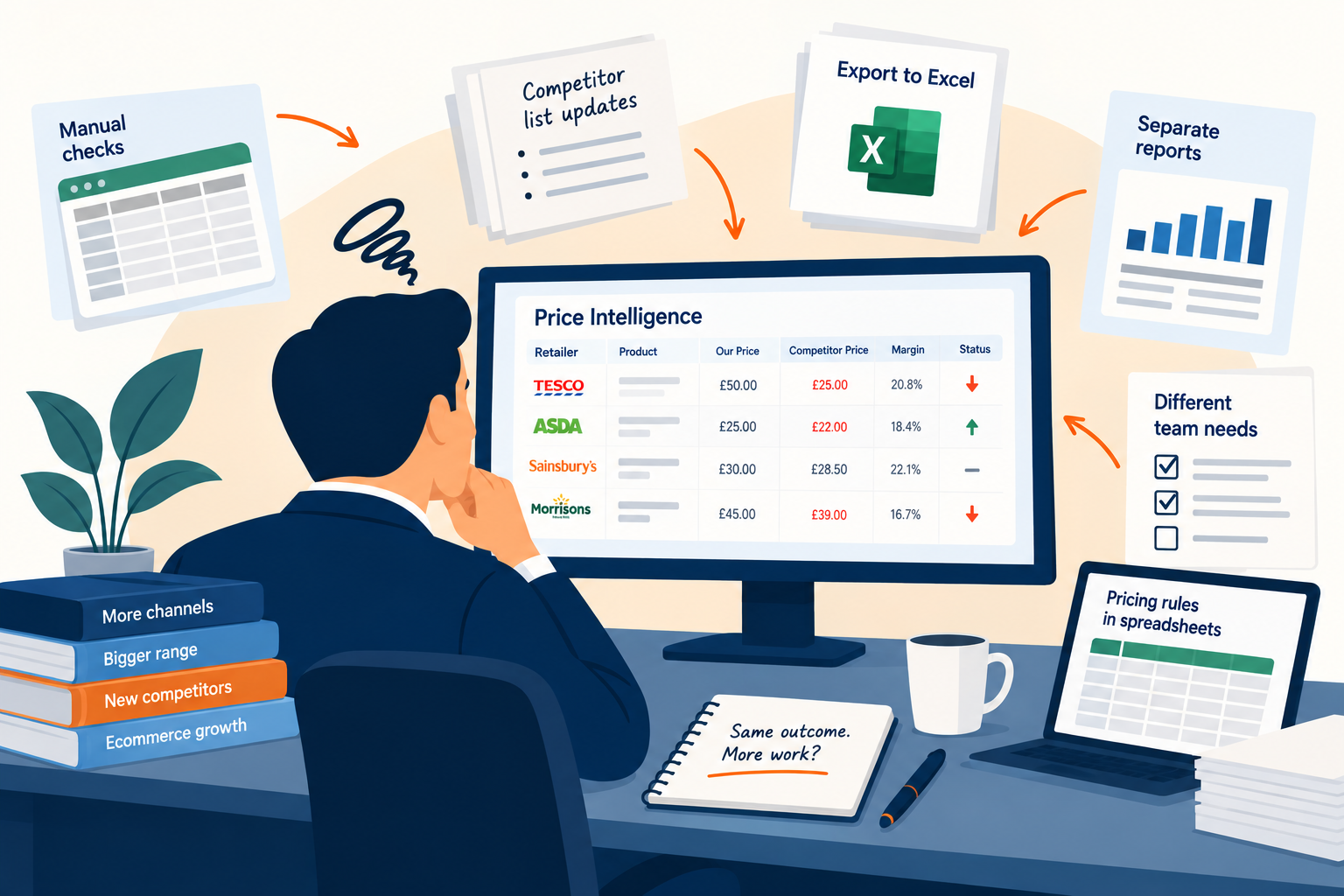
For many retailers, price matching has become almost instinctive.
A competitor drops the price of a product and the immediate question becomes, “Should we match it?” It feels like the safest response. Matching a competitor appears to protect sales, maintain competitiveness, and reduce the risk of losing customers.
But the strongest pricing teams approach competitor activity differently.
They understand that not every price movement deserves a response. More importantly, they recognise that reacting too quickly can sometimes do more commercial damage than standing still.
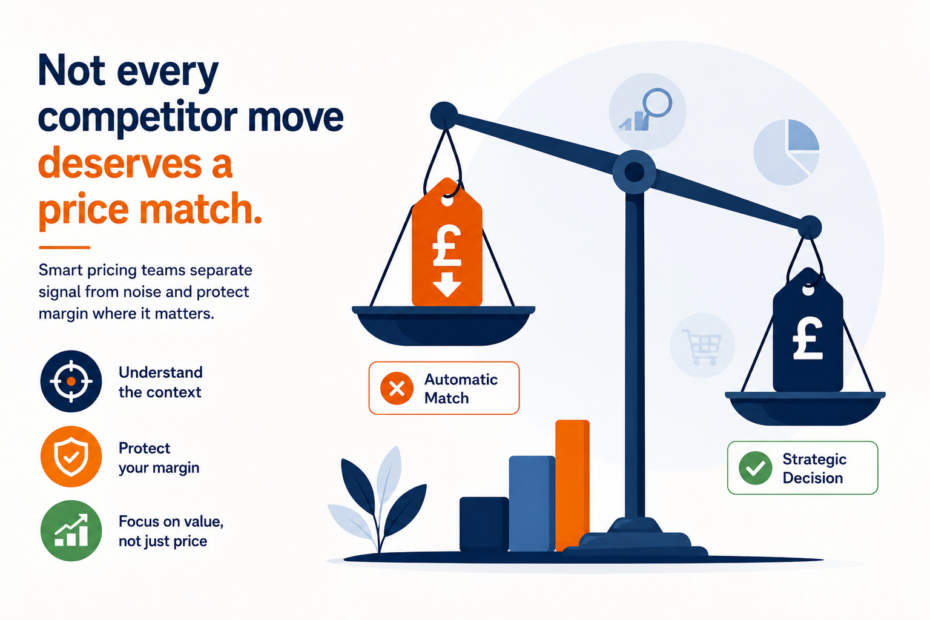
Competitive pricing is not about matching every move the market makes. It is about understanding which changes genuinely matter, which ones are simply background noise, and when protecting margin is actually the stronger commercial decision.
Price Matching Is Not a Pricing Strategy
Price matching is often positioned as a customer-friendly policy, but behind the scenes it can easily become a reactive pricing habit.
When retailers automatically mirror competitor pricing, they hand control of their pricing strategy to someone else. Instead of asking, “What is the right price for our business?” the conversation becomes, “What has our competitor done today?”
Over time, this creates a business that follows the market instead of leading it.
The most effective pricing teams don’t ignore competitor activity, but they don’t allow it to dictate every decision either. Competitor pricing is treated as one input into a much broader commercial picture.
Every Competitor Move Has Context
One of the biggest pricing mistakes retailers make is assuming every competitor price change represents genuine competitive pressure.
In reality, the market is rarely that simple.
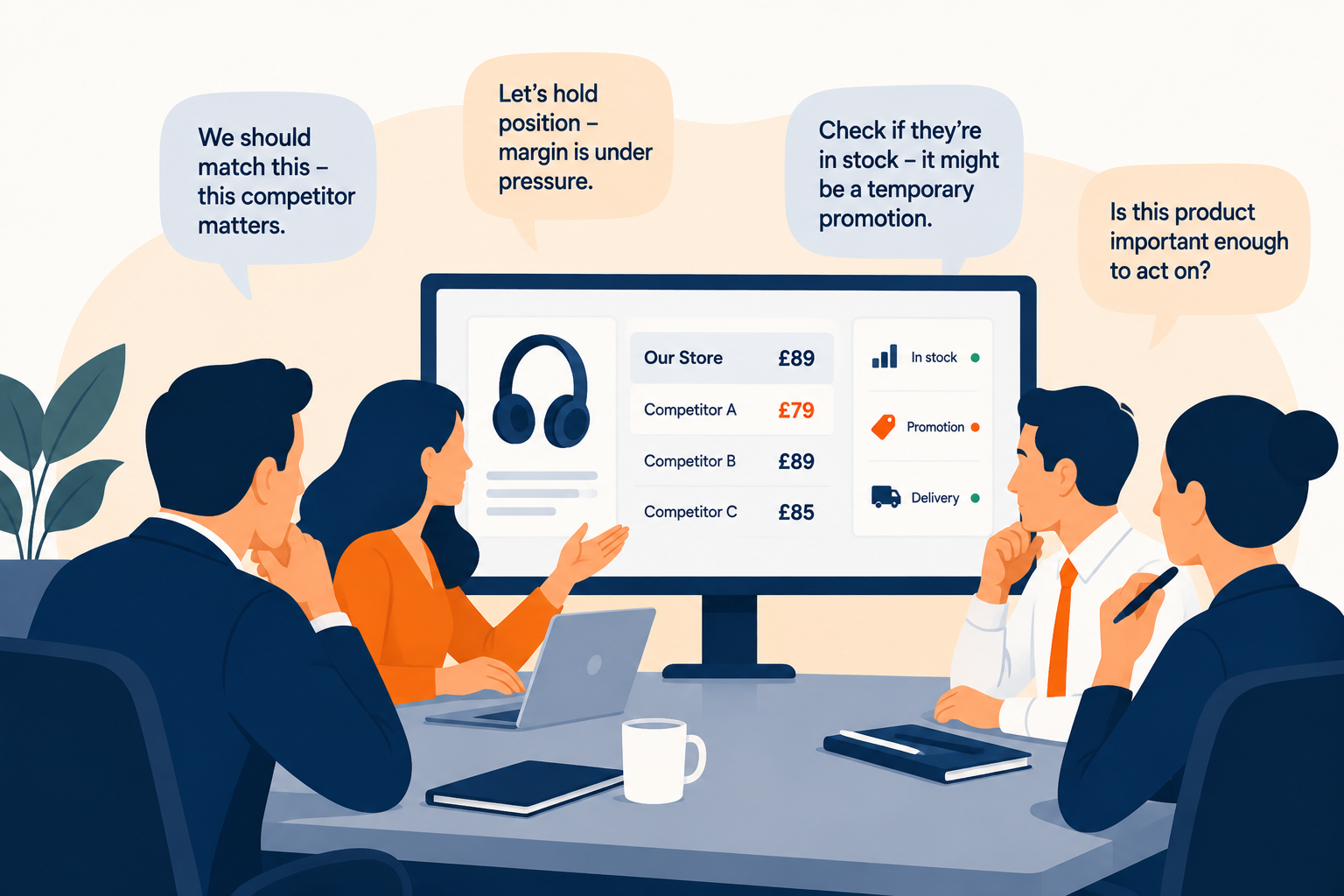
A price reduction could be driven by excess stock, a short-term promotional campaign, a regional pricing strategy, or an attempt to clear discontinued products. A competitor may even be willing to sacrifice margin to achieve an objective that has little relevance to your own business.
Without understanding the context behind a price movement, matching it can create unnecessary commercial damage.
A competitor’s lower price is a signal.
It is not automatically a reason to respond.
Protecting Margin Can Be the Strongest Competitive Move
Retailers often focus on the sales they might lose by holding their price.
Far fewer consider the profit they could lose by reacting unnecessarily.
Reducing prices across an entire category because one competitor changed the price of a handful of products can quickly erode margin without creating meaningful additional demand.
In many situations, customers may never have noticed the competitor’s pricing in the first place. In others, factors such as availability, delivery, customer service, brand reputation, or the overall shopping experience may already justify the difference.
Price is important.
But it is rarely the only reason customers choose where to buy.
The retailers that consistently protect profitability understand that value extends well beyond the price tag.
Separating Market Signals From Market Noise
Modern retail generates an enormous amount of pricing information.
Competitors launch promotions every day. Prices fluctuate continuously. Marketplace sellers appear and disappear. Discounting comes and goes. New reports highlight fresh opportunities and risks almost constantly.
The challenge is no longer accessing pricing data.
It is deciding which movements actually matter.
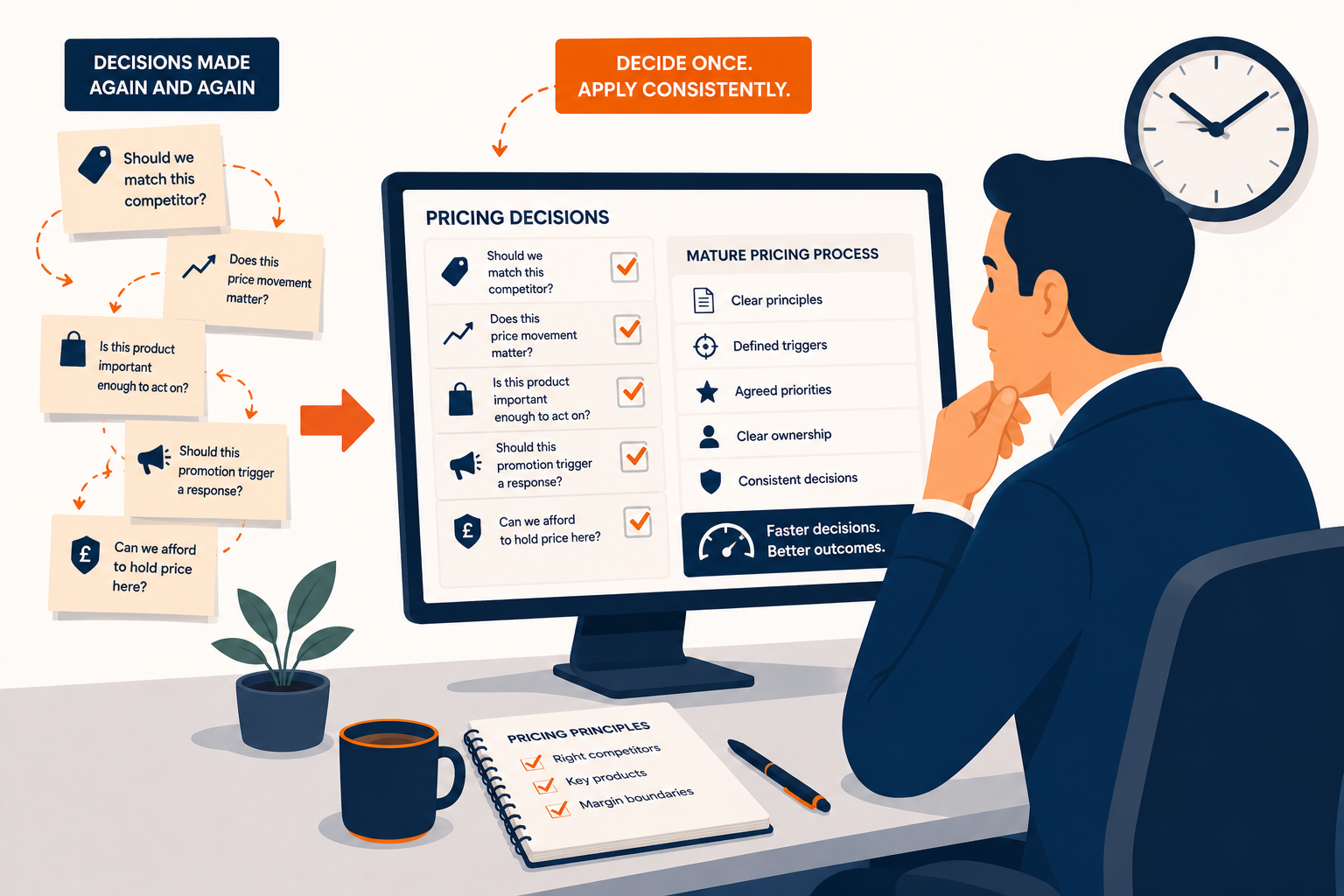
Strong pricing teams separate meaningful market signals from background noise by asking better questions.
Is this competitor commercially relevant?
Is the movement part of a wider trend or an isolated event?
Is the competitor currently in stock?
Does this involve a Key Value Item?
Will customers actually compare this product?
Does this change how customers perceive value?
Only after answering these questions do they decide whether any pricing action is required.
Customer Behaviour Should Drive Pricing Decisions
The most effective pricing decisions begin with understanding the customer rather than simply reacting to competitors.
Retailers need to consider whether customers are likely to notice the price difference, whether the product influences price perception, and whether matching the competitor would genuinely improve competitiveness.
Not every product carries the same commercial importance.
Some products have a significant influence on how customers perceive overall value.
Others have very little impact on purchasing behaviour.
Treating every competitor price movement equally often leads to unnecessary pricing activity that creates work without creating value.
The retailers that consistently outperform understand where pricing matters most and where they can confidently hold their position.
Confidence Comes From Context
One reason many retailers overreact to competitor pricing is uncertainty.
When teams lack confidence in the information available, matching a competitor often feels like the least risky option.
Ironically, it can be one of the riskiest.
Confident pricing decisions come from understanding the wider commercial context, including promotions, stock availability, customer behaviour, product visibility, local market conditions, and the strategic importance of each product.
The more context teams have, the less likely they are to respond unnecessarily.
Instead of reacting to every movement, they focus only on those that genuinely affect commercial performance.
Good Pricing Teams Are Selectively Reactive
Being responsive to the market is important.
Being reactive to everything is expensive.
The strongest pricing teams are not measured by how quickly they match competitors. They are measured by how consistently they make good decisions.
Sometimes that means responding immediately.
Sometimes it means waiting.
Sometimes it means protecting margin because the competitor’s move is unlikely to influence customer behaviour at all.
Knowing the difference is one of the clearest signs of pricing maturity.
Ask Better Questions Before Changing Prices
Instead of asking:
“Should we match this competitor?”
Ask:
“What is this competitor move actually telling us?”
That small change in thinking transforms pricing from a reactive process into a strategic capability.
It encourages teams to understand the market before changing prices, rather than allowing every competitor movement to dictate their commercial decisions.
The retailers that consistently outperform are rarely those responding to every market movement.
They are the ones that know which movements deserve a response and which ones can safely be ignored.
Final Thought
Competitive pricing is not about winning every individual price comparison.
It is about making deliberate pricing decisions that support long-term growth, protect margin, and reinforce customer value.
Sometimes that means matching the market.
Sometimes it means leading it.
And sometimes, the smartest pricing decision a retailer can make is choosing not to change the price at all.