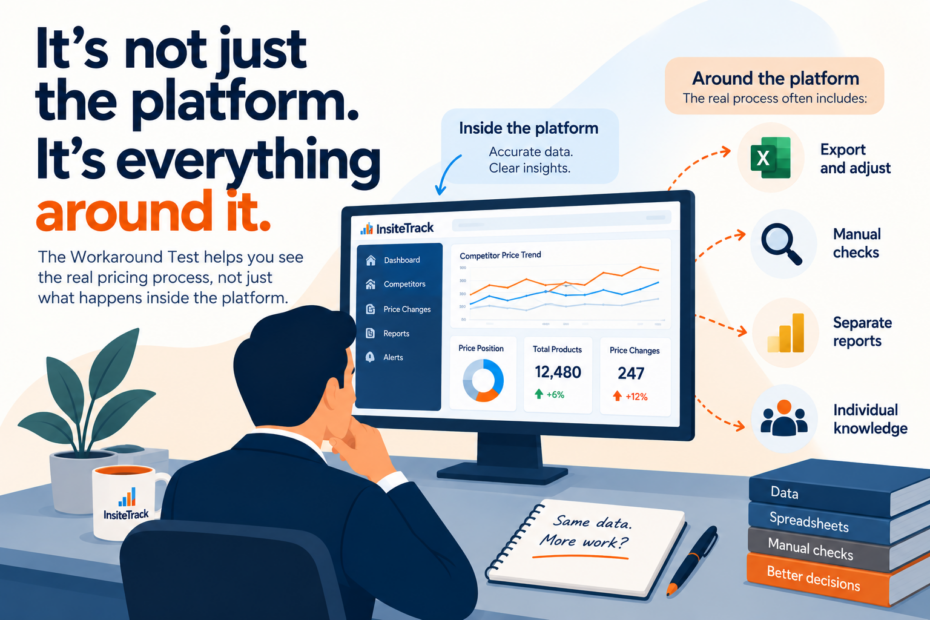
Most retailers would probably judge a pricing platform by what happens inside it.
Does it collect the right competitor prices? Are the reports accurate? Can teams see the information they need? Does the system update frequently enough?
Those are sensible questions, but they only tell part of the story.
A more revealing question is what has been built around the platform since it was introduced.
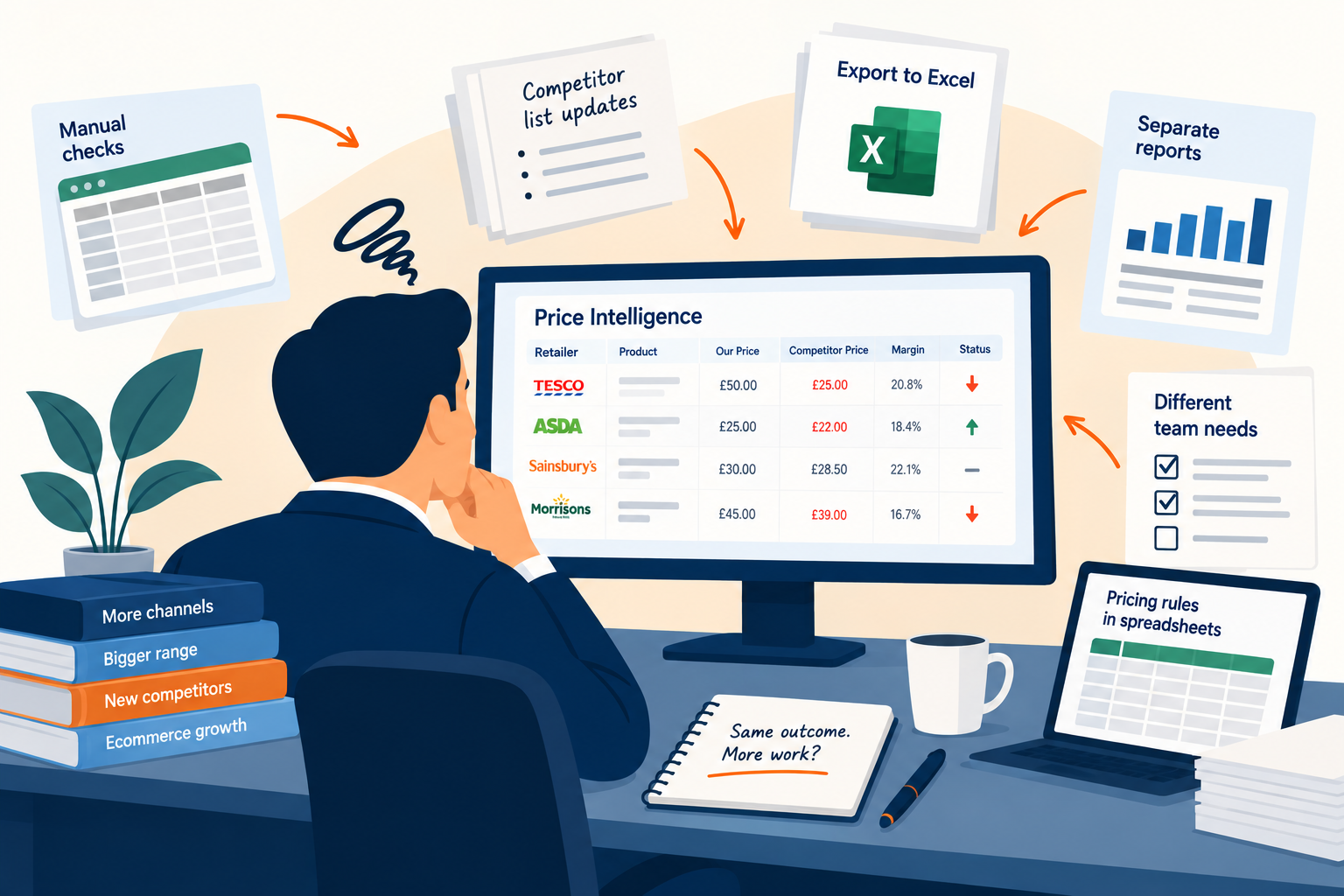
Perhaps someone exports a report into Excel every morning before the wider team can use it. Certain competitors may still be checked manually. Pricing rules might live in a separate spreadsheet. Reports may be rebuilt in Power BI because different teams need the information presented another way.
None of those things automatically means the platform is poor. They may simply indicate that the real pricing process has evolved beyond the original setup.
That is the basis of the Workaround Test. If you want to understand how well your pricing technology fits the business today, look beyond what happens inside the platform and examine everything your team still needs to do around it.
Workarounds Often Start for Good Reasons
Most workarounds begin by solving a genuine problem.
A Category Manager needs more context before acting, so they add information to a spreadsheet. A particular competitor becomes more important, but does not fit neatly within the current monitoring setup, so somebody checks it manually. A senior team wants a different view of pricing performance, so an existing report is reshaped before being shared.
Each decision makes sense at the time.
The difficulty is that these additions can accumulate quietly. What starts as a small adjustment becomes part of the standard workflow. New people join the team and learn that this is simply how the process works.
Several years later, the organisation may be operating a pricing process that looks very different from the one originally designed. The platform is still there, but the real process now includes spreadsheets, manual validation, additional reports and knowledge held by individual people.
That is worth paying attention to.
The Real Pricing System May Be Bigger Than the Platform
Businesses often think of the software as the system. In practice, the system is everything required to reach a pricing decision.
If competitor data needs to be exported, checked and reformatted before it becomes useful, those steps are part of the pricing process too. If certain products are reviewed manually because they are considered more important, that logic is part of the process. If experienced people know which competitor movements can safely be ignored, that knowledge is part of it as well.
Looking at the full workflow changes how pricing technology should be evaluated.
The question becomes less about whether the platform technically provides the data and more about how much additional effort is required before that data becomes useful.
A platform can therefore be functioning exactly as designed while the wider pricing process becomes increasingly dependent on workarounds.
Manual Work Is Not Always the Problem
It is important not to treat every manual step as a failure.
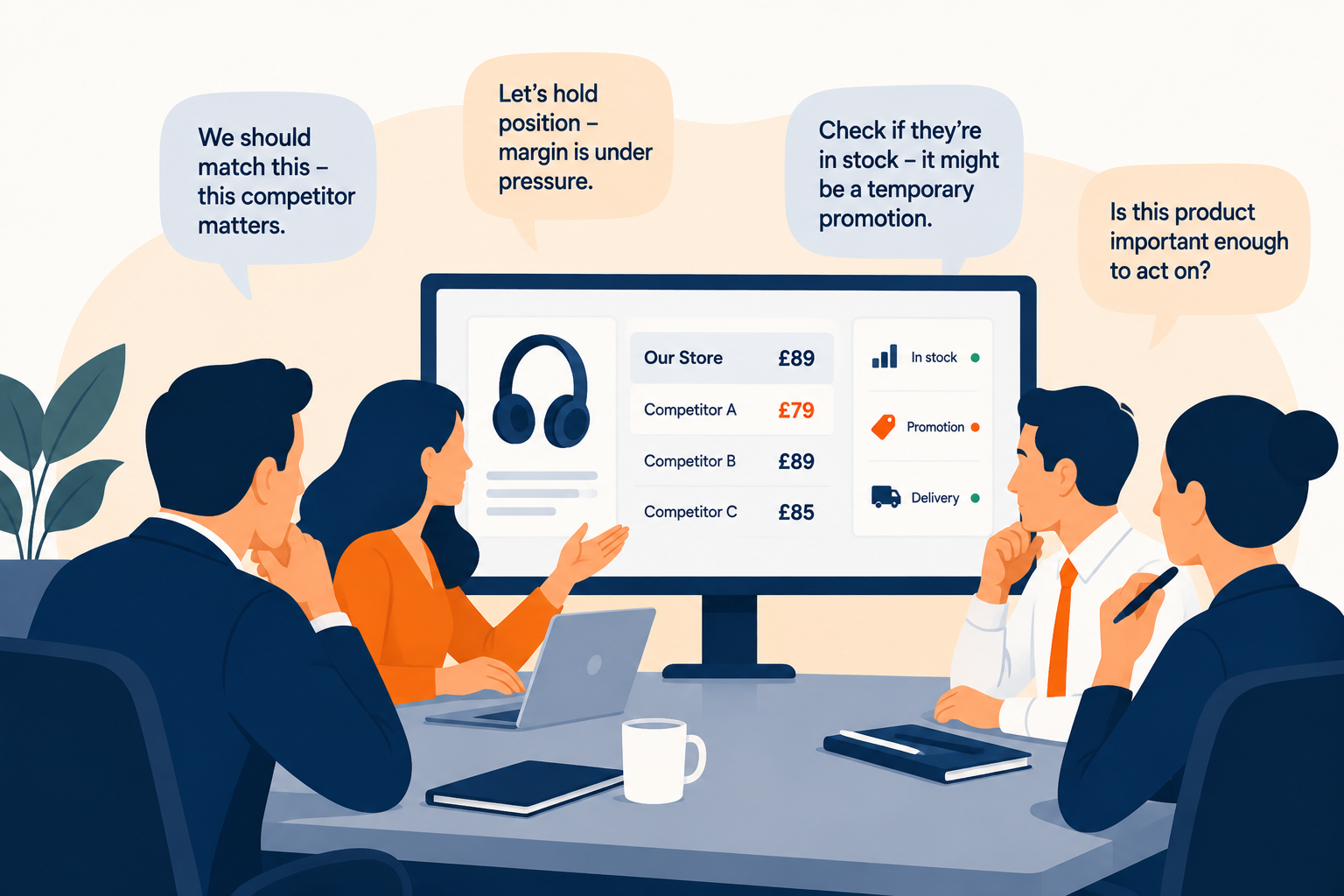
There will always be areas where human judgement adds value. A Pricing Manager may want to review an unusual competitor movement before responding. A Category Manager may deliberately add context to a strategically important product. Commercial teams may occasionally need bespoke analysis that would not make sense to automate.
The more useful question is why the manual work exists.
If it improves the quality of the decision, it may be valuable. If people are repeatedly reformatting reports, checking whether data is correct, reconciling information or rebuilding the same analysis every week, the manual effort may be revealing something about operational fit.
That distinction matters.
Repeated Workarounds Become Hidden Costs
Most businesses would notice a major system failure quickly. Workarounds are harder to see because their cost is distributed across the team.
Ten minutes checking competitor prices may not sound significant. Neither does fifteen minutes adjusting a report or maintaining another spreadsheet. Multiply those activities across categories, people and working days, and the impact becomes much more meaningful.
There is also a less visible cost: decision speed.
If people need to validate information before trusting it, decisions slow down. If different teams reshape the data in different ways, they may reach different conclusions. If pricing logic sits in spreadsheets and individual experience, the process becomes increasingly dependent on who happens to be working at the time.
At that point, operational friction starts affecting more than workload. It starts affecting consistency and confidence as well.
Your Business May Have Changed More Than Your Platform
The Workaround Test becomes particularly useful when a pricing setup has been in place for several years.
Retail businesses rarely stay the same for that long. Ranges expand, new competitors enter the market, ecommerce grows, channels change, category structures evolve and pricing responsibilities move between teams.
The requirement changes with all of that.
The question is whether the setup has changed at the same pace.
If the platform was originally designed around one competitor set, one reporting structure and one way of making pricing decisions, it may gradually become less aligned with the way the business now operates.
That does not mean the original decision was wrong. The solution may have been exactly what the retailer needed at the time.
Operational fit can simply deteriorate as the business evolves.
Workarounds Can Reveal Where Pricing Maturity Is Being Held Back
There is also a connection between workarounds and pricing maturity.
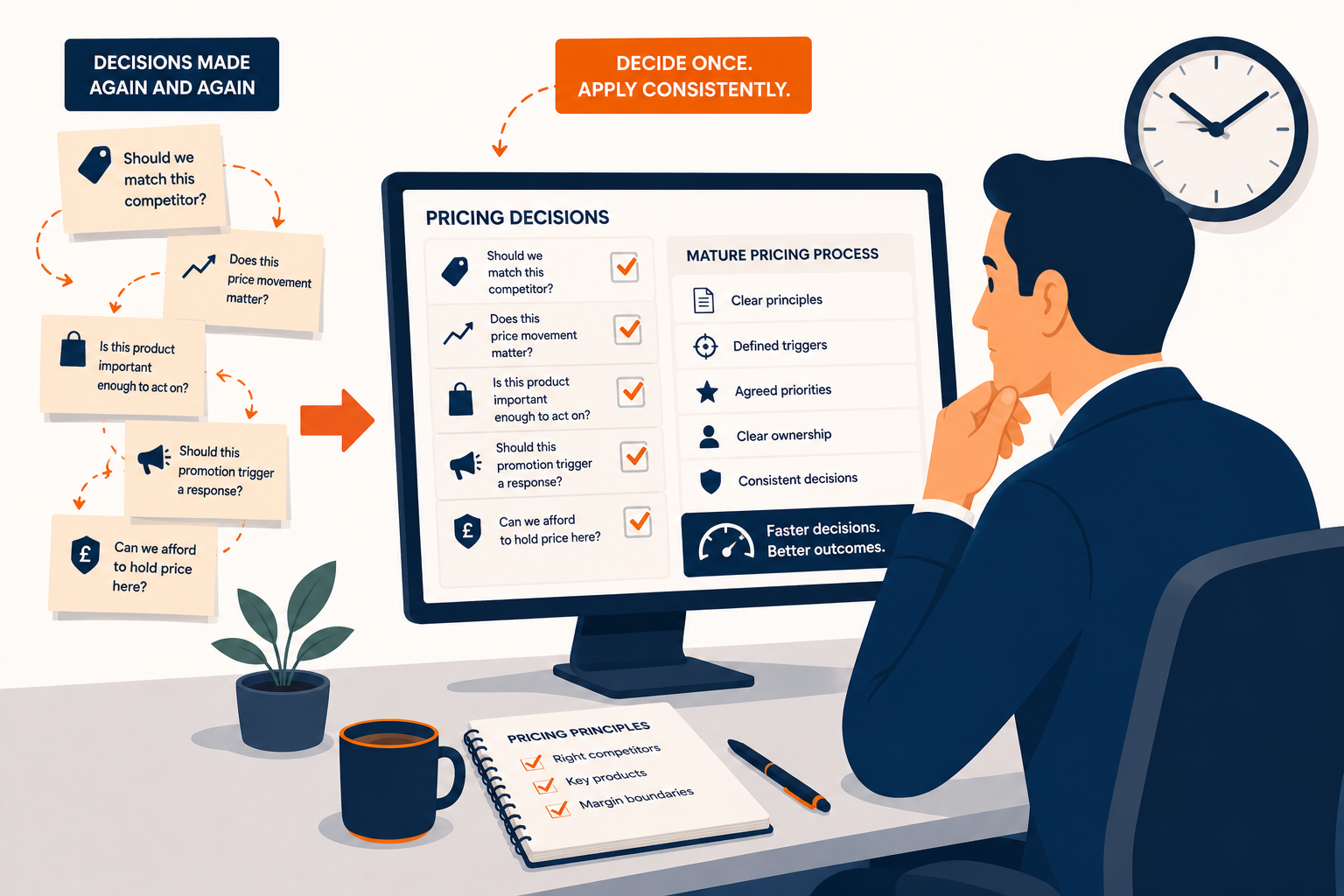
More mature pricing teams tend to have clearer rules, clearer ownership and more consistent ways of turning market information into action.
When large parts of the process depend on manual checks, separate reporting or individual judgement, consistency becomes harder to achieve.
If one Category Manager has developed their own method for deciding which competitor movements matter, another may approach the same situation differently. If pricing rules sit separately from the data, teams may need to interpret those rules manually every time. If a report contains hundreds of movements but does not indicate which ones deserve attention, the team still has to perform the prioritisation itself.
The platform has delivered information, but the decision process still depends heavily on what happens afterwards.
That is often where pricing maturity begins to stall.
Run the Workaround Test
A useful way to review an established pricing setup is to map what happens from the moment competitor data arrives to the point where a decision is made.
Look at where information is exported, where manual checks take place, which reports are rebuilt and which decisions depend on spreadsheets or individual knowledge. Consider which alerts are routinely ignored and what happens when a new competitor, category or commercial requirement needs to be added.
These questions are not intended as a scorecard against a provider.
They are simply a way of understanding how the pricing process actually works.
If very little happens outside the core setup, that is a positive sign. If a substantial parallel process has developed around it, that deserves closer attention.
The Goal Is Not to Eliminate Every Workaround
There will always be exceptions, temporary fixes and genuinely bespoke requirements.
The objective is not to create a pricing process where nobody ever touches a spreadsheet again. The objective is to make sure the additional work exists because it adds commercial value, rather than because the organisation has learned to compensate for limitations in the original setup.
Teams can become extremely good at working around a system.
The better they become at doing so, the easier it is to overlook how much effort the workaround is actually creating.
Sometimes the strongest indication that a pricing setup needs reviewing is not that people complain about it. It is that they have become very efficient at compensating for it.
Look Beyond the Platform
If your price intelligence has been in place for several years, it may be worth looking beyond what the platform itself provides.
Map the real workflow. Look at the manual checks, spreadsheets, additional reports and knowledge sitting outside the system.
Then ask whether those steps are genuinely adding commercial judgement or simply making the existing setup usable.
That tells you far more about operational fit than a feature list ever will.
A pricing platform does not need to be broken before the process around it deserves another look. Sometimes the clearest signal is simply how much the business has had to build around it.