Retailers invest enormous amounts of time and effort into pricing. They monitor competitors, analyse margins, plan promotions, review price indexes, and debate where products should sit in the market. Pricing is one of the most closely managed commercial levers in retail because it directly influences revenue, profitability, and competitiveness.
Customers, however, experience pricing very differently.
They don’t see competitor reports, pricing strategies, or commercial discussions. They simply experience the outcome of those decisions every time they browse a website, compare products, visit a store, or complete a purchase.
Those seemingly small interactions shape something far more valuable than a single sale.
They shape trust.
The retailers that build long-term customer loyalty are not always those with the lowest prices. More often, they are the ones whose pricing feels fair, consistent, and credible. In an increasingly transparent retail market, that confidence has become one of the most valuable competitive advantages a business can create.
Pricing Is About More Than a Number
Retailers naturally think about pricing in commercial terms. They focus on competitiveness, profitability, market position, and margin. Customers approach the same decision from a completely different perspective.
They ask much simpler questions.
Does this feel fair?
Can I trust this retailer?
Am I getting good value?
Those questions are rarely answered by a single price point. Instead, they are formed through repeated experiences over time.
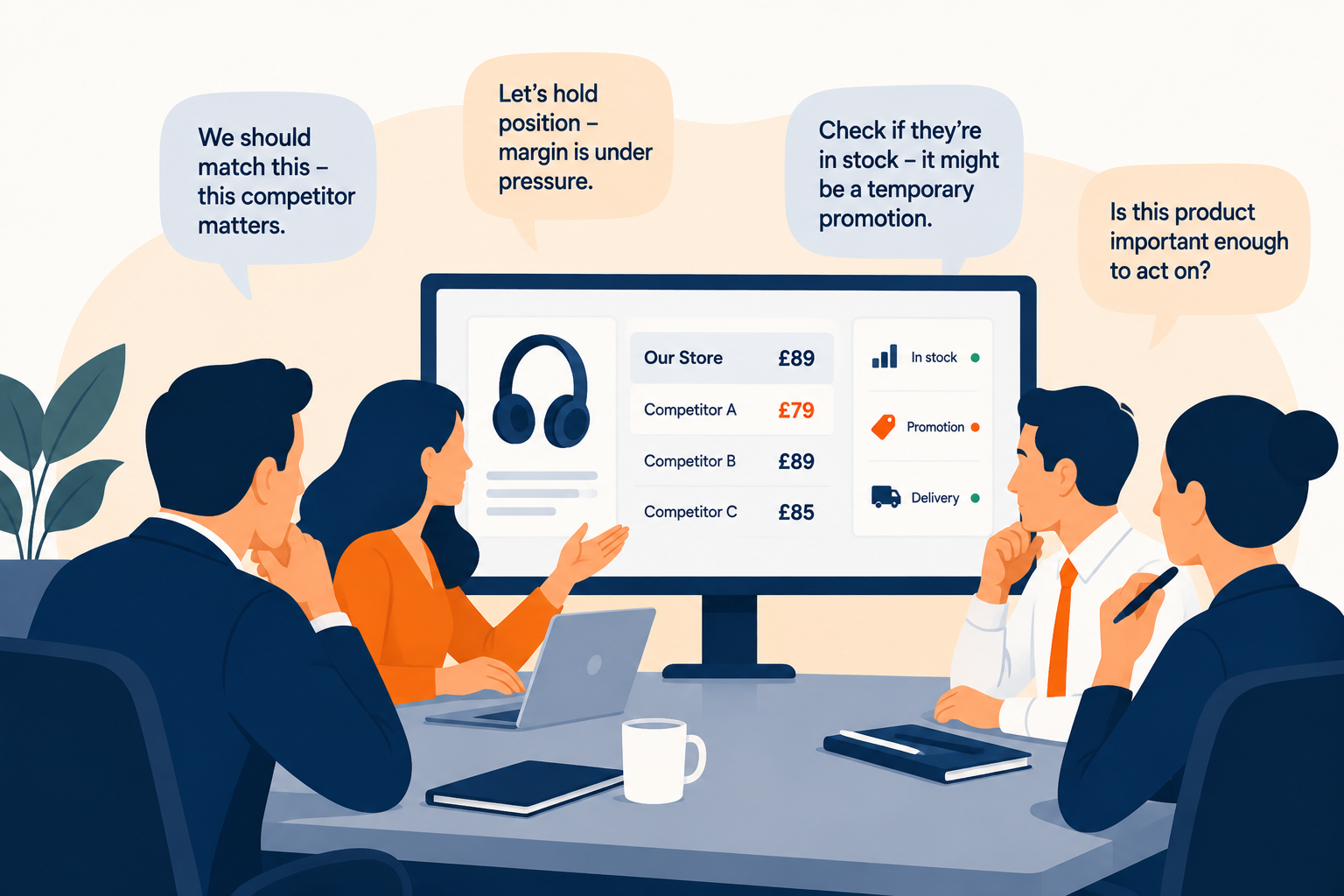
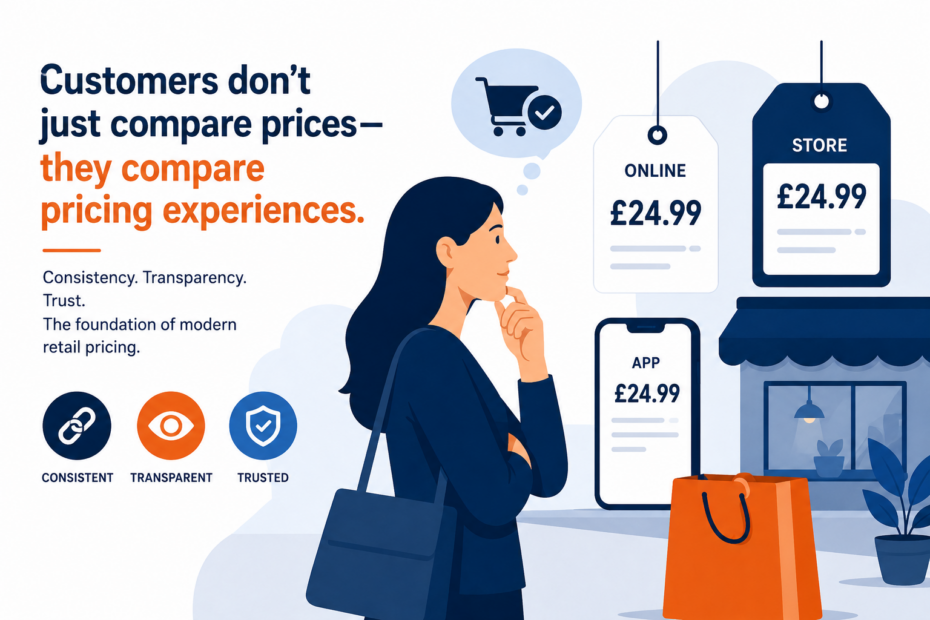
A customer might notice one price online and another in store. They may see a promotion disappear, only for it to return a few days later. They might regularly discover that a competitor is cheaper on products they purchase frequently or struggle to understand whether a discount genuinely represents value.
Individually, these moments seem insignificant.
Collectively, they shape how customers perceive a retailer’s pricing.
Trust Is Built Through Consistency
One of the biggest misconceptions in retail pricing is that customers judge individual prices.
In reality, they judge consistency.
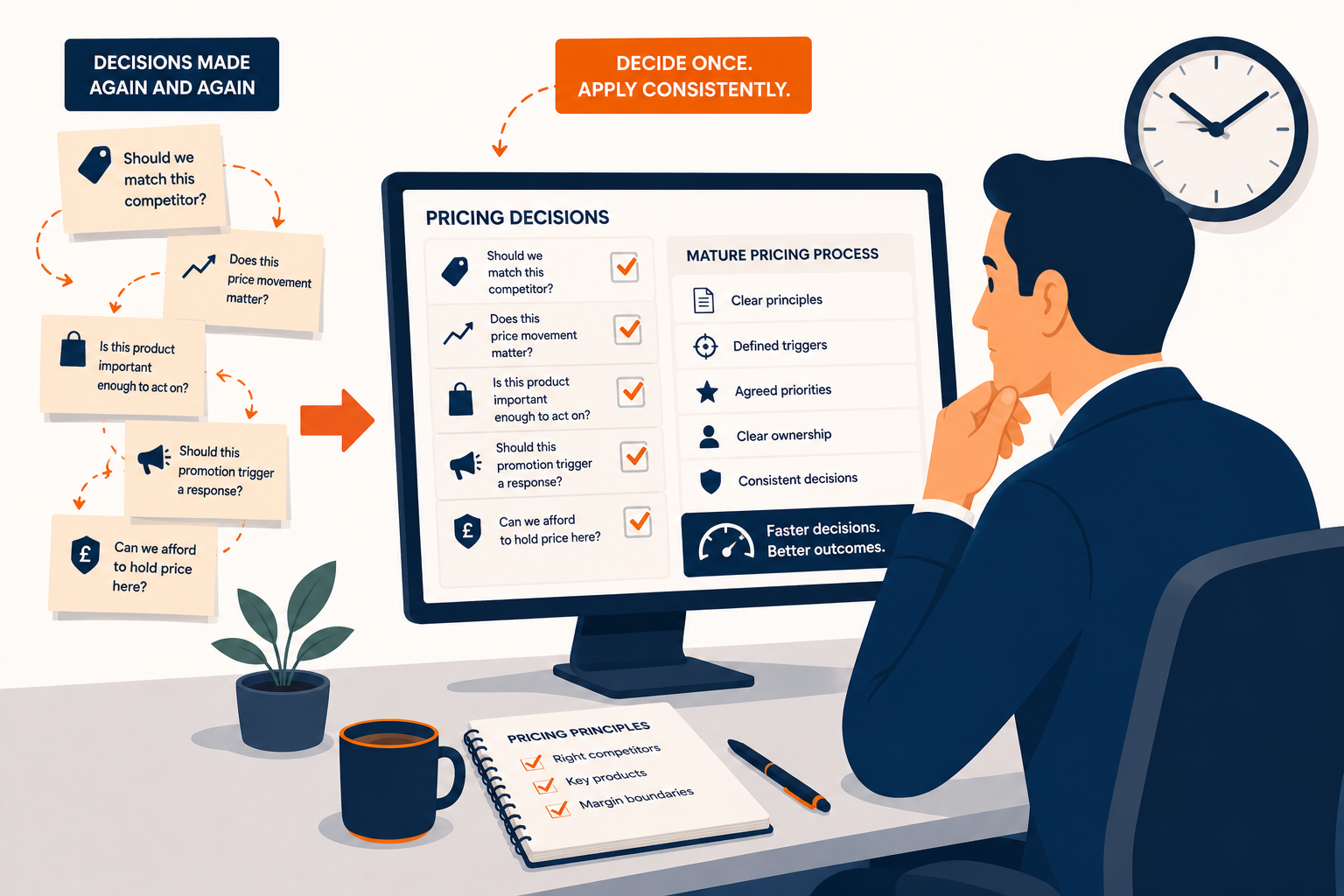
Most customers understand that prices change. They expect promotions, seasonal activity, and competitive responses. What creates uncertainty is pricing that feels unpredictable or difficult to explain.
When customers cannot make sense of pricing, they begin questioning whether they are paying a fair price.
That uncertainty changes behaviour.
Instead of purchasing immediately, they compare more retailers. They wait for discounts. They delay purchases. They become less confident that today’s price represents good value.
Eventually, pricing stops being something they trust and becomes something they feel they need to verify.
The Small Moments That Create the Pricing Trust Gap
The pricing trust gap rarely appears because of one major mistake.
Instead, it develops gradually through repeated customer experiences.
Perhaps a product is priced differently online and in store. A “limited-time” promotion seems to run every week. A key product is consistently cheaper elsewhere. Delivery costs remove the value of what initially looked like a competitive offer, or stock shortages make pricing feel inconsistent and unpredictable.
None of these moments is likely to cause a customer to leave on its own.
Together, however, they create doubt.
And doubt is expensive.
Customers Compare More Than Price
Retailers often assume customers compare prices.
Increasingly, customers compare pricing experiences.
Two retailers may offer almost identical prices, yet one feels significantly more trustworthy because its pricing is clearer, more consistent, and easier to understand.
Customers notice whether promotions make sense. They notice whether prices remain relatively stable. They notice whether value feels consistent across online and offline channels, and whether pricing decisions appear intentional rather than reactive.
The difference may seem subtle, but commercially it is significant.
Customers are not simply buying products.
They are buying confidence.
Why Price Transparency Raises the Stakes
Modern retail has made pricing more transparent than ever before.
Customers can compare products across multiple retailers within seconds. Google Shopping, marketplaces, mobile devices, and comparison websites have dramatically reduced the effort required to validate a price before making a purchase.
This creates both opportunity and risk.
Retailers can no longer rely solely on being competitively priced.
They also need to appear credible.
A retailer whose pricing feels inconsistent or confusing may still win individual transactions, but over time they risk losing something far more difficult to rebuild.
Customer confidence.
The Hidden Cost of Losing Pricing Trust
When customers stop trusting pricing, the consequences extend well beyond individual sales.
Price sensitivity increases because customers become less willing to purchase without comparing alternatives. Promotional dependency grows as discounts become the primary reason to buy. Brand loyalty weakens because customers become more willing to switch retailers for relatively small price differences.
Marketing also becomes less effective because more effort is required to overcome hesitation and reinforce value.
Perhaps most importantly, every future pricing decision becomes harder to justify.
Once customers begin questioning value, rebuilding confidence is significantly more difficult than maintaining it in the first place.
Why Pricing Is Becoming a Leadership Conversation
Pricing has traditionally been viewed as a commercial function.
Increasingly, it is becoming a customer experience function as well.
Every pricing decision influences how customers perceive fairness, consistency, and value. That means pricing no longer affects only revenue and margin. It also shapes trust, loyalty, and long-term customer relationships.
The retailers recognising this shift are beginning to ask different questions.
Rather than asking whether prices are competitive enough, they ask whether their pricing experience feels consistent enough.
That is a much broader conversation.
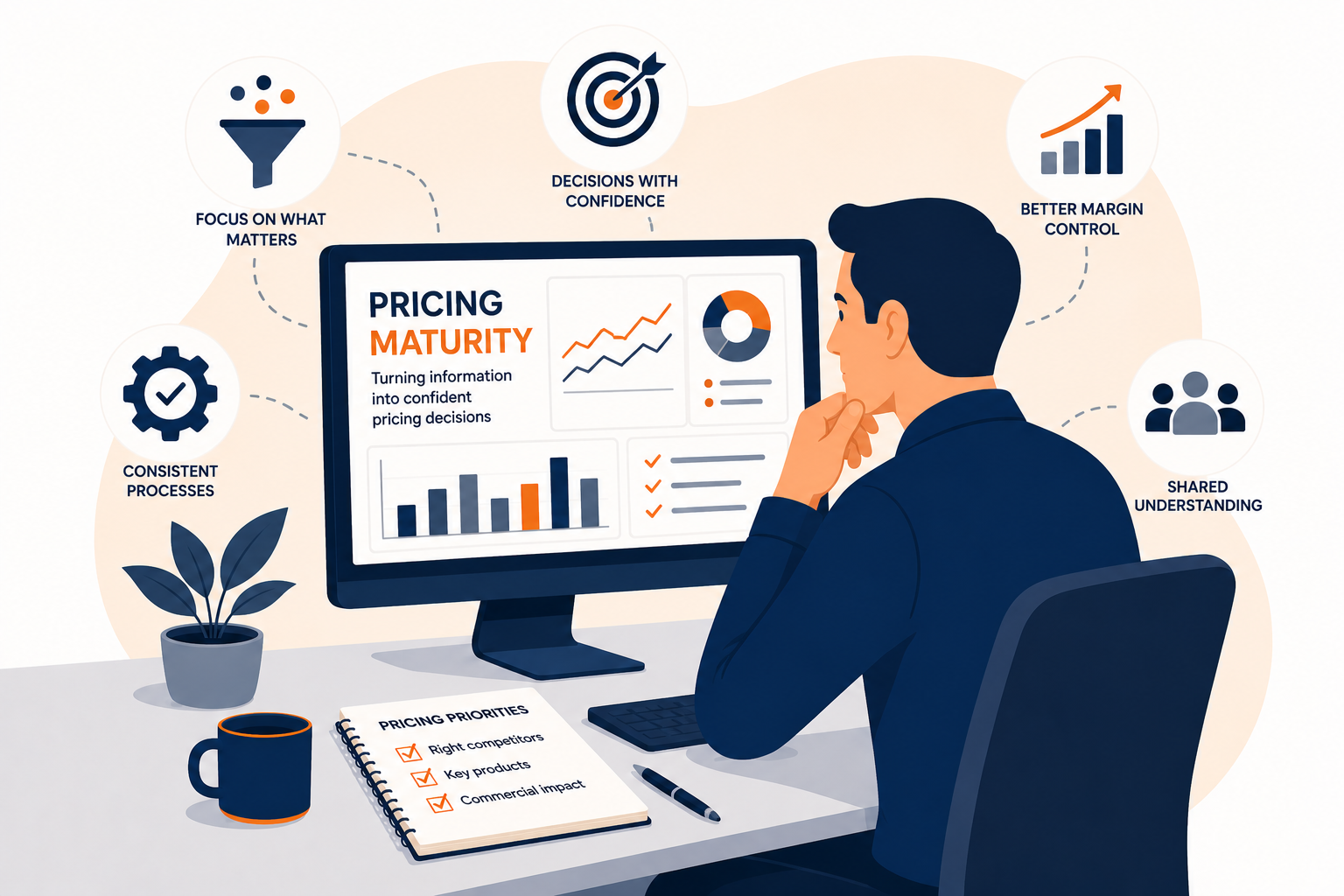
It brings together pricing, ecommerce, trading, marketing, and customer experience around a shared objective.
Building customer confidence.
Closing the Pricing Trust Gap
Closing the pricing trust gap does not require retailers to have the lowest prices.
It requires them to deliver pricing that customers can understand, believe in, and trust.
That means ensuring pricing decisions remain consistent across channels, promotions are genuine and easy to understand, value is communicated clearly, and competitive pricing sits within a coherent customer experience.
Strong pricing is not simply about protecting margin or improving competitiveness.
It is about creating confidence.
Because customers rarely remember every individual price.
They remember how a retailer’s pricing made them feel.
In an increasingly transparent retail environment, that trust may become the most valuable pricing advantage of all.