Most retailers believe they have a pricing strategy. And in most cases, they do. It’s defined centrally, aligned to brand positioning, and supported by data and reporting. On paper, it makes sense. But customers don’t experience your pricing strategy. They experience your execution. And that’s where the gap appears.
Customers Notice More Than You Think
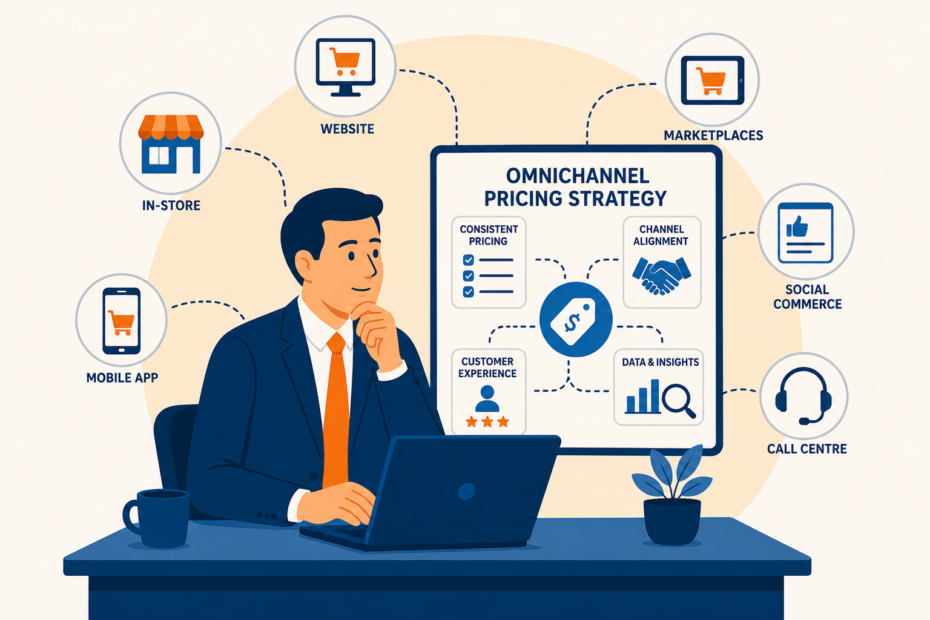
Retail has become completely transparent. Customers move between channels without friction. They browse online, check prices on mobile, walk into stores, and compare across marketplaces in seconds. They don’t think in channels. They think in value.
Which means even small inconsistencies become visible. A product priced differently online and in-store. A promotion available in one place but not another. Regional differences that don’t make sense to the customer. Individually, these feel minor. Collectively, they shape perception.
The Risk Isn’t Pricing. It’s Inconsistency
Most pricing strategies aren’t fundamentally flawed. The issue is how consistently they are delivered.
What starts as a controlled, centralised strategy becomes fragmented across stores, online channels, regions, and formats. Customers don’t see the internal logic behind that. They see the inconsistency. And inconsistency creates doubt.
Where the Gap Actually Comes From
This usually isn’t a capability issue. It’s a structural one.
Pricing is often defined centrally but executed across a complex network of teams, systems, stores, and channels. Every layer introduces variation. Over time, that variation becomes visible. Not internally, but externally.
The Store vs Online Disconnect
This is where the issue becomes most obvious.
Internally, the reasons often make sense. Different cost structures, channel-specific promotions, operational constraints, and timing differences all contribute to variation. But customers don’t see those reasons.
They see a different price for the same product. A promotion that doesn’t carry across channels. A lack of clarity around what the “real” price actually is. That creates friction at the point of decision. And friction reduces confidence.
Why This Matters More Than Ever
Customers are more informed than they have ever been. They can compare prices instantly, check alternatives while standing in-store, and move between channels without effort. Consistency is no longer seen as a bonus. It is expected.
This means pricing is no longer just about competitiveness. It is about coherence. Because inconsistent pricing doesn’t just affect conversion. It affects trust.
What Strong Retailers Do Differently
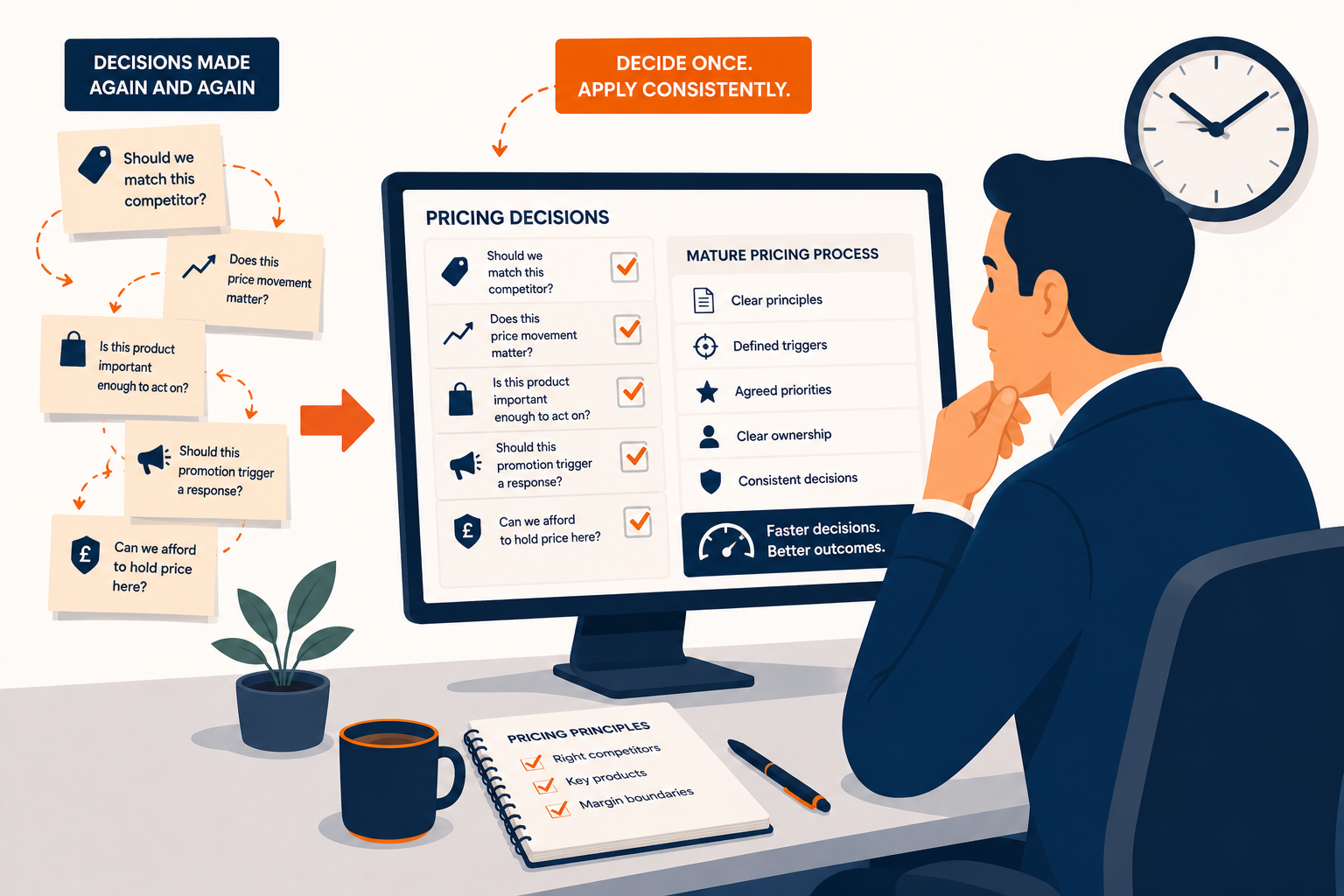
The retailers that manage this well don’t necessarily have radically different pricing strategies. They have stronger execution alignment.
They ensure pricing is consistent enough to feel predictable, promotions are coordinated across channels, and pricing updates are synchronised quickly. Not perfectly identical, but clearly intentional. That consistency builds confidence.
Customers may not consciously notice every aligned decision. But they quickly notice when things feel disconnected.
The Data Behind Consistency
Maintaining that level of alignment is difficult without connected visibility.
It requires more than internal reporting and historical sales data. Retailers need a joined-up view of competitor pricing, promotional activity, stock availability, and true price position across both channels and regions.
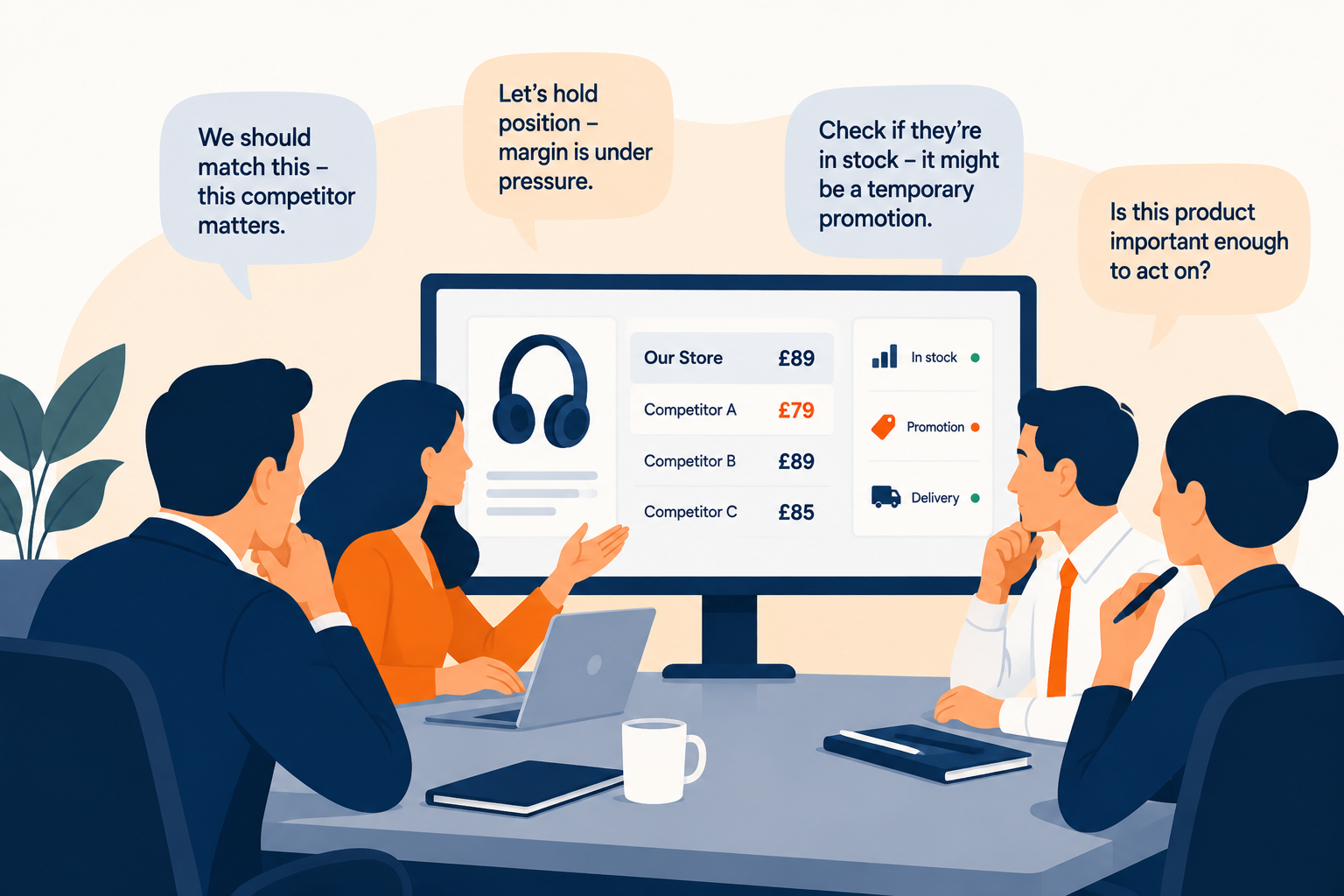
Without that, decisions are made in isolation. And isolated decisions create inconsistent outcomes. A promotion launched online without store alignment. Regional pricing differences unsupported by local competition. Store teams reacting to local pressure without full context.
The strategy may still look aligned centrally. But the customer experience starts to drift.
Why Alignment Breaks Down
Even when the data exists, alignment often fails operationally.
Different teams work from different views of the market. Store-level execution lags behind central decisions. Ownership across channels becomes blurred. What appears aligned in reporting doesn’t always translate into reality on the shop floor.
This creates a familiar pattern. The strategy holds. But the execution slowly fragments over time.
The Customer Sees the Output, Not the Process
Internally, inconsistency can usually be explained. Externally, it cannot.
Customers don’t understand system limitations, delayed updates, or channel-specific logic. They only see the outcome in front of them.
And when pricing feels inconsistent, it raises a very simple question:
“Can I trust this?”
That is the real risk. Because once trust weakens, pricing
becomes harder to defend everywhere.
From Visibility to Alignment
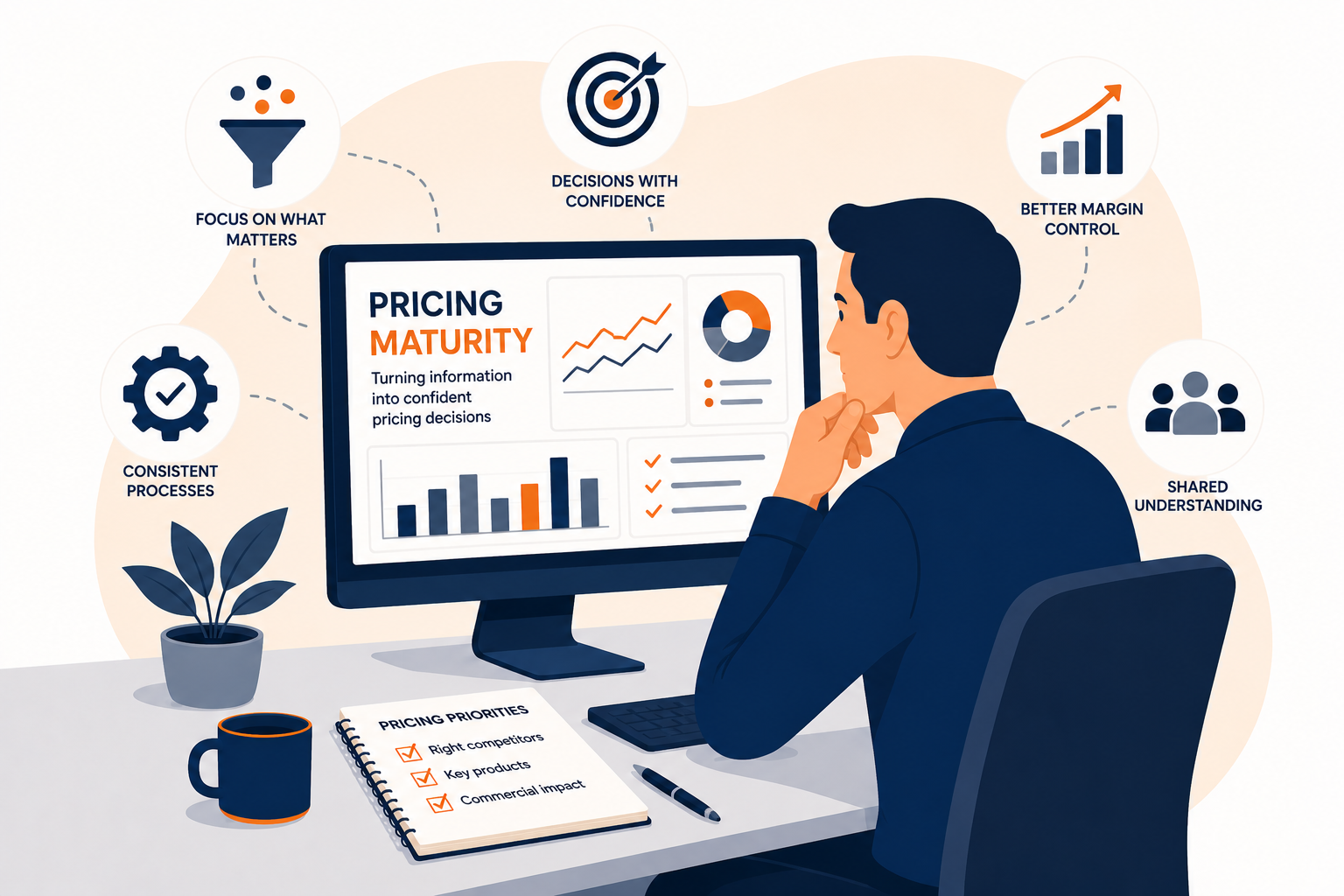
The retailers that manage this best focus less on visibility alone and more on alignment.
They create a shared view of the market across teams, ensure pricing decisions translate consistently across stores and channels, and make sure variations are intentional rather than accidental.
This is where pricing intelligence becomes commercially valuable. Not simply as a reporting tool, but as a way to create a single version of the truth across the business.
Because customers don’t judge your pricing model. They judge your pricing experience. And that experience is only as strong as its consistency.