
Most category teams don’t lack knowledge.
They lack visibility.
A large part of how categories are managed today doesn’t live in systems. It lives in people. Experience, instinct, and memory often fill the gaps left by incomplete data.
On the surface, this works.
But underneath, it creates friction, inconsistency, and risk.
Category Knowledge Lives in People, Not Systems
Over time, category managers build a deep understanding of their market.
They know:
• Which competitors are genuinely aggressive
• Which promotions actually matter
• Which products drive perception
• When to react and when to hold
• What has worked before
This knowledge isn’t formally documented. It is learned through experience, built over time, and refined through repetition.
That makes it valuable.
But it also makes it fragile.
The Hidden Dependency
From the outside, the category appears to run smoothly. Prices are adjusted, promotions are launched, and decisions are made.
But much of that relies on invisible inputs.
Individual judgement.
Memory of past behaviour.
Informal rules.
Experience that isn’t shared.
This creates a dependency that is rarely acknowledged.
It works well when the right people are in place.
But it breaks down when they are not.
The Operational Reality
In practice, this dependency shows up in subtle but important ways.
Category managers often rely on:
• Remembering how competitors behaved previously
• Knowing which pricing rules can be flexed
• Recalling which products create the most pressure
• Interpreting incomplete data using experience
This fills the gaps left by systems.
Because data alone is not enough. It often lacks context, clarity, and confidence.
So teams compensate.
Why This Slows Decision-Making
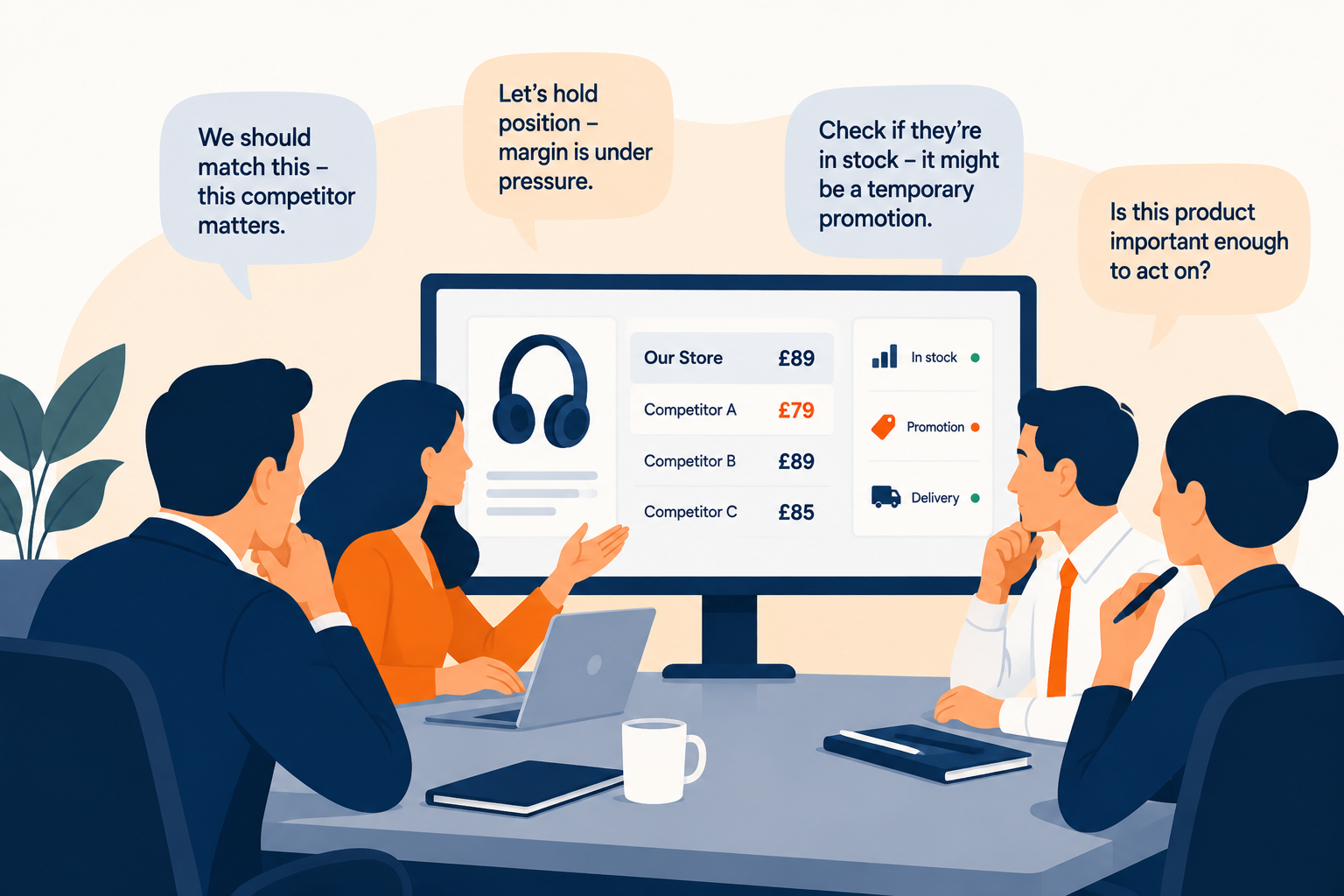
When knowledge is not visible, every decision requires reconstruction.
Context needs to be rebuilt.
Signals need to be validated.
Assumptions need to be checked.
Even experienced category managers hesitate, not because they lack capability, but because the process depends on piecing together fragmented information.
This takes time.
And in a fast-moving market, time is the constraint.
Decisions feel slower than they should. Not because teams are inefficient, but because knowledge is not easily accessible.
The Risk of Knowledge Gaps
This model also creates risk, particularly during moments of pressure or change.
• Team transitions
• Peak trading periods
• Category handovers
• New product launches
When knowledge is not visible:
• New team members take longer to become effective
• Decisions become inconsistent
• Opportunities are missed
• Reactions become more cautious
The category continues to function.
But it loses speed, confidence, and control.
What Your Team Knows But Can’t See
Most category teams already know more than they can easily access.
They understand where competitors are likely to move, which products matter most, which promotions are noise, where margin can be protected, and where they are exposed.
But that knowledge is fragmented.
It exists across individuals, conversations, and past decisions.
It is not visible in one place.
And that is the problem.
Why More Data Doesn’t Solve It
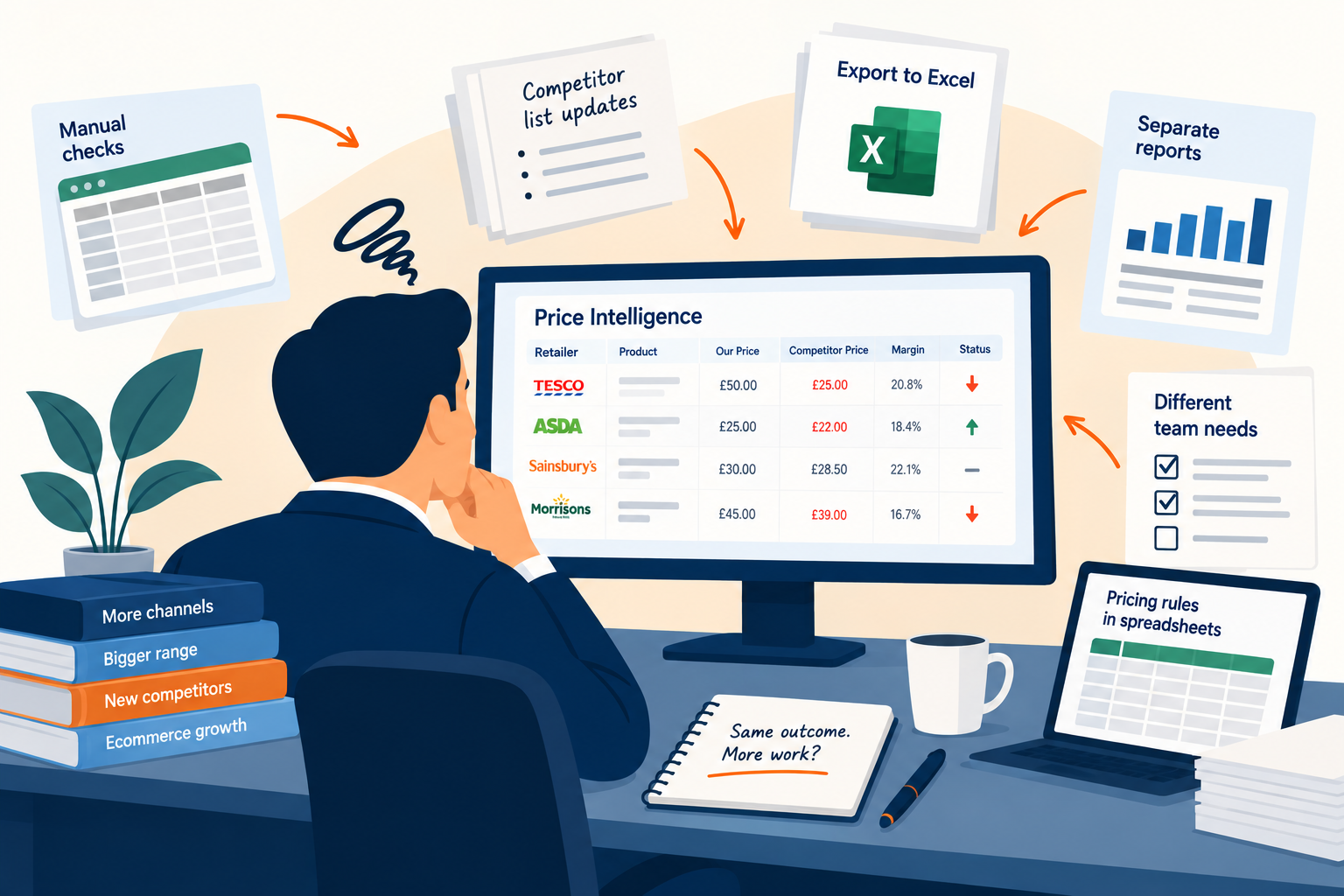
The typical response is to add more data.
More dashboards.
More reports.
More feeds.
But more data does not replace knowledge.
It often increases the burden.
Category managers spend more time interpreting signals, validating data, and rebuilding context.
The issue is not access to information.
It is usability.
Making Knowledge Visible
This is where price intelligence changes the dynamic.
Not just by providing competitor pricing, but by structuring knowledge into something teams can act on.
When done well, it brings together:
• Competitor pricing
• Promotional activity
• Stock availability
• Price position
• Product-level visibility
All in one place, in a format aligned to how category teams actually work.
This turns:
Implicit knowledge into shared visibility
Experience into structured insight
Memory into accessible context
What Changes When Knowledge Is Shared
When category knowledge becomes visible, behaviour shifts.
Decisions become faster because context does not need to be rebuilt.
Confidence increases because signals are clearer.
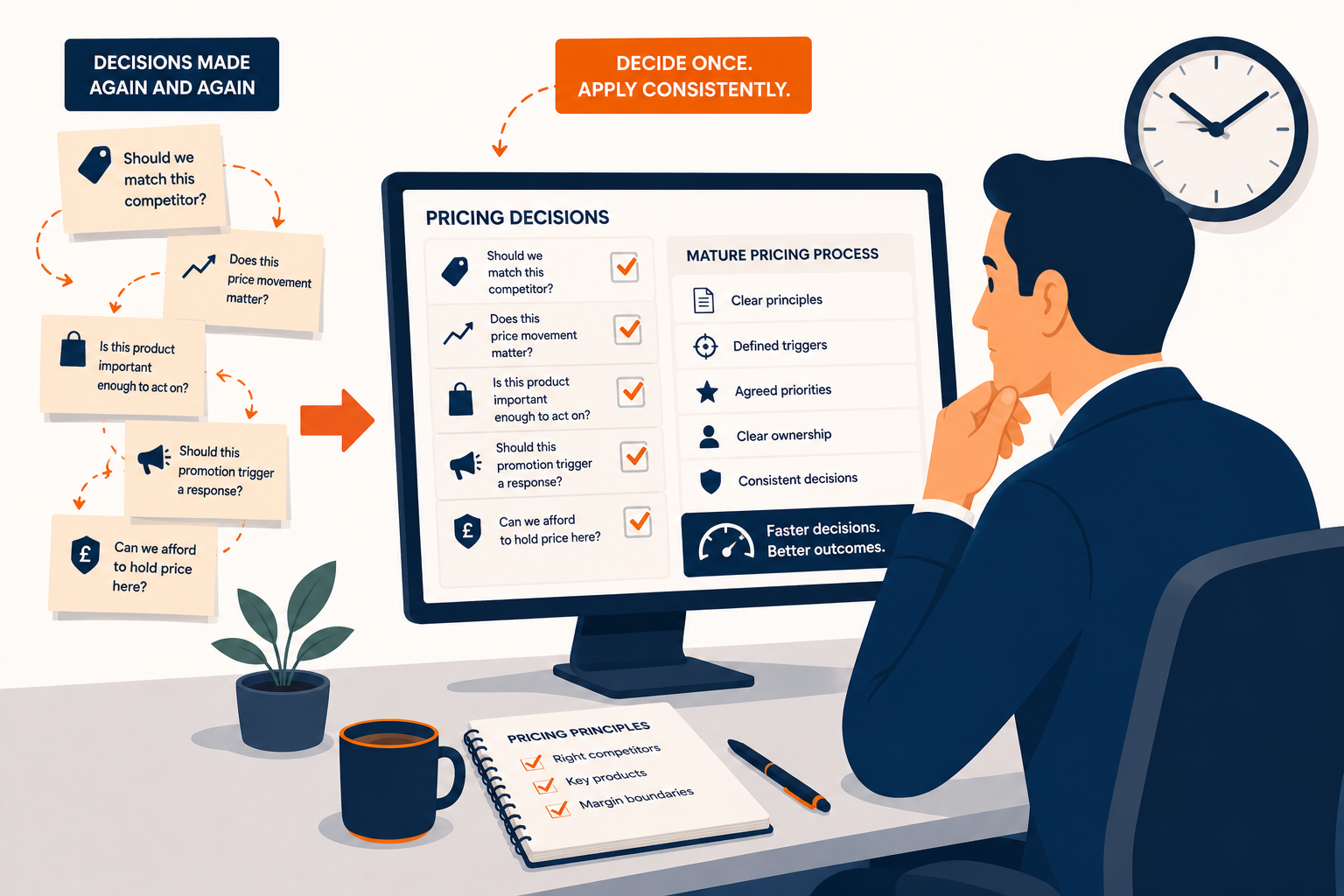
Consistency improves because decisions are no longer dependent on individuals.
Onboarding becomes easier, and the category becomes more scalable.
From Individual Judgement to Structured Capability
This is the real shift.
Moving from individual judgement to structured pricing capability.
Category managers still apply experience.
But they are no longer dependent on it.
Because the system supports them.
Instead of replacing knowledge, it amplifies it.
A Simple Self-Assessment
To understand where your category stands, ask:
• How much pricing knowledge lives in people rather than systems?
• How quickly can a new team member make confident decisions?
• Do decisions rely on memory or visible context?
• Is competitor behaviour clearly understood or inferred?
• Does your data reduce effort or create more work?
If several of these feel unclear, knowledge may still be hidden.