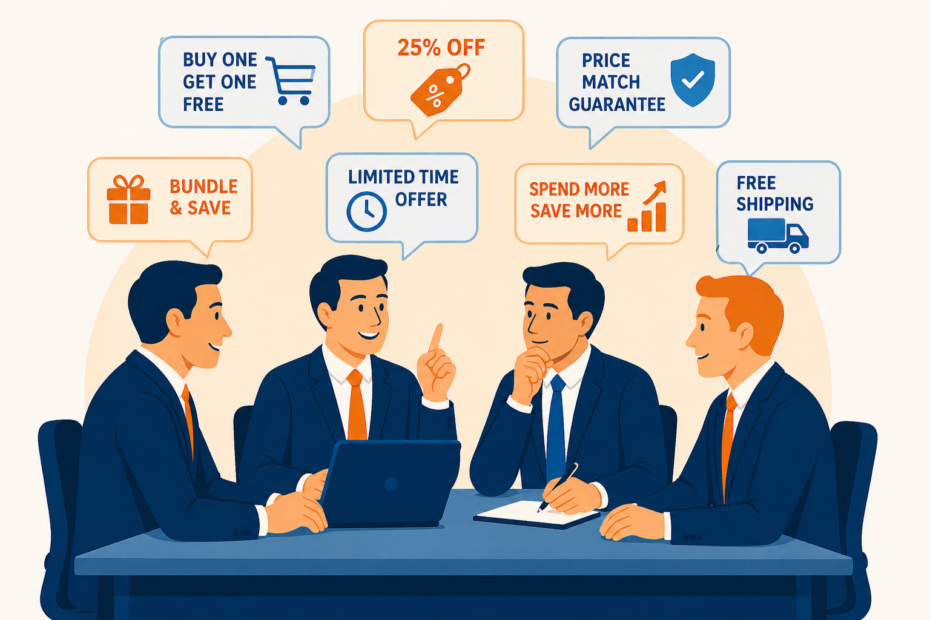
Promotions are one of the most powerful levers in retail. They drive traffic, move stock, and create spikes in revenue. On the surface, they often look like they are working.
But there is a harder question most organisations avoid asking: are your promotions actually driving growth… or just hiding the problem?
When Activity Looks Like Performance
Most businesses don’t measure promotions by what they truly change. They measure them by what they produce.
Sales increase, volume moves, and targets are hit. As a result, the promotion is seen as successful.
But activity is not the same as performance.
A promotion can increase revenue while quietly eroding margin. It can deliver short-term gains while weakening long-term position. It can sustain performance without actually improving it. That is where the risk sits.
The Illusion of Success
Promotions are one of the few commercial levers that can make performance appear stronger than it really is.
They can:
• Mask weak underlying demand
• Offset poor price positioning
• Compensate for lost competitiveness
• Smooth short-term revenue gaps
Because the outcome is visible, more sales and more activity, these promotions are rarely challenged.
This creates a dangerous cycle. As pressure builds, promotional activity increases. Over time, it becomes harder to distinguish between genuine growth and artificially sustained performance.
The Compounding Effect No One Sees Early
The impact of this behaviour is rarely immediate. It builds gradually and often goes unnoticed until it becomes difficult to reverse.
Margins soften over time. Customers begin to expect discounts. Promotional frequency increases, and full-price performance weakens.
Individually, none of these changes trigger concern. Collectively, they reshape the economics of the category.
By the time margin pressure becomes visible in reporting, the underlying behaviour has already been in place for weeks or months.
Why Promotions Become the Default Response
This is not a failure of teams. It is a structural outcome.
When visibility is incomplete, promotions become the safest and most accessible lever. They provide immediate impact, create predictable short-term results, and reduce the perceived risk of inaction.
As a result, when performance feels uncertain, the default question becomes:
“What can we run?”
Instead of:
“What is actually happening in the market?”
That shift matters. It turns promotions into a response to uncertainty, rather than a deliberate strategic choice.
The Visibility Gap Behind the Decisions
At the centre of this issue is incomplete context.
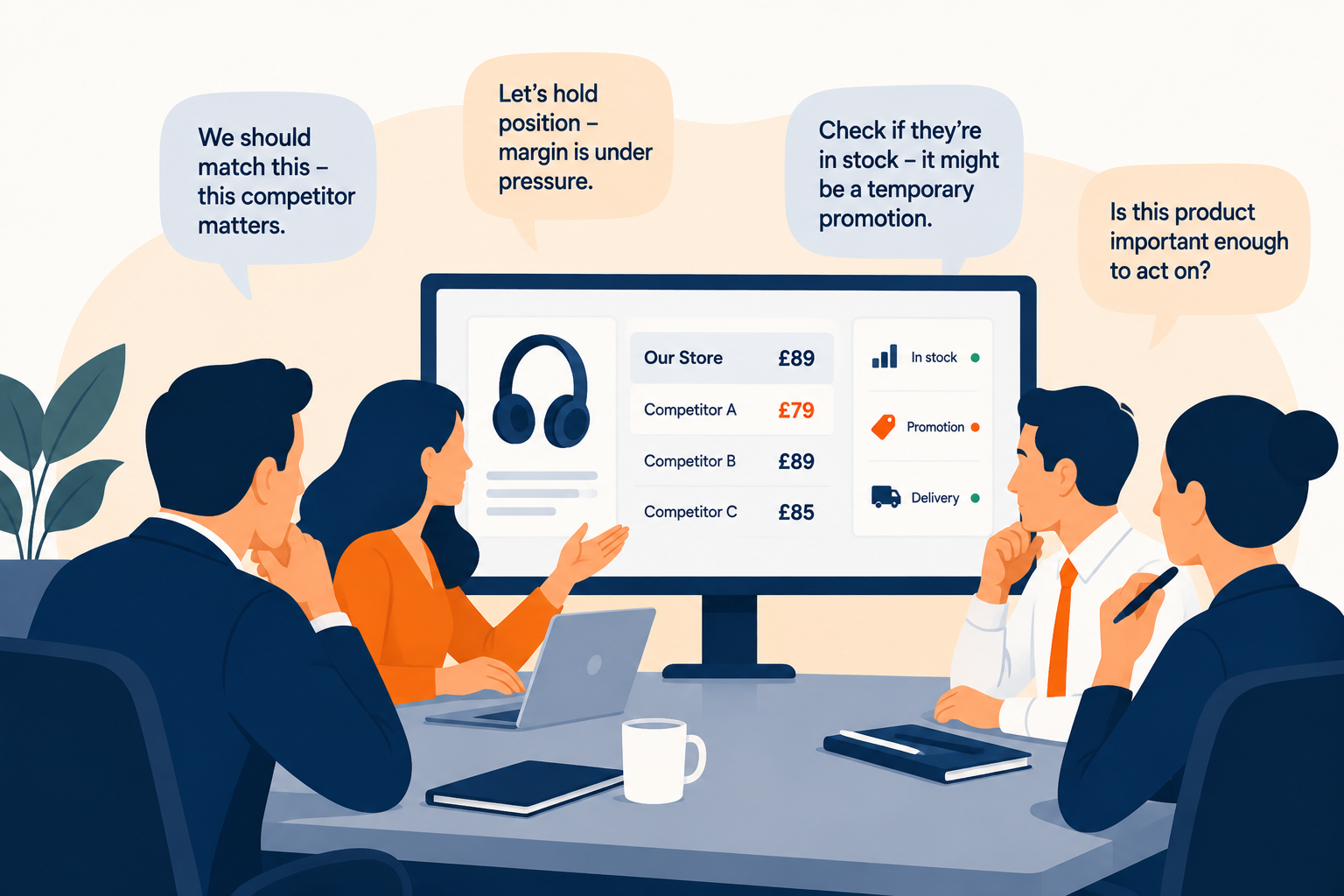
Most promotional decisions are driven by internal signals such as sales performance, stock pressure, and revenue targets. While these are important, they do not provide a full picture.
Without understanding the external market, decisions are only partially informed.
That includes visibility into:
• Competitor pricing behaviour
• Competitor promotional activity
• Market stock availability
• True price position by product
• Where competitors are strong or weak
Without this context, promotions become a default reaction rather than a targeted decision.
The Questions Most Teams Don’t Ask
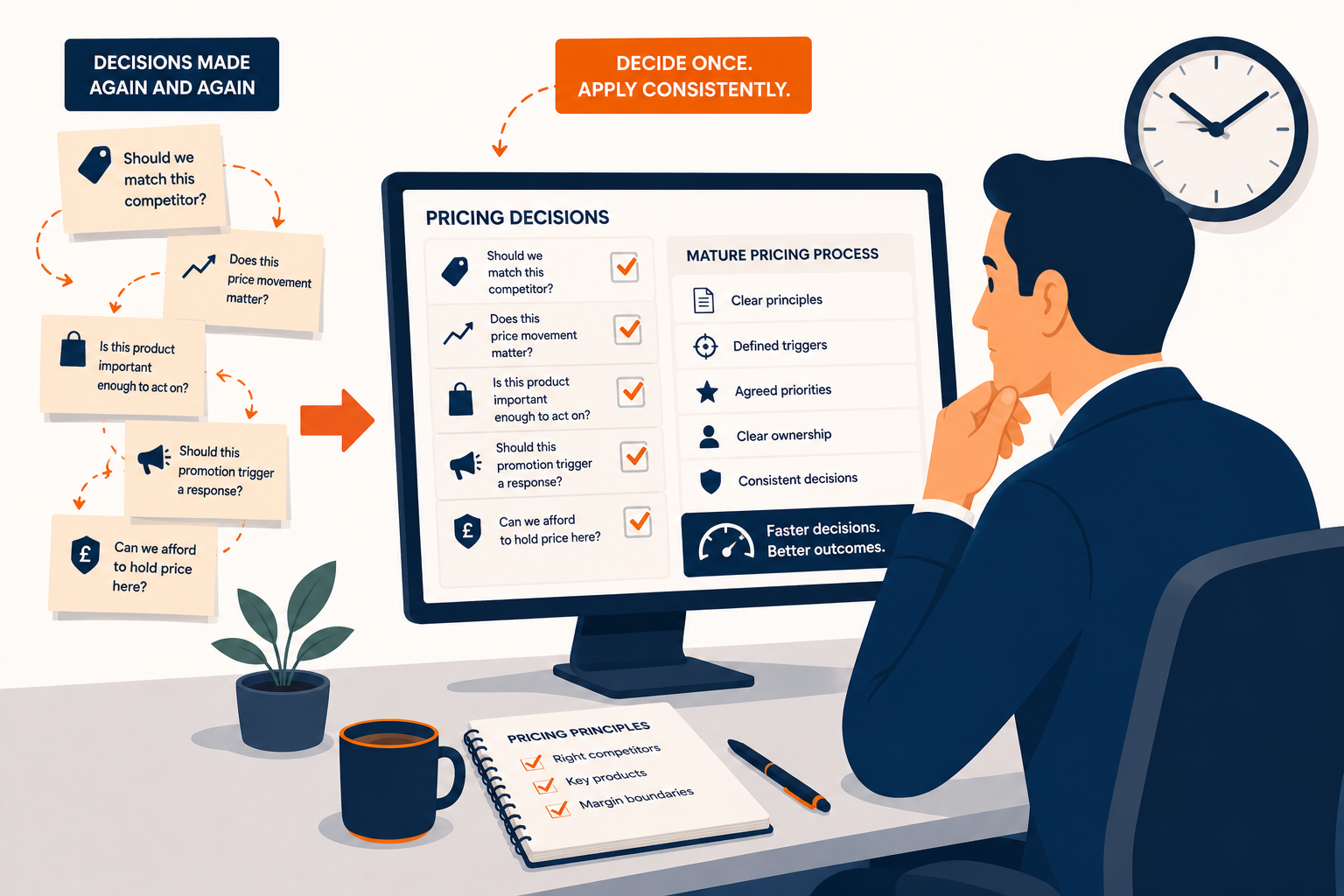
Shifting from activity to strategy requires a different set of questions. Not more analysis, but better clarity.
A few simple questions can quickly expose whether promotions are truly effective:
• Would performance hold without the promotion?
• Are we driving incremental demand, or just pulling it forward?
• Are we reacting to the market, or compensating for something else?
• Do we understand the full margin impact across the promotional cycle?
• Are we promoting because we need to, or because we lack clarity?
These are uncomfortable questions, but they are the ones that separate activity from strategy.
What Better Looks Like
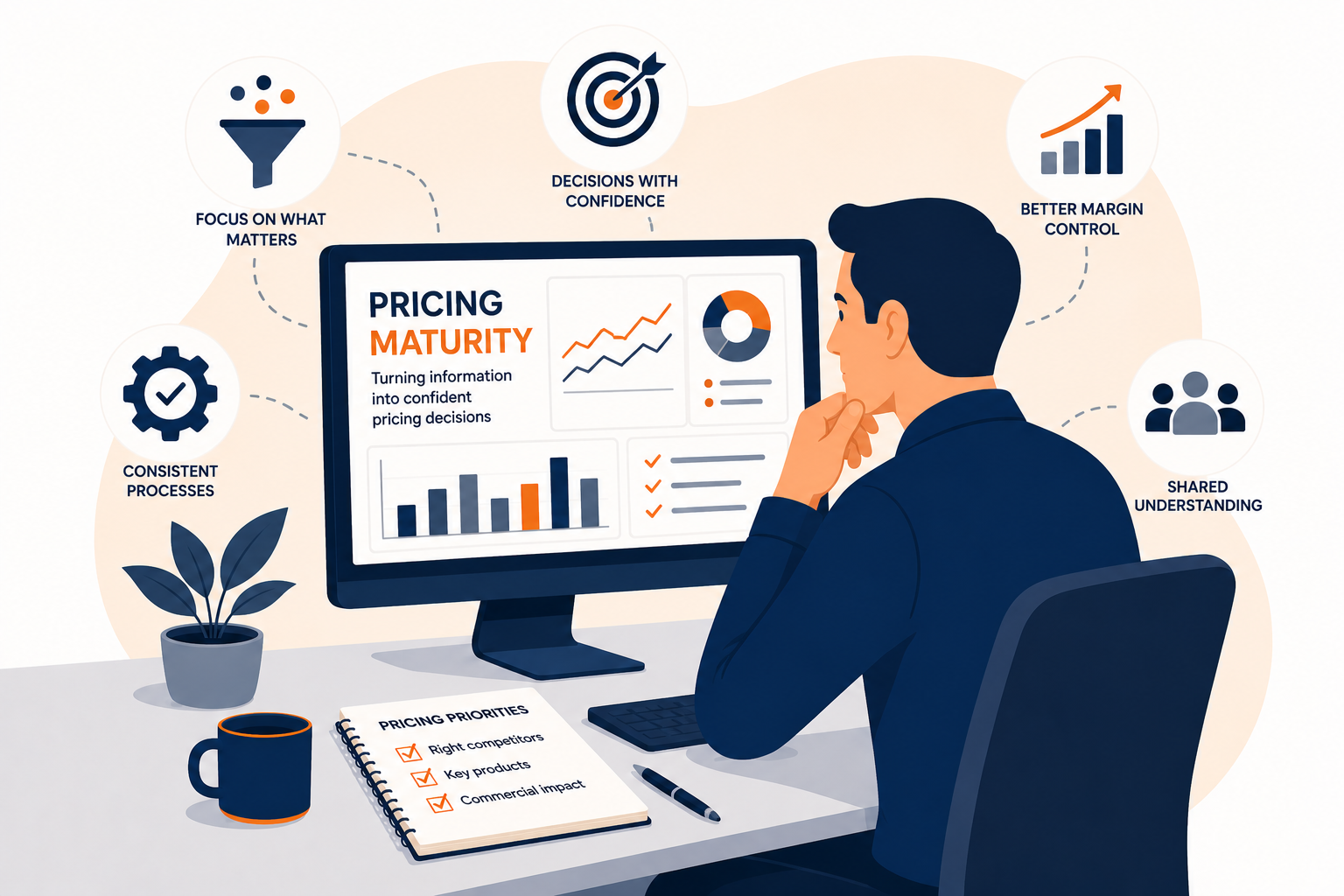
Stronger promotional strategies are not defined by volume. They are defined by precision.
They start with a clear view of the market, not internal pressure. That means understanding where competitors are active, where they are weak, and where opportunities actually exist.
In practice, this includes:
• Identifying where competitors are actively promoting
• Recognising where competitor stock is weak or unavailable
• Focusing on products that shape price perception
• Protecting margin where the market allows
• Targeting promotions where they will drive real incremental impact
This does not reduce promotional activity for the sake of it. It makes it more deliberate, more focused, and ultimately more effective.