
Retail leaders often assume pricing decisions take time because teams need more data.
In reality, the delay is usually driven by something else. Teams are often looking for more validation, more certainty, and ultimately more confidence before acting.
In many organisations, the delay does not come from the market.
It comes from the pricing process itself.
Competitor prices move daily. Promotions appear and disappear quickly. Customer expectations shift faster than internal reporting cycles. Yet pricing decisions still move through layers of reporting, validation, and internal discussion before action is taken.
By the time confidence is reached, the market has already moved.
Which leads to a simple but uncomfortable leadership question.
How long does it actually take your organisation to react when the market moves?
Not when the next meeting happens. Not when the next report arrives.
But from the moment the market changes.
When Pricing Decisions Move Slower Than the Market
Retail pricing operates in one of the fastest decision environments in the business.
Competitors adjust prices daily. Promotional mechanics change weekly. Marketplaces reset price expectations in real time.
Yet many pricing processes still follow rhythms built for a slower retail environment.
Competitor reports are reviewed weekly. Pricing changes require multiple approvals. Teams validate signals repeatedly before responding.
Each step feels sensible in isolation. Together, they create delay.
If a competitor adjusts price on Monday, when does your organisation respond?
Tuesday? Next week? Next trading review?
Most leadership teams have never measured this.
But the answer often reveals how far internal pricing processes have drifted from the speed of the market itself.
Where Pricing Delays Actually Come From
Pricing delays rarely come from a lack of effort.
They come from internal friction.
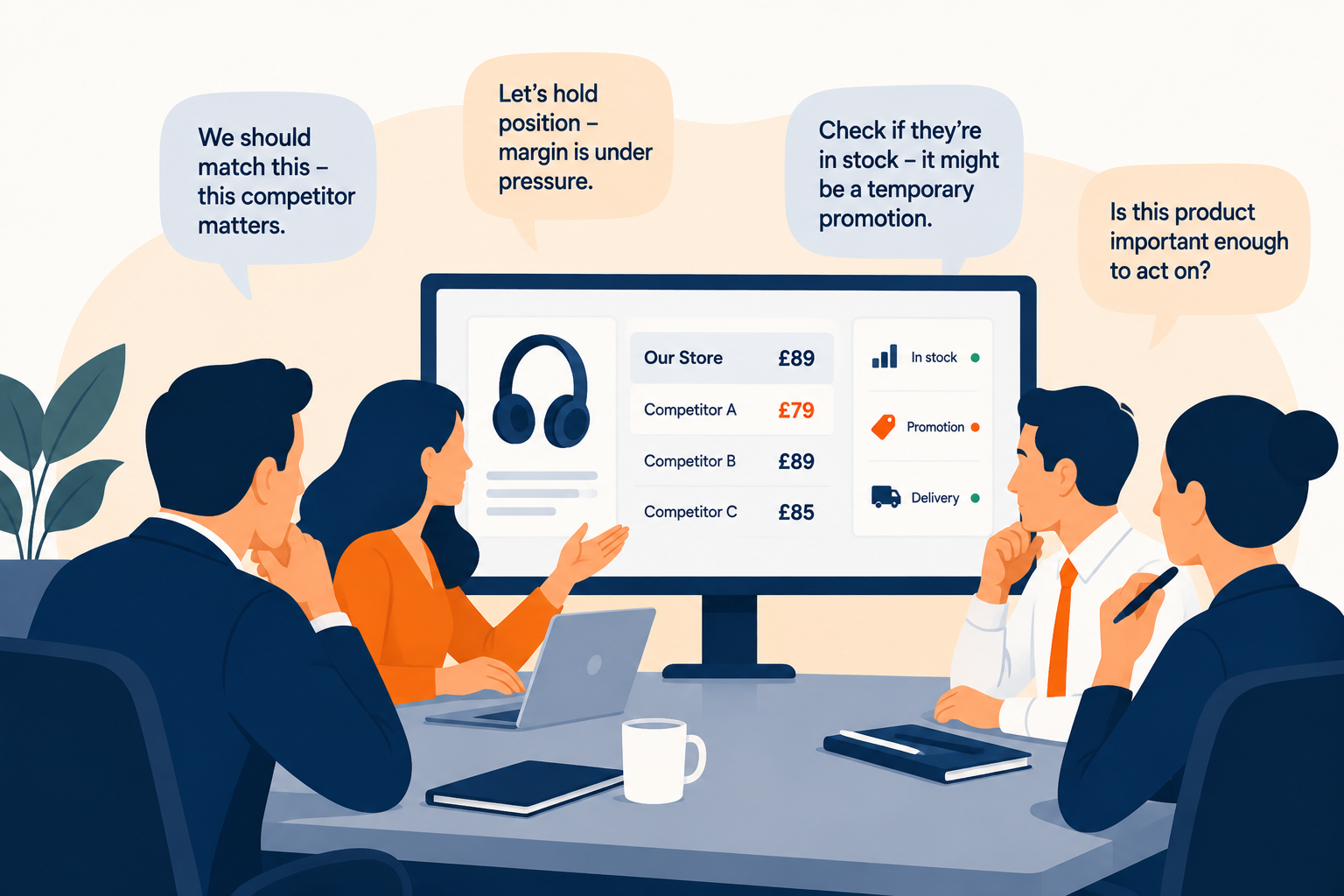
Signals are reviewed across multiple reports. Teams validate competitor movements before escalation. Category managers debate whether a price move is temporary or structural. Commercial leaders are brought in to confirm decisions.
None of these behaviours are unreasonable. They exist to prevent unnecessary pricing reactions.
But they introduce a question leadership rarely asks.
Is your pricing process designed to enable decisions, or to avoid making them too quickly?
When every signal requires interpretation, validation, and approval, pricing decisions inevitably slow down.
By the time alignment is reached, the opportunity to act may already have passed.
Why Margin Impact Appears Later Than You Expect
One reason pricing delays persist is that the consequences are rarely immediate.
Margin erosion rarely arrives as a single event. Instead, it accumulates gradually.
A competitor undercuts a key product. A promotion quietly extends. Customer price perception shifts over time.
Individually, these changes appear manageable. Collectively, they reshape the competitive position of the retailer.
By the time margin pressure appears in reporting, the underlying behaviour may have been developing for weeks.
This creates a dangerous illusion.
Leadership believes pricing is under control because margin impact has not yet appeared.
Meanwhile, the market has already moved.
The Compounding Cost of Slow Pricing Decisions
Delayed pricing reactions rarely cause immediate damage.
The cost appears over time.
Competitors establish stronger price perception. Promotional pressure increases. Retailers respond later and often with deeper discounts.
The longer the delay, the harder the correction becomes.
In many cases, margin erosion is not caused by one incorrect pricing decision.
It is caused by dozens of small delays.
And most of them occur before leadership even notices.
The Leadership Question That Matters Most
When pricing decisions feel slow, many organisations assume the solution is better data.
More dashboards. More competitor monitoring. More reporting.
But data rarely solves hesitation.
Confidence does.
The real leadership question is not whether the pricing strategy is correct.
It is operational.
How long does it actually take your organisation to act once the market moves?
If the answer is unclear, that uncertainty itself is a signal.
Pricing Capability Is Really About Decision Confidence
Retailers that respond effectively to market change rarely have dramatically better data.
What they have is a clearer decision structure.
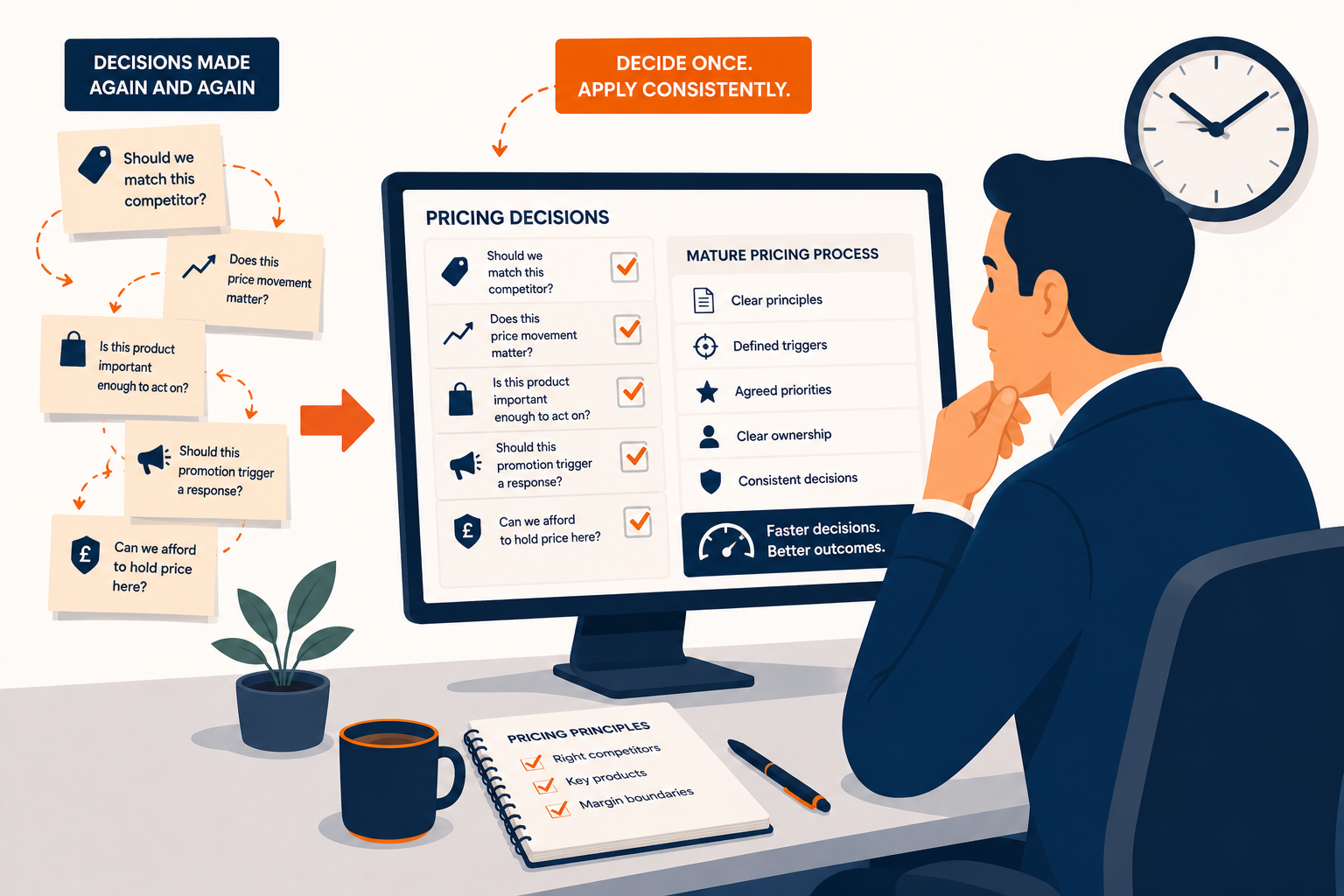
Ownership is defined. Signals are prioritised. Decision pathways are shorter. Teams know when they can act and when escalation is required.
The goal is not reckless pricing speed.
It is disciplined confidence.
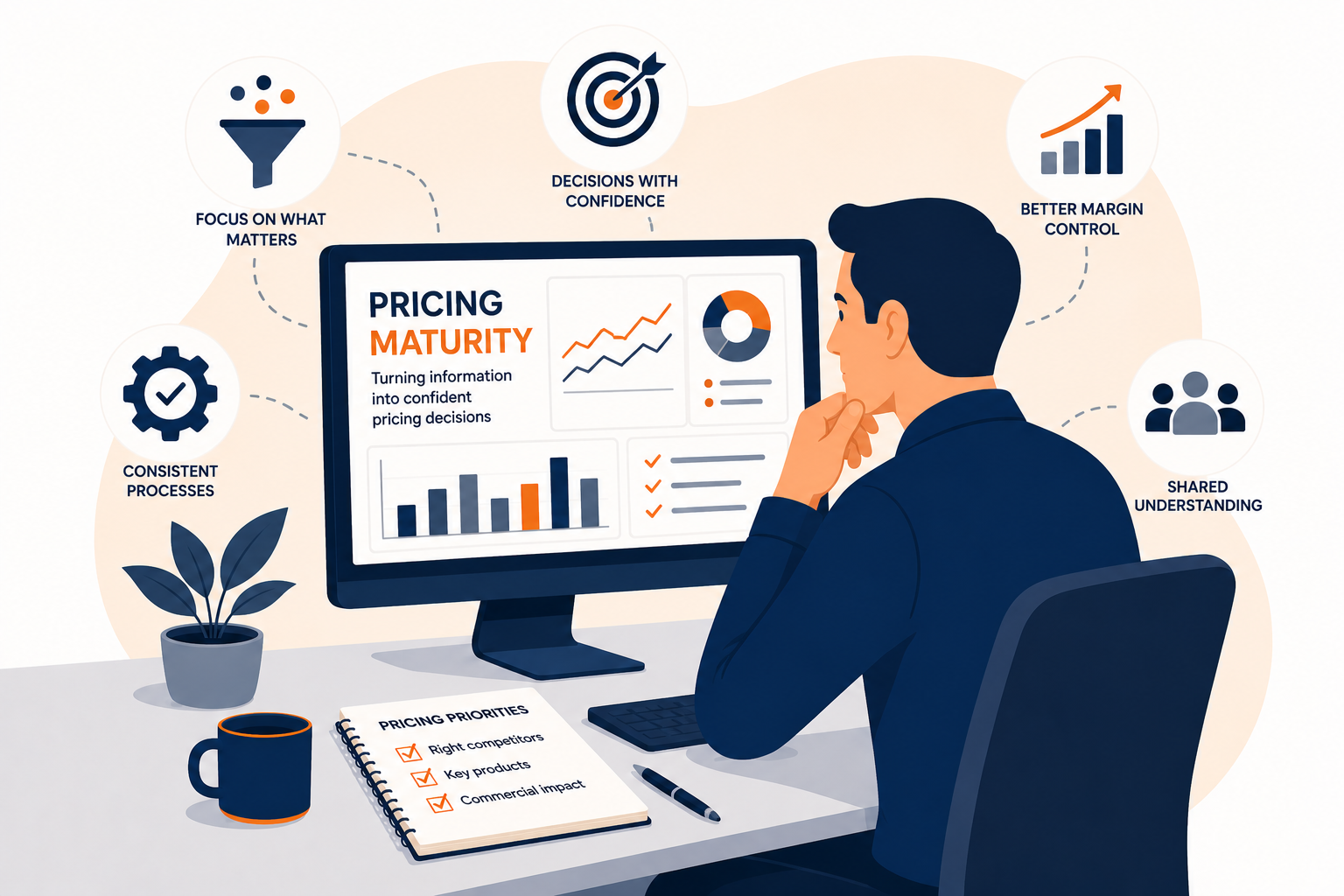
When teams trust both the data and the framework guiding decisions, pricing reactions become faster without becoming reactive.
A Pricing Process Built for a Different Retail Environment
Many pricing processes were designed for a retail environment that no longer exists.
An environment where price changes were slower. Competitor visibility was limited. Market reactions took time.
That environment has disappeared.
Today, pricing moves continuously.
Which means pricing capability must evolve as well.
Retailers rarely lose margin because they lack data.
They lose margin because their pricing process cannot move at the speed of the market.
A Final Question for Leadership
If you want to understand your pricing capability, ask one question.
From the moment the market changes, how long does it take your organisation to respond?
If the answer is measured in weeks rather than days, your pricing process may be protecting certainty at the cost of competitiveness.
And in modern retail, slow certainty can be more expensive than imperfect speed.