
Peak trading creates a difficult combination for pricing teams. Competitor activity increases, promotions become more frequent, stock positions move quickly and commercial pressure rises at exactly the point when there is less time to assess what is happening. The result is usually more market signals, more potential decisions and more opportunity for unnecessary reaction.
The challenge is not simply keeping up with every change. It is deciding which changes are commercially important enough to deserve attention. A retailer that reacts to everything may look responsive, but responsiveness without context can quickly create avoidable workload and margin pressure. Stronger pricing processes are built around knowing what matters before the volume of activity increases.
Peak Trading Increases Activity, Not Necessarily Importance
A busy market naturally produces more competitor price movements. Some of those changes will be significant, but many will have very little impact on the retailer’s real competitive position. A small reduction from a marginal competitor on a low priority product should not carry the same weight as a major move from an important competitor on a high volume line.
The difficulty is that both can appear equally prominent within a raw competitor pricing feed. If the team has to investigate every movement manually, the volume of work quickly becomes difficult to manage. The objective should therefore be to separate important signals from routine market activity as early as possible.
Competitor Relevance Should Come Before Reaction
Not every competitor has the same influence across every category. One retailer may be a major reference point for power tools but largely irrelevant within plumbing. Another may be highly competitive online but less important for customers who value local availability or collection.
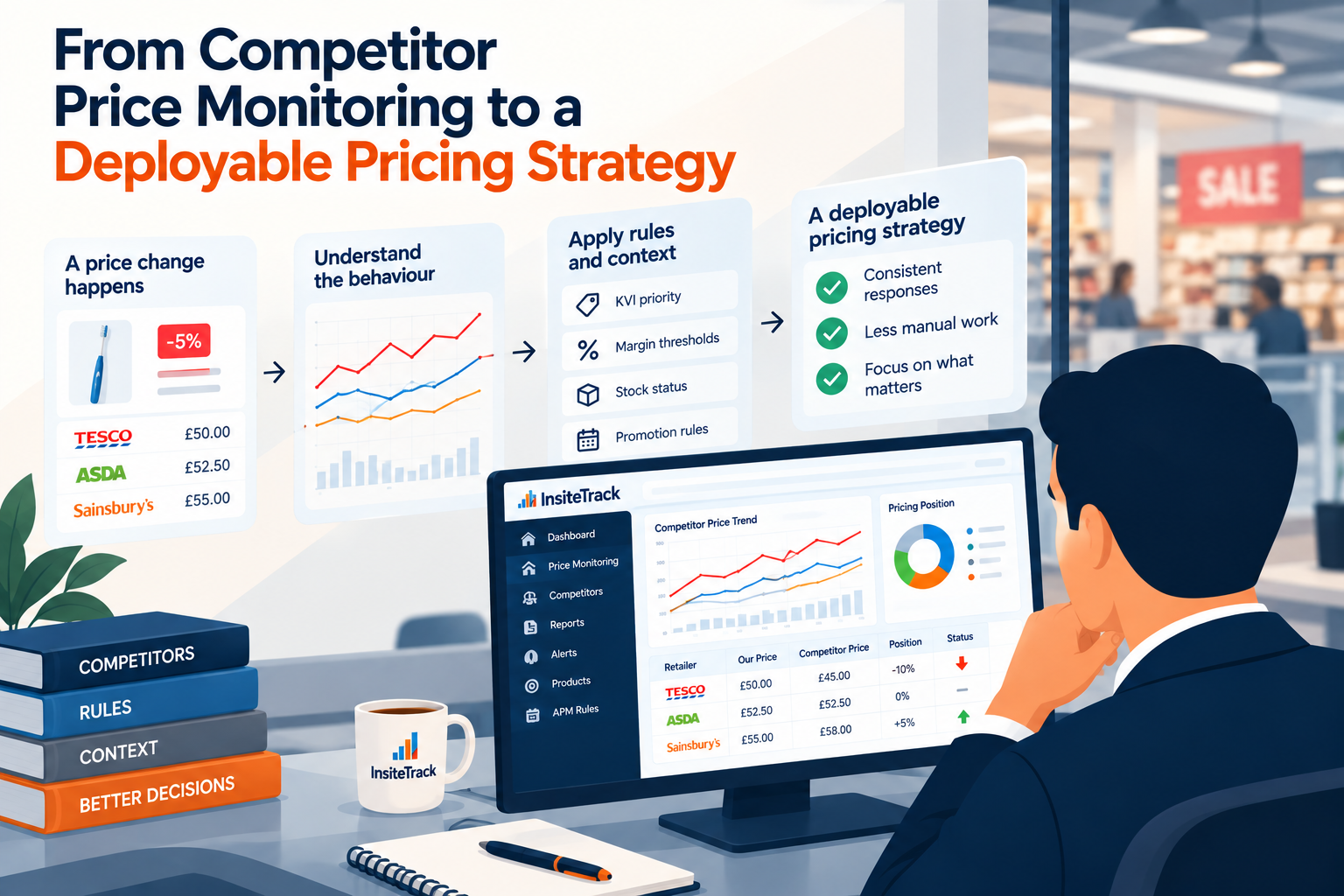
That means competitor relevance should form part of the decision itself. A price move only becomes meaningful when the retailer understands who made it, where that competitor matters and whether customers are genuinely likely to compare the two offers. During peak, this hierarchy becomes particularly valuable because it allows the team to focus on movements from competitors that can actually affect performance.
The Product Matters Just as Much as the Competitor
The importance of the product should also determine how quickly a price change is reviewed. Retailers often manage thousands of products, but only a proportion of those products will have a major influence on customer price perception, traffic, margin or volume. Treating every SKU with the same level of urgency creates an enormous amount of unnecessary work.
A better approach is to give greater attention to products where competitive position genuinely matters. Key Value Items, promotional lines, high volume products and strategically important categories may need tighter monitoring. Long tail products with limited competitive sensitivity can usually be handled differently, allowing the pricing team to concentrate its effort where the commercial impact is greatest.
Availability Can Completely Change the Competitive Picture
A lower competitor price can appear concerning until availability is considered. If the competitor is out of stock, unable to deliver quickly or only has limited local availability, the cheaper price may represent much less of a threat than the headline comparison suggests. This becomes particularly important during peak periods when stock levels can change rapidly.
The retailer’s own availability matters as well. A highly competitive price can create value on a product the business has strong stock depth in, while aggressive pricing may make less sense where supply is restricted. Looking at price and stock together creates a much more realistic view of the customer offer and helps avoid unnecessary price reductions.
Promotional Prices Need Their Own Context
Peak trading usually brings a sharp increase in promotional activity. Flash sales, weekend offers, supplier funded campaigns and clearance events can all create temporary pricing positions that look significant when viewed without context. Matching those movements automatically can turn a short term competitor promotion into a much longer term reduction in margin.
Retailers therefore need to understand whether a competitor change represents a genuine change in market position or a temporary event. The duration and nature of the promotion can materially change the appropriate response. Sometimes the right decision is to match, sometimes it is to monitor, and sometimes it is simply to allow the promotion to run its course.
Market Position Is More Important Than the Change Itself
A competitor changing price does not automatically mean the retailer’s own position has worsened. If the business remains within its target position after the movement, there may be little commercial reason to respond. A competitor moving from £100 to £98 matters differently if the retailer is already selling at £95 than if it is currently at £105.
This is why the movement itself should never be the entire decision. Pricing teams need to understand how the change affects their relative position and whether that new position sits outside agreed commercial boundaries. That shifts the process from reacting to competitor activity towards managing a defined pricing strategy.
Clear Rules Become More Valuable During Busy Periods
Peak trading is a poor time to start debating the basic principles behind the pricing strategy. Which competitors matter, which products deserve priority, what margin boundaries need protecting and which promotional movements warrant action should ideally be considered before the busiest periods begin.
Clear rules give teams a consistent starting point. They can define when a competitor should influence a price, when an exception should be escalated and when no action is required. The clearer those principles are, the less time people spend rebuilding the same decision from scratch every time the market moves.
Automation Should Handle the Predictable Decisions
Where a pricing decision is predictable and repeated frequently, automation can reduce peak workload significantly. If the business has already decided that certain products should follow a specific competitor within agreed margin limits, there is little value in asking someone to manually review the same situation every day.
The same principle can apply to stock availability, promotion types and acceptable price gaps. Automation can filter or execute the routine cases while escalating unusual or commercially important situations to the team. This keeps people focused on decisions where human judgement genuinely adds value rather than using their time to repeatedly confirm an established rule.
Faster Reactions Are Not Always Better Decisions
Peak trading naturally creates pressure to move quickly, but speed on its own should not be confused with effectiveness. A retailer that reacts immediately to every competitor change can be extremely responsive while still making poor commercial decisions. In some cases, it may simply be reducing margin faster than the market requires.
The more valuable capability is knowing quickly whether a response is necessary. Reliable competitor data, availability information, promotional context and clear commercial rules all contribute to that judgement. Confidence sometimes means changing price quickly, but it can just as easily mean knowing when to hold.
Peak Reveals How Well the Pricing Process Really Works
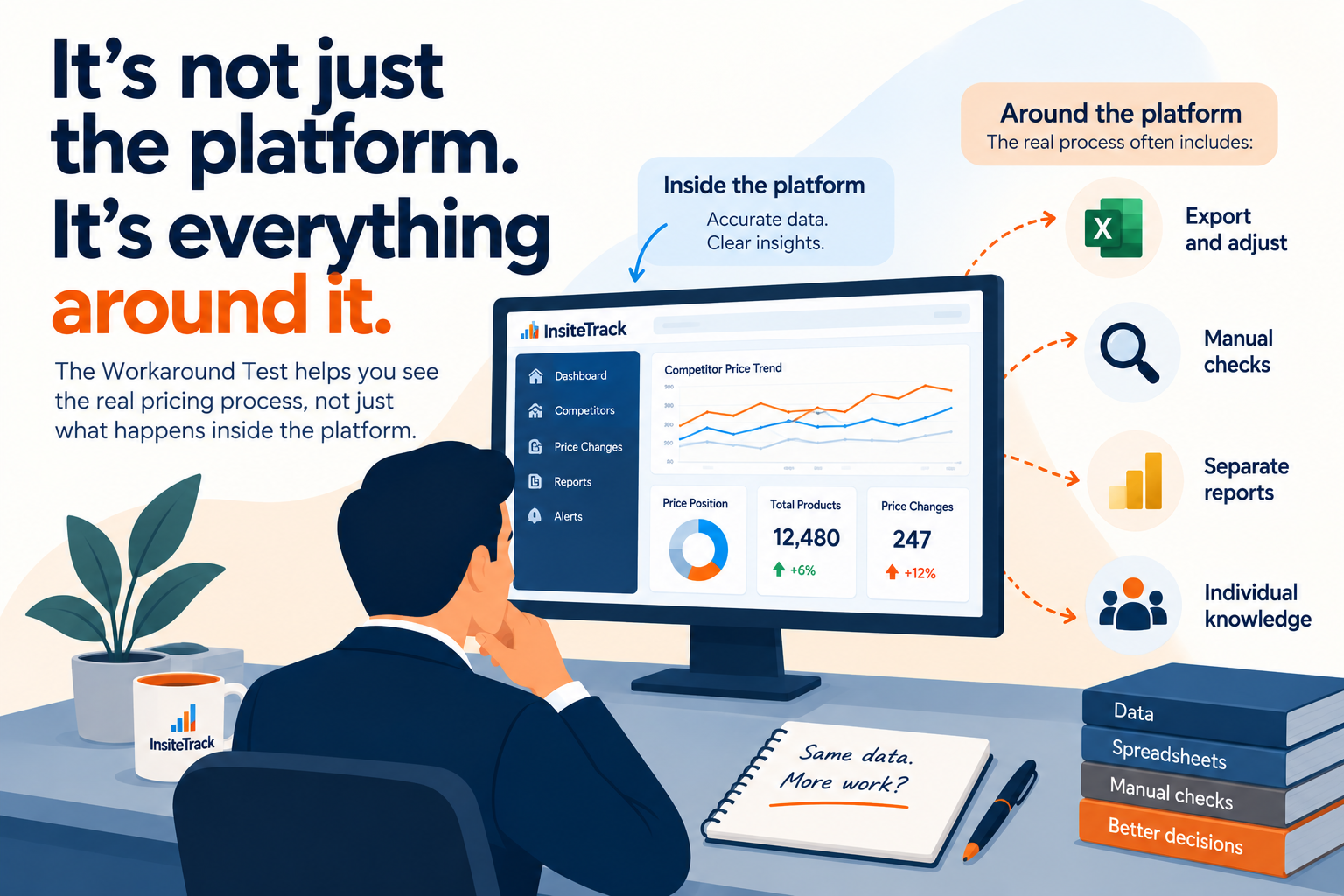
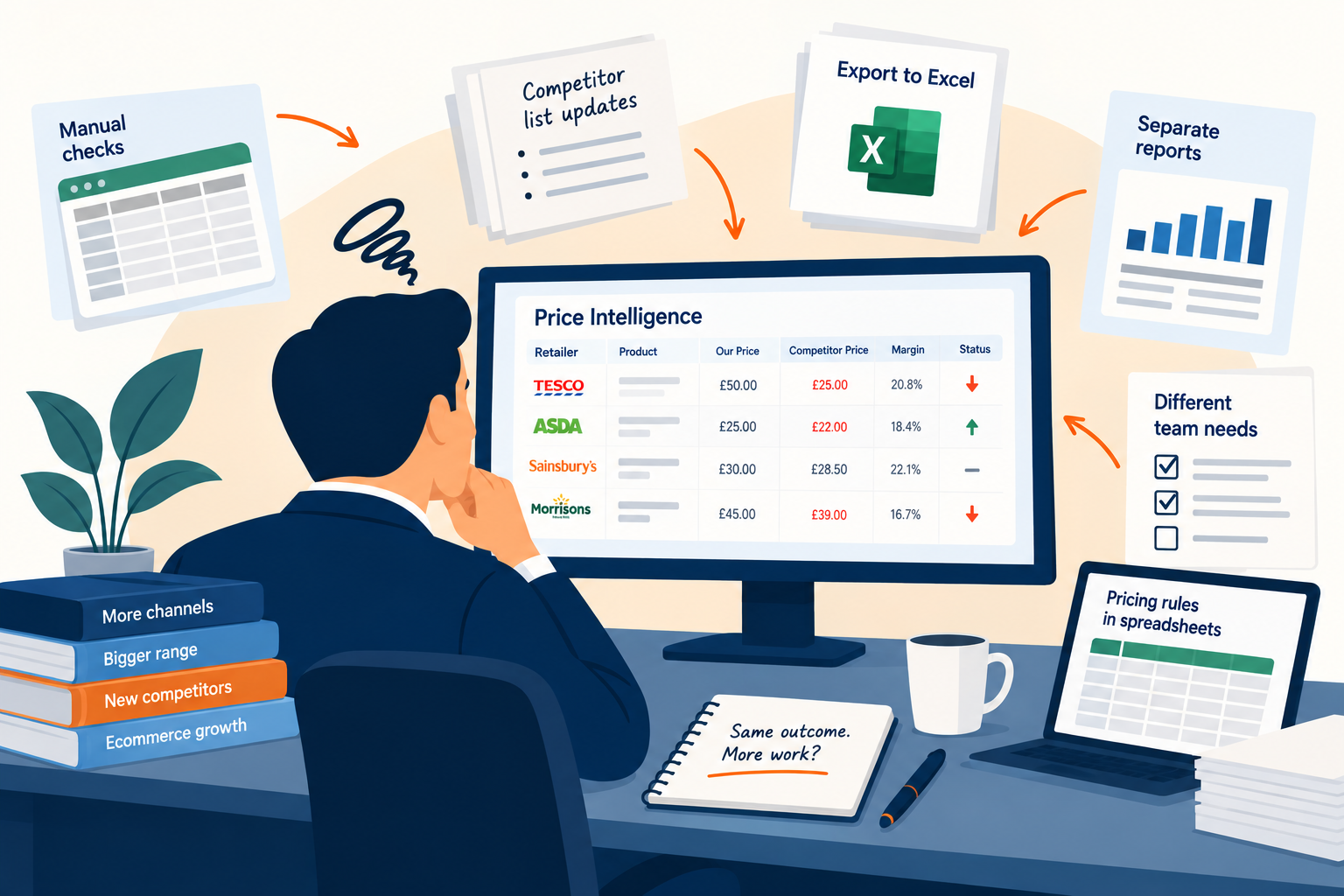
Periods of high market activity tend to expose weaknesses that are easier to absorb at quieter times. Manual checks take longer, inconsistent rules become more visible and unclear priorities create larger queues of decisions. If every new competitor movement automatically creates more work, the process becomes increasingly difficult to scale.
A stronger approach reduces that dependency on manual interpretation. Important competitors and products are already prioritised, routine scenarios have defined responses and only genuine exceptions require deeper attention. The pricing team can then absorb a much larger volume of market activity without needing the same increase in manual decision making.
Turn Market Activity Into a Smaller Number of Better Decisions
Retailers will never eliminate competitor activity during peak, nor should they try. The opportunity is to turn a very large number of price changes into a much smaller set of commercially meaningful decisions. That requires a combination of competitor relevance, product importance, availability, promotional context and clear pricing boundaries.
The businesses that handle peak most effectively are unlikely to be those that simply collect the greatest volume of pricing data. They will be the ones that can identify what deserves attention quickly and confidently. In a busy market, the real advantage is not seeing everything. It is knowing what matters.