Everyone has the data now. Competitor prices are visible, promotions are tracked, dashboards are built, and reports are shared. There was a time when that created an advantage. Today, it doesn’t. When every retailer can see the same signals, visibility stops being the differentiator. The real question becomes what actually happens after the data is seen.
Data Isn’t the Problem Anymore
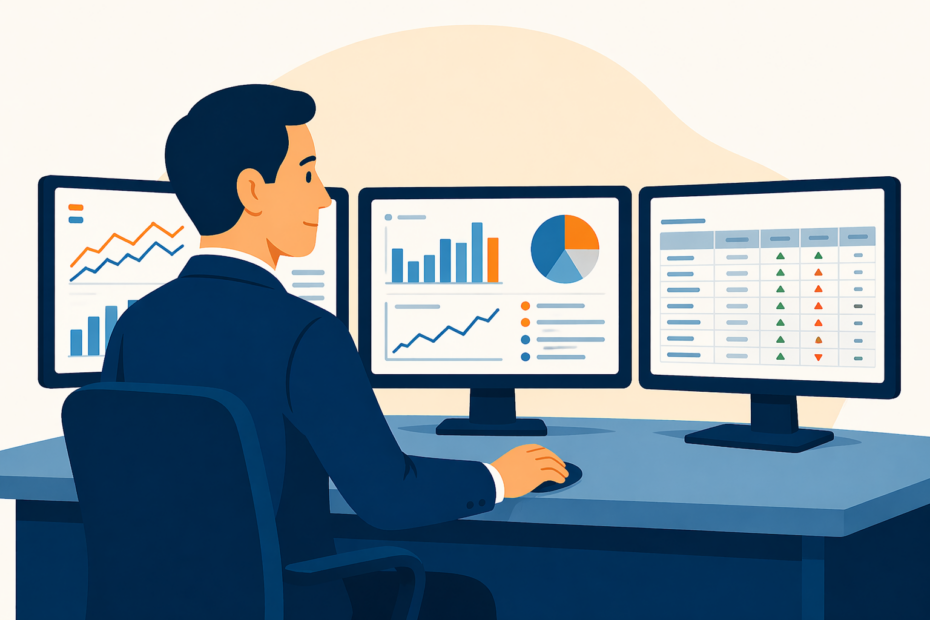
Retail pricing data has become widely accessible. Multiple providers offer similar coverage, marketplaces expose pricing instantly, and internal teams are surrounded by reporting. Most organisations are no longer asking whether they have the data. Instead, they are asking, often indirectly, why it still feels difficult to act on it. That is the shift. The constraint is no longer access. It is execution.
The Real Bottleneck Is Decision Confidence
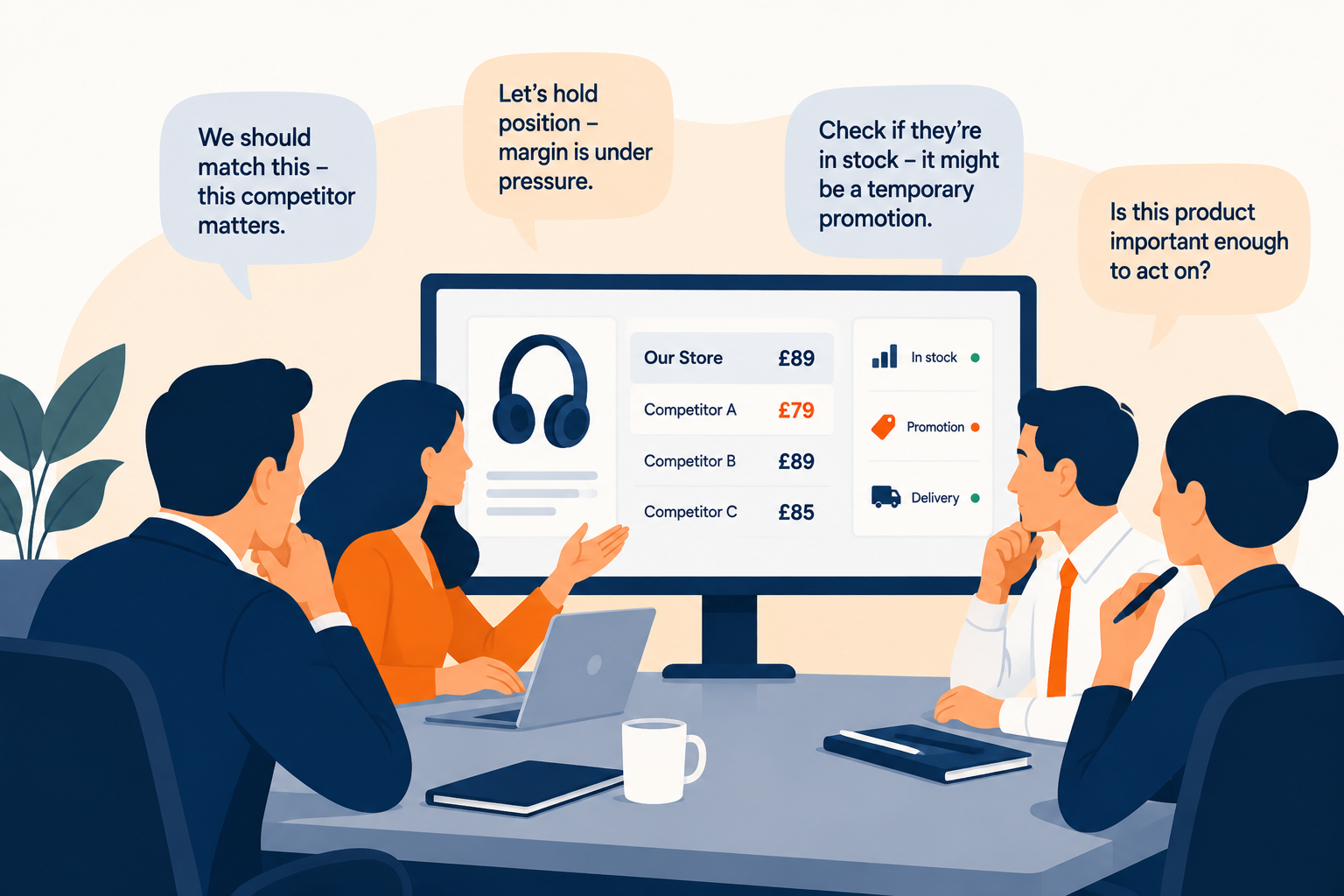
At its simplest, pricing should follow a clear pattern: a signal appears, a decision is made, and action follows. In reality, it rarely works like that. Signals are reviewed, data is validated, context is rebuilt, and decisions are discussed. While that process unfolds, the market continues to move. This is where pricing capability is truly tested, not in what teams can see, but in how quickly they can move from signal to action.
Why More Data Often Makes It Worse
When pricing feels slow, the instinct is to add more data. More feeds, more dashboards, more reporting layers. It feels like progress, but it often creates friction. More data increases cognitive load, extends interpretation time, encourages internal debate, and ultimately slows decisions. The issue is not the volume of data available. It is whether that data clearly shows what to do next. If it does not, it adds work rather than removing it.
Most Retailers Are Stuck at the Same Stage
Many pricing teams believe they are relatively mature. They have competitor visibility, run regular reviews, and monitor the market consistently. But this is only foundational maturity. It answers what is happening, not what should be done about it. That gap is where most organisations stall. The presence of data creates the illusion of control, but without clear pathways to action, decisions remain slow and reactive.
Where Capability Starts to Diverge
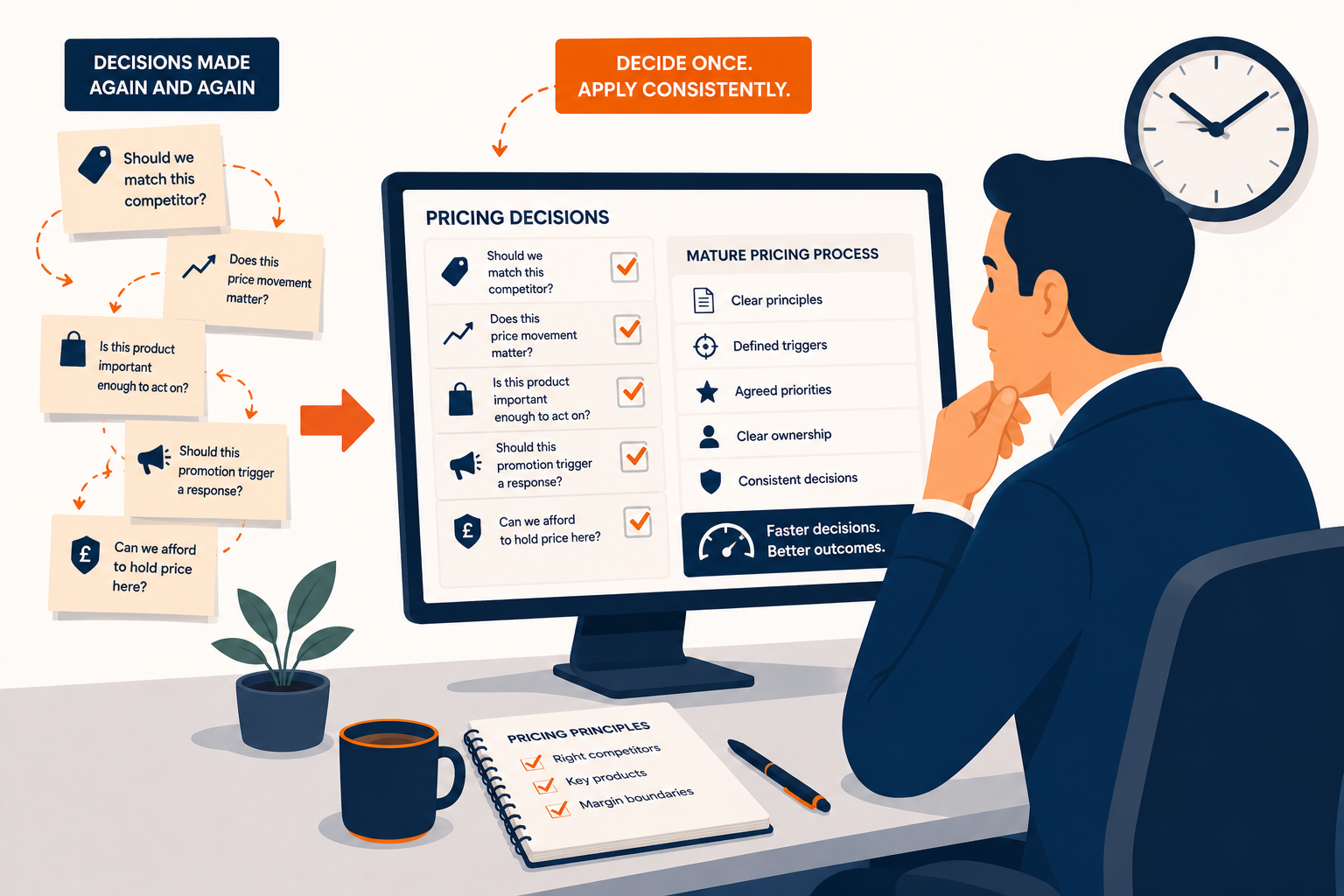
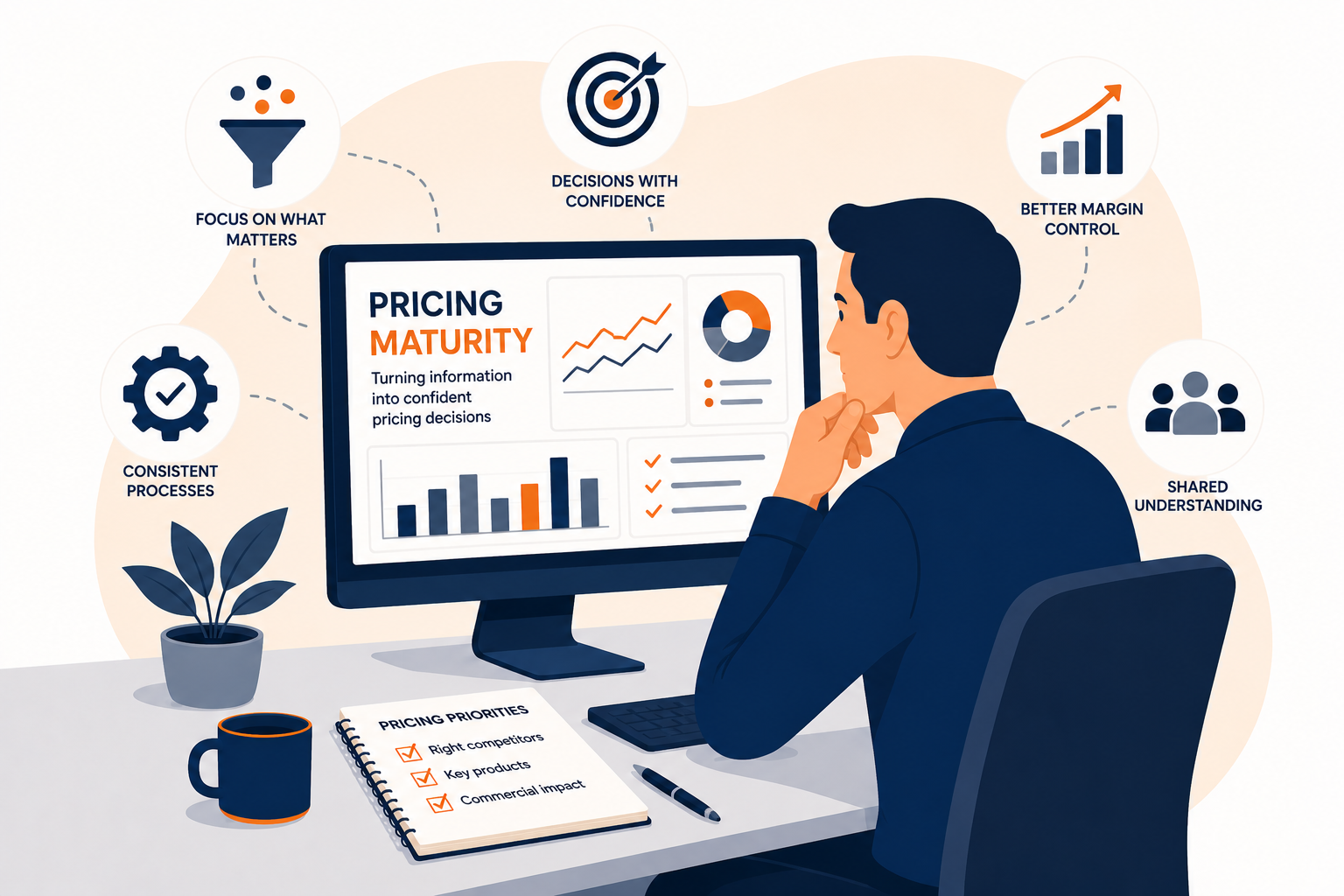
The retailers that move forward approach pricing differently. They stop treating it as a reporting exercise and start treating it as a decision system. This shift is less about technology and more about structure. Signals are prioritised rather than simply surfaced, ownership is clear, and focus is placed on high-impact products rather than the full range. Decision pathways are shorter, not more complex. The result is not more data, but better use of it.
From Activity to Control
At a more advanced level, pricing begins to feel calmer and more deliberate. Teams are not reacting to every movement. They are managing what matters. This typically includes filtering out noise, applying automation within clear commercial guardrails, embedding a consistent decision rhythm, and aligning pricing with promotions and channel performance. The outcome is not speed for its own sake, but clarity. And clarity removes hesitation.
Same Data, Different Outcomes
This is where the competitive gap becomes visible. Two retailers can have identical competitor data. One spreads effort across the range, debates decisions, and reacts late. The other focuses on high-impact products, acts quickly, and ignores noise. The difference is not insight. It is execution. Over time, that difference compounds.
The Overlooked Factor: Usability
There is another layer that is often underestimated. Data quality and usability. Even small issues create friction. If product matching is inconsistent, trust breaks down. If competitor coverage is incomplete, exposure is hidden. If outputs are unclear, decisions slow down. You do not need poor data for this to happen. You just need data that requires effort to interpret. The best pricing environments are not defined by how much data they have, but by how easy it is to use.
A Simple Challenge for Leadership
If you want to understand your pricing capability, do not ask how much data you have. Ask how effectively it drives action. How long does it take to respond to a competitor move? How often do pricing decisions require discussion? Do teams trust the data immediately or validate it first? Are you focused on the products that shape perception? Does your data simplify decisions or slow them down? If those answers are unclear, the issue is not insight. It is structure.