
Most retailers think about competition too broadly.
They look at overall price position, category averages, and market-wide competitiveness.
And they assume that to lose, they have to be beaten across the board.
That is rarely what actually happens.
You don’t lose the market.
You lose the moments that matter.
Competition Is Not Evenly Distributed
Retail competition is not a flat playing field.
Customers do not evaluate your entire range.
They do not compare every SKU.
They do not calculate your average price position.
They focus on specific products.
The ones they recognise.
The ones they search for.
The ones that anchor value in their mind.
This is where competition actually happens.
And it is where retailers are most exposed.
The Products That Shape Perception
Every retailer has a small group of products that carry disproportionate weight.
These are often referred to as Key Value Items.
They are not always the highest margin.
They are not always the highest volume.
But they are highly visible.
These products shape how customers perceive your pricing overall.
If you are weak here, it does not matter if you are competitive elsewhere.
Perception is already set.
Where Retailers Actually Lose
Most pricing strategies fail in the same way.
Not through broad mispricing.
But through narrow exposure.
• A competitor undercuts a handful of high-visibility products
• A marketplace seller becomes aggressive on key lines
• A promotion lands on products customers actively compare
Individually, these moves look small.
Collectively, they shift perception.
Customers begin to assume you are expensive.
Conversion softens.
Promotional pressure increases.
And the response often comes too late.
Because the focus was too broad to detect the real issue early.
The Danger of Averaging Everything
One of the most common pricing mistakes is relying on averages.
• Average price position
• Average competitiveness
• Average margin impact
Averages create comfort.
But they hide exposure.
You can be competitive on average while being uncompetitive where it matters most.
And customers do not experience your pricing as an average.
They experience it through specific interactions:
• A search result
• A product comparison
• A promotional message
That is where decisions are made.
A Better Way to Think About Competition
Stronger pricing strategies focus less on the full range and more on critical moments.
Instead of asking:
Are we competitive overall?
The better question is:
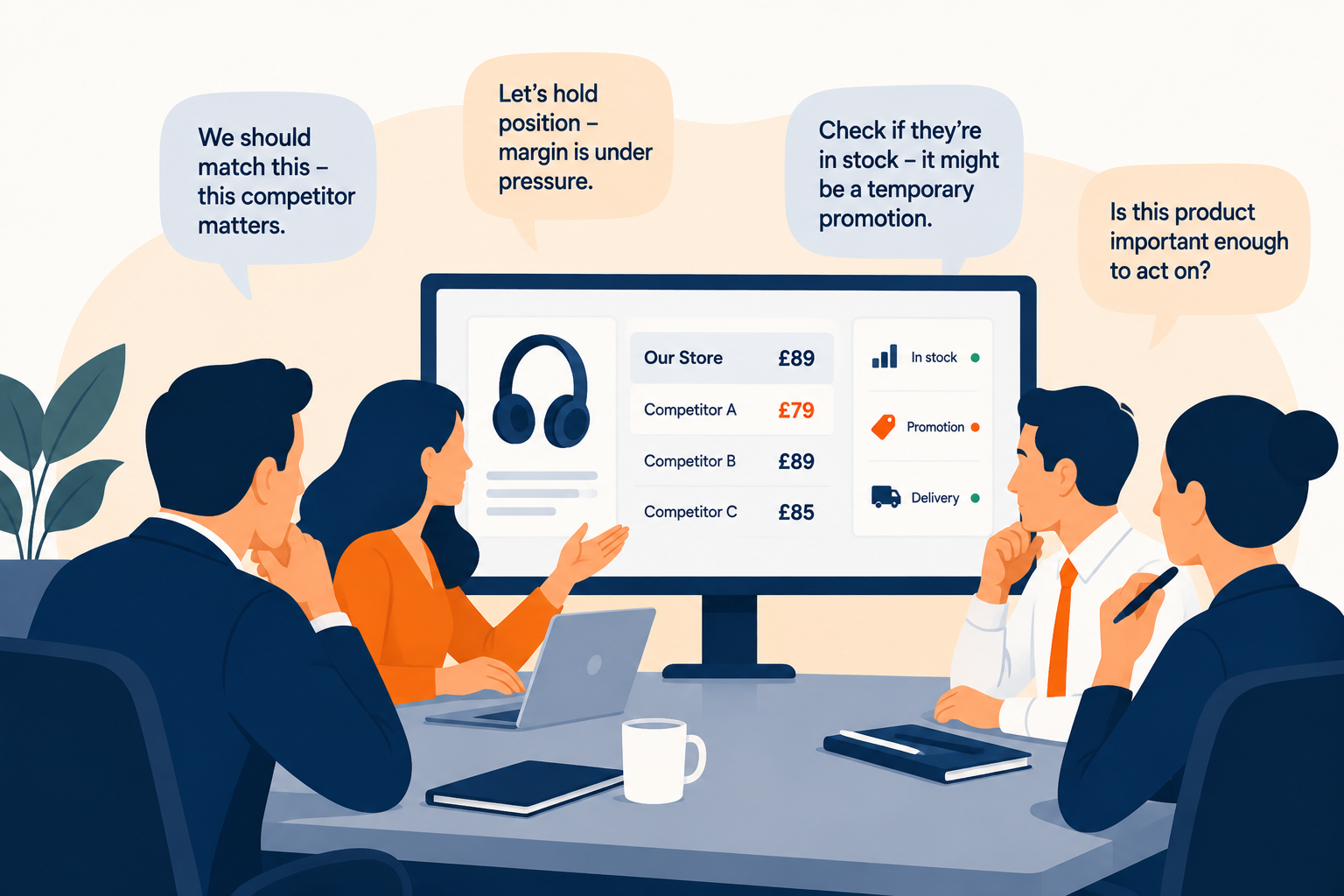
Where are we visible, and how do we compare there?
This shifts the focus toward:
• High-traffic, high-visibility products
• Products that anchor price perception
• Competitor behaviour on those specific items
• Promotional activity that influences comparison
• Stock availability that changes the competitive landscape
Competition becomes targeted rather than generalised.
And decisions become more deliberate.
The Role of Price Intelligence
This is where price intelligence becomes critical.
Not just as a way to track competitor prices.
But as a way to understand:
• Where competitors are aggressive
• Where they are weak
• Where they are out of stock
• Where promotions are concentrated
• Where price gaps actually matter
Without this visibility, retailers often react too broadly.
They discount across categories instead of acting precisely.
They protect margin in the wrong places and give it away in others.
With the right intelligence, the focus becomes sharper.
Not everywhere.
Just where it matters.
What Better Looks Like in Practice
Retailers that manage this well behave differently.
They do not try to win across the entire range.
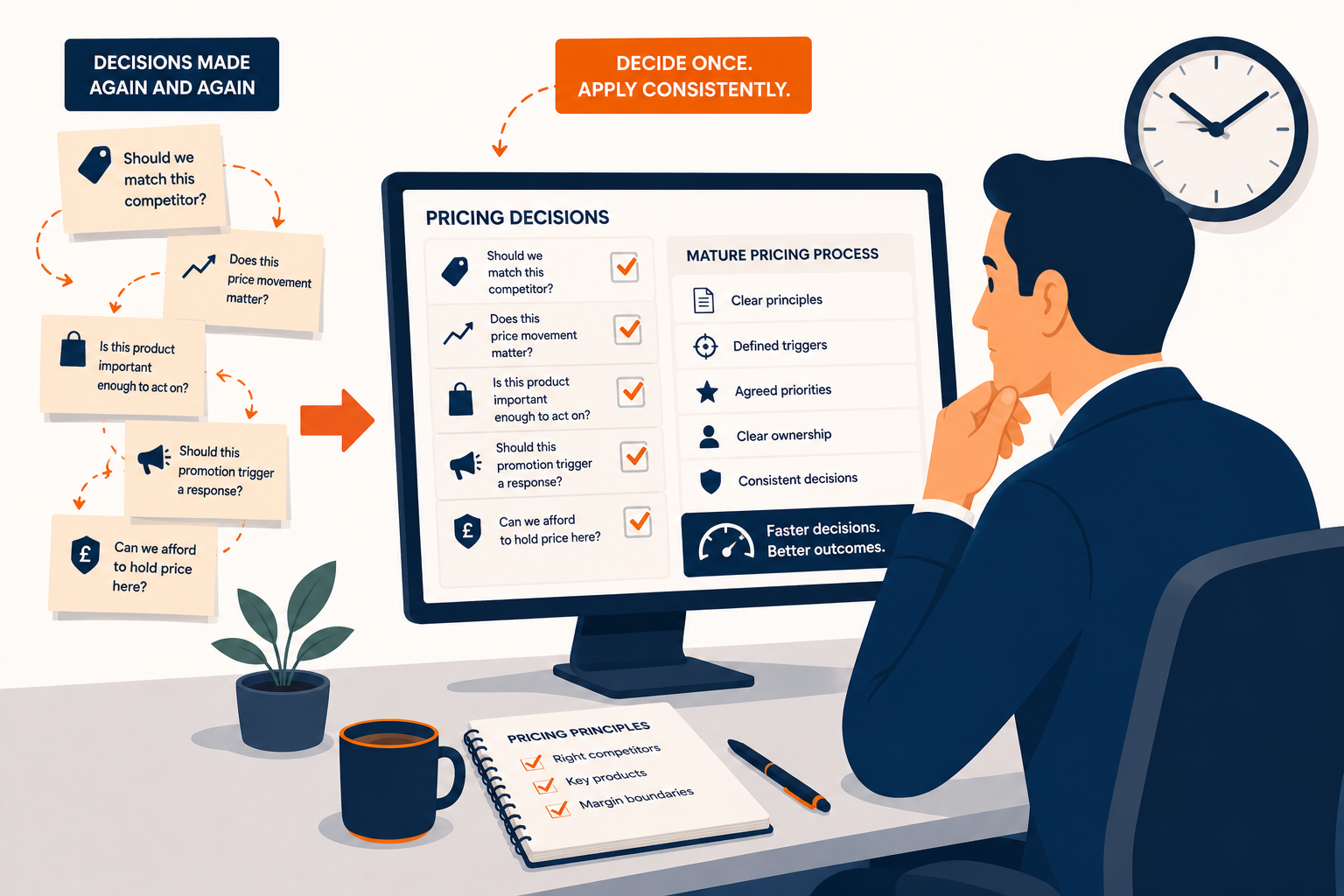
They prioritise.
They identify the products that shape perception and treat them differently.
Typically, this means:
• Protecting competitiveness on Key Value Items
• Holding margin where customer visibility is low
• Reacting quickly to competitor moves on high-impact products
• Ignoring noise on low-impact areas
In one example, a retailer shifted focus from broad category competitiveness to a defined set of high-visibility products.
Instead of reacting to every competitor move, they concentrated effort where customers were actively comparing.
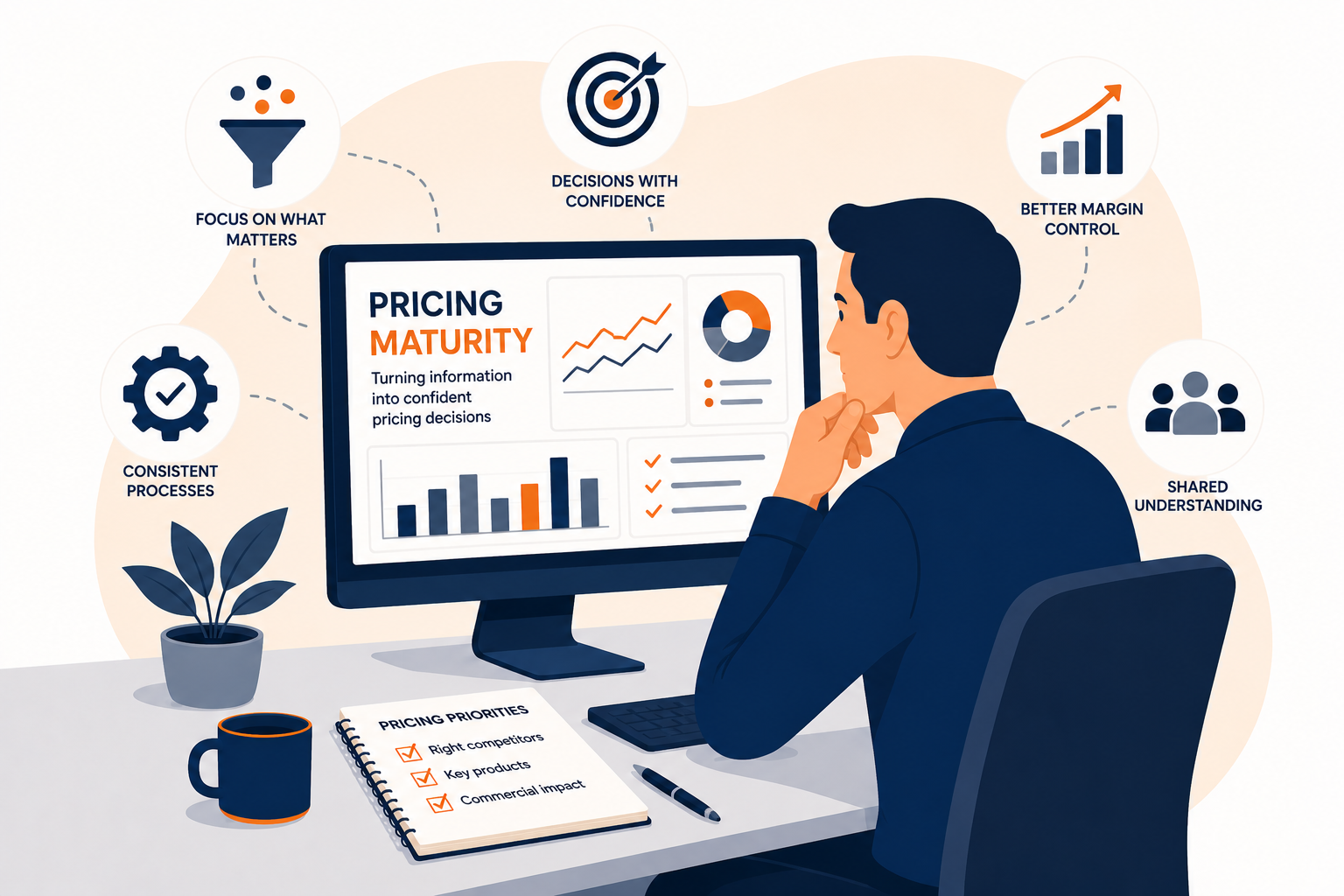
The result was fewer pricing changes, stronger price perception, and improved margin control.
Not because they did more.
But because they focused better.
Why This Matters More Than Ever
Retail has become more transparent.
Customers can compare instantly.
Marketplaces surface alternatives in seconds.
Promotions are visible across channels.
This increases the importance of specific moments.
You are not being judged continuously.
You are being judged in snapshots.
And those snapshots are shaped by a small number of products.
To understand your exposure, ask a few direct questions:
• Do you know which products define your price perception?
• Can you see how competitors price those specific items?
• Are competitor promotions concentrated on those products?
• Do you know when competitors are out of stock on key lines?
• Are your pricing decisions prioritised around these products?
If several of these are unclear, your pricing strategy may be too broad.