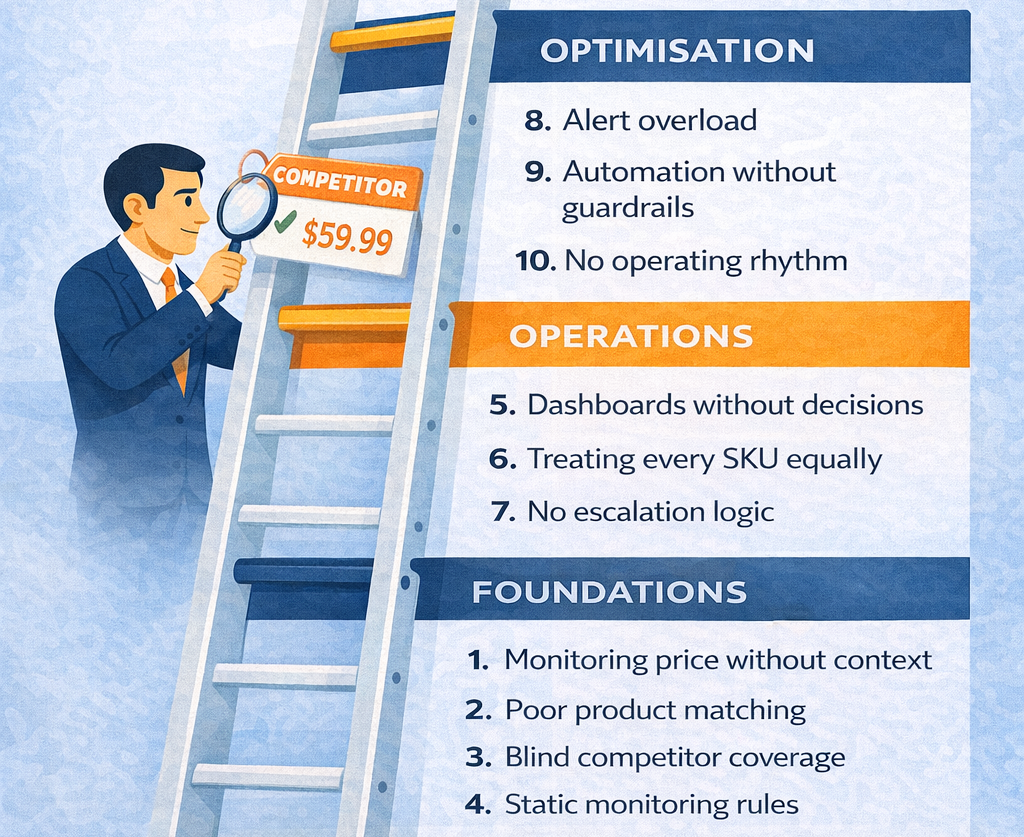

Pricing transparency has become one of the most powerful tools available to modern retailers. Price is one of the clearest signals a retailer sends to customers. It communicates fairness, value and intent long before a product is added to a basket. In a market where prices move more frequently and customers have more access to information than ever, pricing transparency has become essential for building trust. Importantly, transparency does not require lowering prices. Retailers who communicate value effectively often strengthen loyalty, reduce sensitivity to competitor undercutting and improve customer satisfaction without adjusting price points at all.
Why Pricing Transparency Matters More Than Ever
Customers today are highly informed. They compare prices across multiple devices, expect consistency across channels and notice unexpected changes quickly. When price movements are unclear or unexplained, customers question fairness and lose confidence in the brand. Pricing transparency helps shift the conversation from confusion to clarity. It allows retailers to explain why prices move, especially during volatility, supply challenges or competitive changes. Retailers who prioritise pricing transparency see meaningful benefits, including higher trust and stronger loyalty, fewer pricing-related complaints, greater willingness to pay for quality and service, lower sensitivity to competitor price changes and improved long-term brand perception. Pricing transparency is not about being cheaper. It is about being clear.
Transparency Without Margin Loss: What Customers Actually Want
Customers do not expect the lowest price. They expect a fair one. Research across retail sectors shows that clarity influences perception more than a small discount ever will. Customers want consistency across channels and devices, clear explanations when prices shift, easy access to pricing details, confidence that promotions are genuine and assurance they are not overpaying. Ultimately, customers want honesty and alignment. Retailers can deliver all of this without compromising profitability.
Five Ways Retailers Can Build Trust Through Pricing Transparency
Below are five practical strategies retailers can implement to improve customer trust while protecting margin strength.
1. Make Price Changes Easy to Understand
Customers become frustrated when prices change without clear reasoning. Retailers can reduce confusion by explaining price movements in simple terms, especially in categories where volatility is expected.
Examples include:
• Highlighting changes in supplier costs
• Explaining seasonal variations or stock cycles
• Using clear language to describe promotional logic
Simple explanations humanise pricing decisions and help customers understand the context behind them.
2. Communicate Value, Not Just Price
Pricing transparency is not only about explaining numbers. It is also about articulating value. Retailers can strengthen customer trust by highlighting:
• Product durability and quality
• Guarantees or warranties
• Delivery speed and convenience
• Ethical sourcing or sustainability credentials
• Service standards and aftercare
When customers understand what the price represents, the price becomes only one aspect of the decision.
3. Ensure Complete Alignment Across All Channels
One of the fastest ways to break trust is inconsistency between channels. When a website price does not match marketplace listings or in-store pricing, customers lose confidence. Retailers can prevent this by synchronising pricing across website, app, store and marketplaces, removing lag through automated pricing systems, ensuring Google Shopping and backend data reflect the latest price and validating pricing data frequently to avoid mismatches. Alignment shows customers that the retailer is organised, transparent and respectful of their time.
4. Maintain Transparent Promotional Logic
Promotions often create unnecessary confusion. Customers struggle to understand discount rules or promotional mechanics, which reduces trust. Retailers can improve clarity by displaying clear start and end dates, automatically applying promotions at checkout, simplifying complex multibuy offers and ensuring promotional messaging matches the shelf edge or product page. When promotions are intuitive and predictable, customers feel confident and respected.
5. Use Data to Support Customer-Centric Pricing Decisions
Pricing transparency requires accurate information behind the scenes. Retailers need reliable intelligence on competitor prices, stock movement, market trends and customer behaviour to ensure decisions are fair and well-informed. Data-driven transparency helps retailers avoid unnecessary price reductions, protect margin while staying competitive, identify where customers expect value, respond quickly when fairness perception is at risk and highlight categories where transparency matters most. This is where InsiteTrack supports retailers directly with validated, contextual pricing data and clear reporting that teams can communicate confidently.
How Pricing Transparency Strengthens Long-Term Profitability
Many retailers fear that transparency will lead to lower prices, but evidence shows the opposite. When customers trust a retailer’s pricing, basket sizes increase, repeat purchase rates rise, price sensitivity decreases, loyalty strengthens and promotional performance improves. Pricing transparency creates confidence. Confidence creates loyalty. Loyalty drives sustainable profitability.
Building a Customer-Centric Pricing Culture
Pricing transparency is not only a tactic. It is a cultural mindset. It requires teams across the business to understand the customer perspective and commit to consistent, fair, value-led decision-making. A customer-centric pricing culture includes shared access to accurate pricing data, strong communication between pricing, category, marketing and digital, recognition that price is central to brand identity, commitment to clear and consistent pricing and a focus on delivering value rather than simply meeting cost targets. Retailers who adopt this approach move beyond transactional pricing. They build meaningful trust and long-lasting customer relationships.
Pricing transparency is a powerful competitive advantage. It strengthens perception, improves decision-making and supports margin without reducing prices. Retailers who communicate clearly, act consistently and use data intelligently create an environment of trust that benefits both customers and commercial performance. When strong data, customer-focused communication and reliable delivery come together, pricing transparency moves from being a challenge to becoming a differentiator.