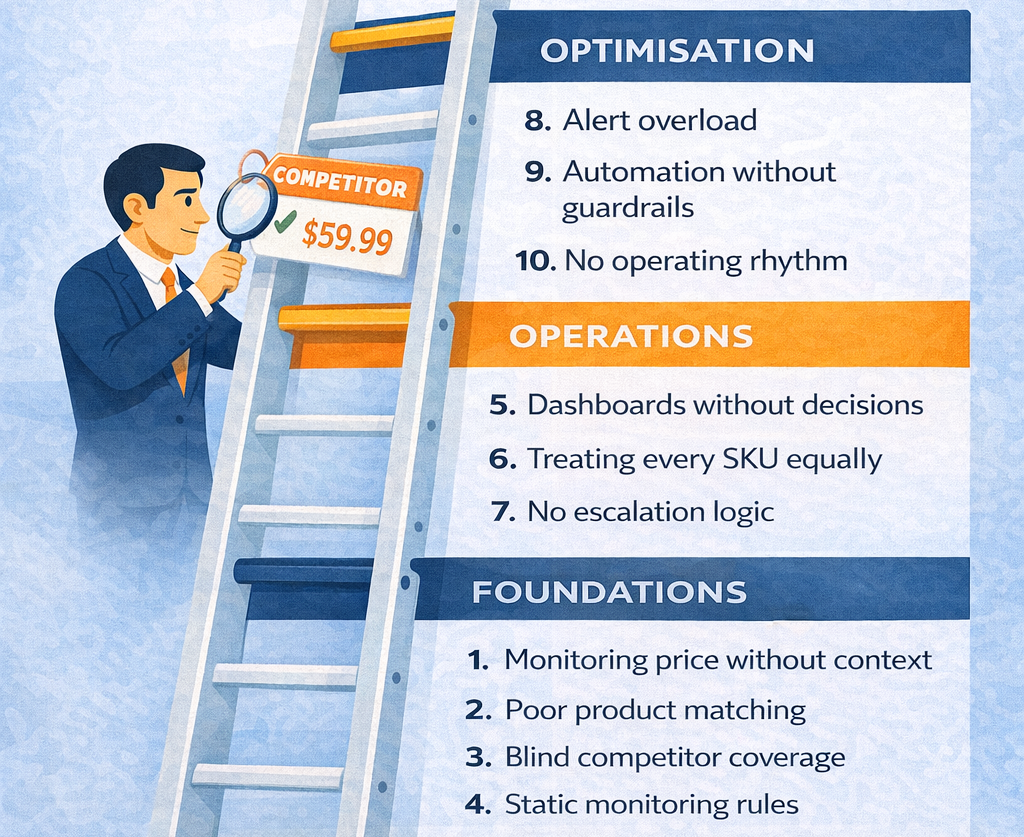
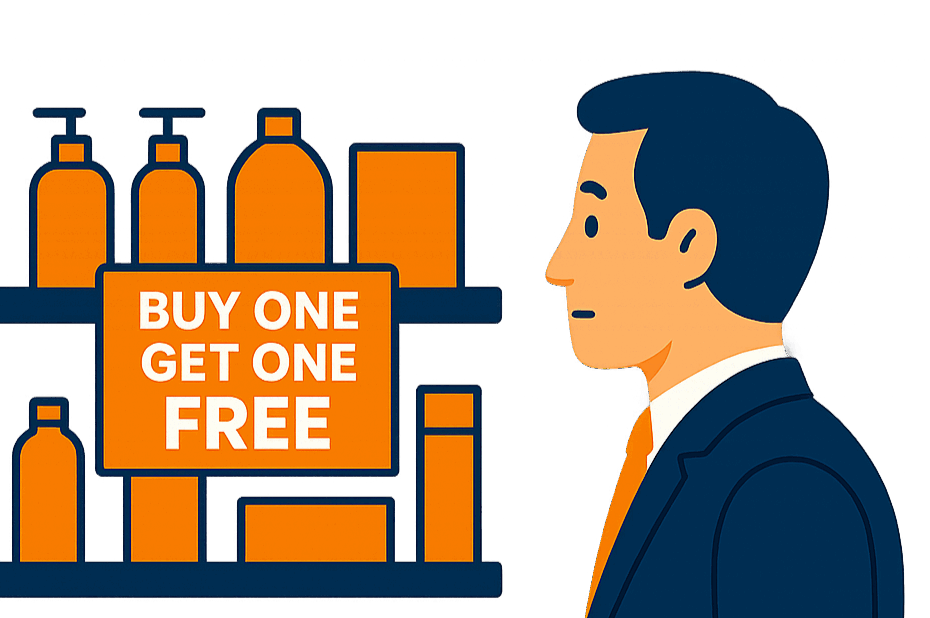
Promotions are meant to create momentum, lift demand, and strengthen customer value perception. However, many retailers end up cutting deeper than necessary or discounting products that do not require it. They react to competitor moves that look urgent but lack proper context. As a result, margin erodes quickly while performance does not improve.
Over-discounting has quietly become one of the biggest causes of preventable margin loss in retail. It appears to be a pricing issue at first glance, but the true causes usually sit within data gaps, low visibility, and a lack of structured promotional discipline. When commercial pressure is high and the market shifts rapidly, teams often prioritise speed over clarity. The encouraging news is that most promotional errors follow predictable patterns. Once retailers understand these patterns and support their teams with better intelligence, promotions begin to deliver the outcomes they were designed for.
The Most Common Reasons Retailers Over-Discount
Promotional mistakes are usually made with good intentions. Teams want to remain competitive, protect volume, or respond to what appears to be a market signal. But without the right information, these decisions often lead to unnecessary discounting or promotions that do not create value.
Below are the most common reasons retailers fall into the trap of over-discounting.
Matching Competitors Blindly
When a competitor lowers a price, many retailers feel compelled to match immediately in order to protect conversion. This instinctive move is one of the fastest paths to margin loss. Competitor discounts are often driven by internal issues such as excess stock, slow sell-through, or end-of-season clearances. They may also be running deep promotions in one channel while holding full value in another. Matching without investigating the reason behind the price change creates unnecessary pressure on margin.
Ignoring Stock Signals
Stock availability is one of the most reliable indicators for promotional decisions. When a competitor is out of stock, holding your price can strengthen both margin and perception. Similarly, if your own stock levels cannot support a surge in demand, a promotion may create more customer frustration than sales. When pricing and stock visibility are not aligned, retailers often discount at the wrong time or fail to hold price when conditions favour them.
Discounting KVIs Unnecessarily
Key Value Items strongly influence how customers judge price fairness. These items matter, but many retailers reduce them even when competitive pressure is low. KVIs typically have tight margins, so unnecessary cuts have a disproportionate impact on profitability. Understanding when KVIs truly shape perception and when they can hold their value is essential for reducing over-discounting.
Relying on Historic Playbooks
Promotional calendars that worked three years ago rarely work today. Customer expectations have changed, promotional cycles have accelerated, and digital channels amplify price movements instantly. Retailers who rely on outdated promotional playbooks often discount too early, too broadly, or too deeply. Without real-time insight, historic behaviour becomes a source of over-discounting rather than strategic advantage.
How Price Intelligence Helps Retailers Reduce Over-Discounting
Reducing over-discounting does not start with cutting back on promotions. It begins with giving teams the visibility and context needed to make confident decisions. Price intelligence solutions provide the insight required to apply promotional discipline consistently.
Better Context Behind Competitor Activity
Retailers need to understand more than the price displayed on the screen. They need to know why a competitor has discounted. Price intelligence reveals promotional mechanics, depth, timing, stock positions, channel differences, and historical patterns. This context helps teams distinguish between meaningful pressure and isolated activity.
Improved Timing and Selective Promotion Depth
Promotions are as much about timing as they are about price. Price intelligence highlights when competitors enter and exit promotions and which categories are moving quickest. Teams can then act with greater precision by targeting specific SKUs, responding only when significant gaps appear, and applying the minimum discount depth required to maintain competitiveness.
Protecting KVIs Without Unnecessary Margin Loss
A clear view of competitor KVI activity allows retailers to manage these influential items more intelligently. With strong KVI insight, teams can identify when to hold price, when temporary matching is necessary, and when competitive pressure is simply not strong enough to justify a cut. This creates a healthier balance between perception and profitability.
Aligning Pricing, Stock, and Promotional Decisions
Over-discounting often occurs when pricing, stock, and trading teams operate separately. Price intelligence brings these functions closer together by incorporating stock signals directly into pricing reports. This alignment prevents promotions that do not make operational sense and supports targeted promotional activity only when stock levels allow it.
Why Flexible Data Delivery Strengthens Promotional Strategy
Promotional decisions rarely wait for scheduled reporting cycles. Retailers need insight delivered in formats that suit their teams, whether that is an Excel report for buyers, a Power BI dashboard for commercial leaders, or an API feed for digital pricing teams. Flexible access ensures the right information reaches the right person at the right time. This is often where standalone tools fall short and where partnership-driven pricing intelligence creates meaningful impact.
From Over-Discounting to Precision Promotions
Promotions remain one of the most effective tools in retail. They can drive demand, influence customer perception, and support strategic objectives. However, without the right visibility, they can erode profit faster than any other pricing action. Retailers who use high-quality price intelligence gain the ability to discount with intention, choose their moments carefully, and protect margin while still delivering value to customers.
With the right insight, the right timing, and the right alignment between teams, retailers move from over-discounting to precise promotional execution. Promotions stop becoming a risk and start becoming a genuine competitive advantage.