
In the late 1990s, Andy Grove, former CEO of Intel, popularised a phrase that has shaped how many leaders think about competition: “Only the Paranoid Survive.”
It was never about fear. It was about discipline.
Grove used the phrase to describe how companies endure in intensely competitive markets. They do so by maintaining constant awareness of the forces that could quietly erode their position long before the damage becomes visible in financial performance.
That principle feels increasingly relevant in modern retail.
Retail Has Entered an Era of Permanent Competition
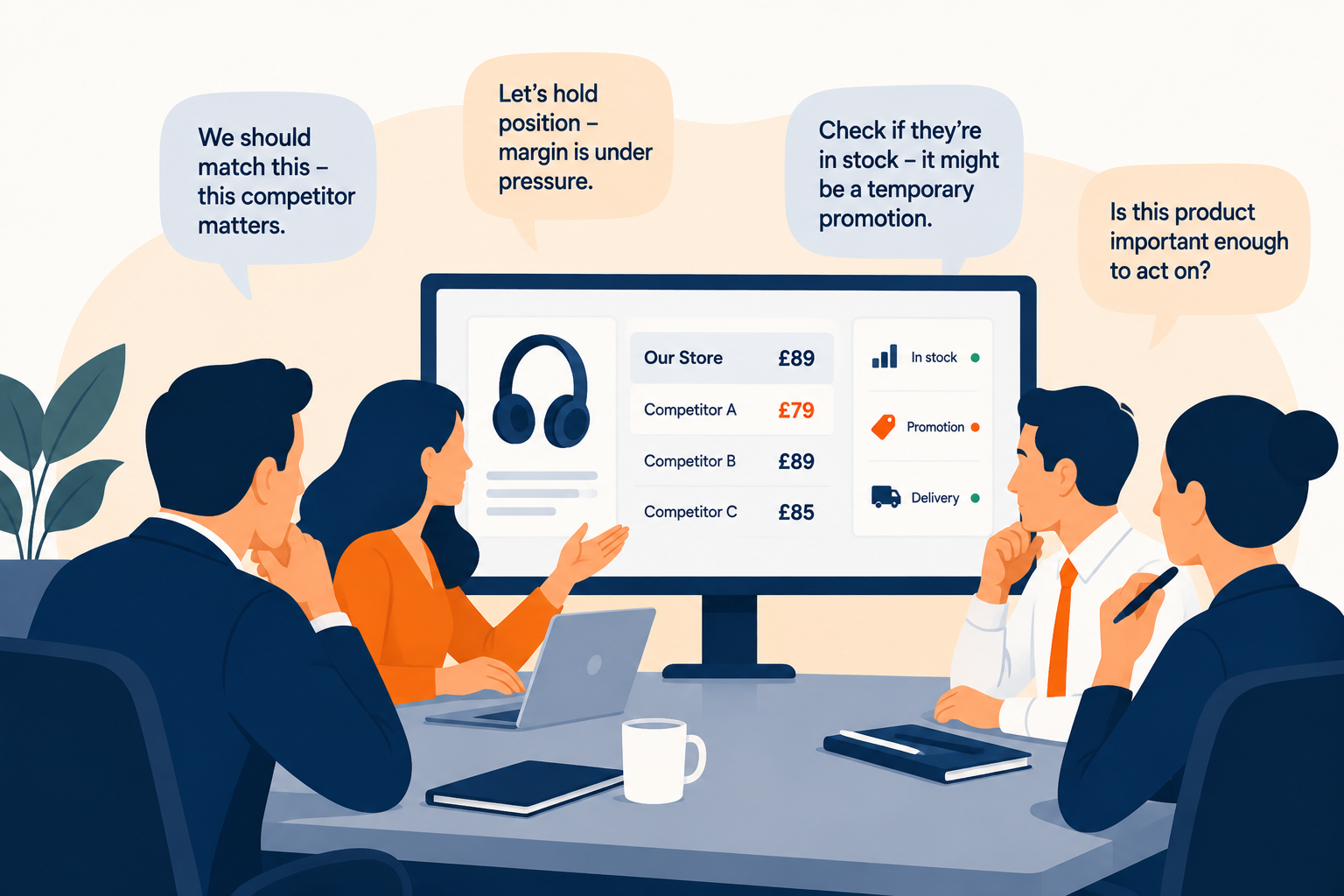
Retail now operates in conditions Grove would immediately recognise. Products are increasingly commoditised. Switching costs for customers are minimal. Competitors can adjust prices multiple times per day. Marketplaces and aggregators expose pricing instantly. Margin pressure is constant.
In this environment, pricing is no longer a tactical lever. It is a strategic capability that can protect profitability or quietly weaken it.
Yet many retailers continue to operate with partial visibility.
Strategic Inflection Points Rarely Announce Themselves
Grove introduced the concept of strategic inflection points, moments when the fundamentals of a market shift so gradually that organisations fail to adapt until it is too late.
The danger is not the event itself. It is the delay in recognising it.
In retail pricing, these shifts do not arrive dramatically. They appear as patterns:
• A competitor selectively undercuts key lines online
• A marketplace seller resets customer price expectations
• Margin is sacrificed in key value items to gain share
• Promotions become permanent rather than tactical
• Range and availability influence perception as much as headline price
Retailers rarely lose margin overnight. They lose it slowly through incremental decisions made without full context.
Spreadsheet Pricing Creates a False Sense of Security
Many leadership teams believe pricing is under control because competitor data is reviewed periodically and experienced category managers are trusted to monitor the market.
However, manual processes introduce lag. Lag creates blind spots. Blind spots increase risk.
By the time margin impact appears in reporting, the competitive environment has already moved. Historical visibility does not equal competitive awareness.
Constructive paranoia means recognising that visibility without timely action is insufficient.
Paranoia as Discipline, Not Panic
Healthy paranoia is not reactive discounting. It is disciplined vigilance.
It involves:
• Understanding where price truly shapes customer perception
• Identifying where exposure exists across channels
• Viewing price, promotion, stock and range together
• Acting quickly within clear commercial guardrails
Retail leaders who outperform are not necessarily the cheapest. They are the most deliberate about where price matters and where it does not.
A Real-World Example of Constructive Vigilance
One of the most formative experiences in competitive pricing came from working with the founder of a multi channel UK retailer who later became the market leader in his field.
Pricing was not reviewed occasionally. It was monitored continuously. Every competitor move was treated as deliberate. Not background noise. Not coincidence. A signal.
He did not wait for weekly reviews. When a competitor adjusted a key product, the response was calculated and timely. There was no panic. There was no complacency.
He understood that price perception is anchored by a small number of highly visible products. These products were guarded carefully. If a competitor attempted to reset expectations in a key category, the response was immediate and strategic. Not to win every price battle, but to protect perception.
Over time, this vigilance created a defensive moat. Competitors struggled to gain traction because meaningful moves were consistently met with awareness and intent.
The outcome was clear leadership in revenue, market share, and profitability. This success was not driven by aggressive discounting. It was built on disciplined awareness.
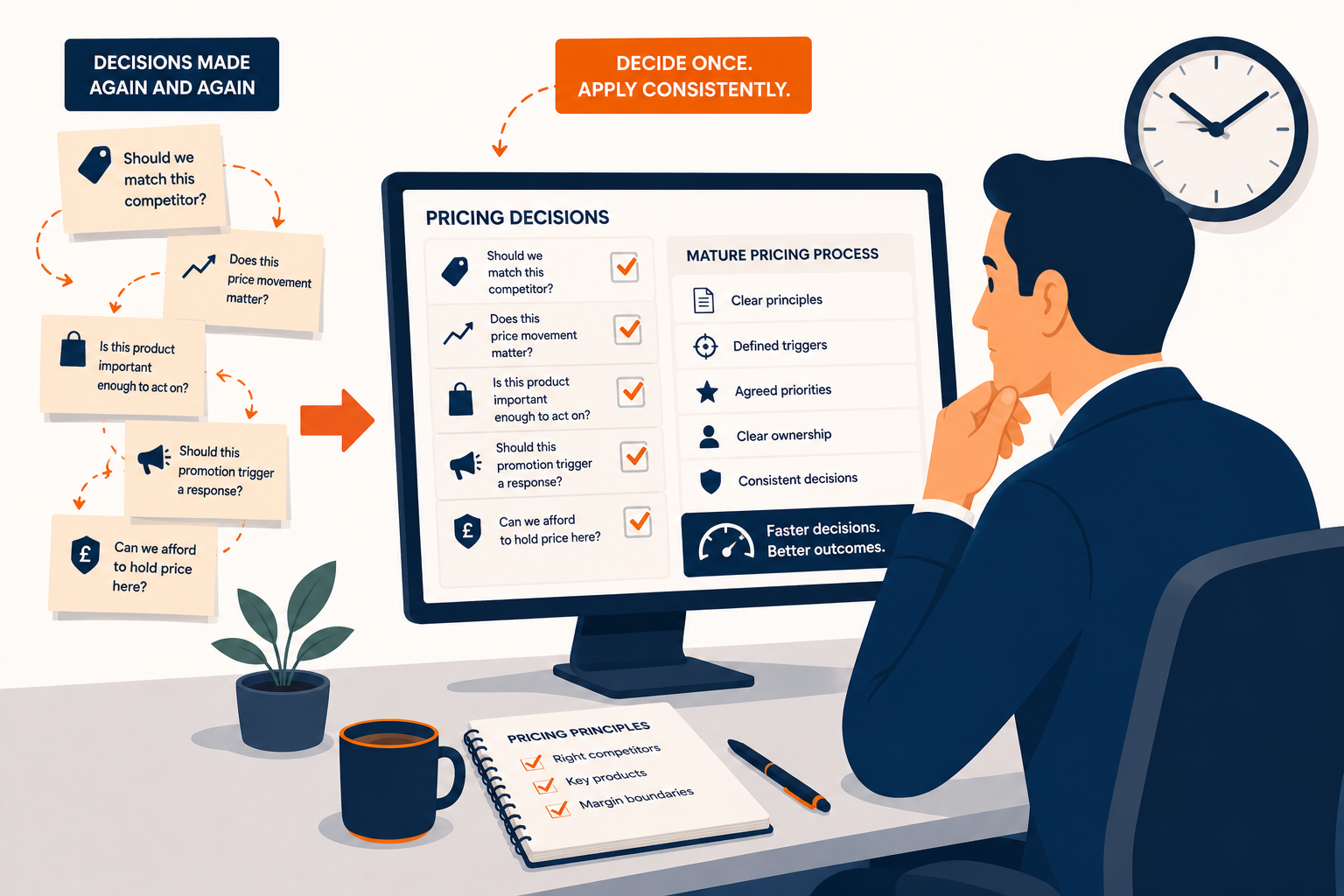
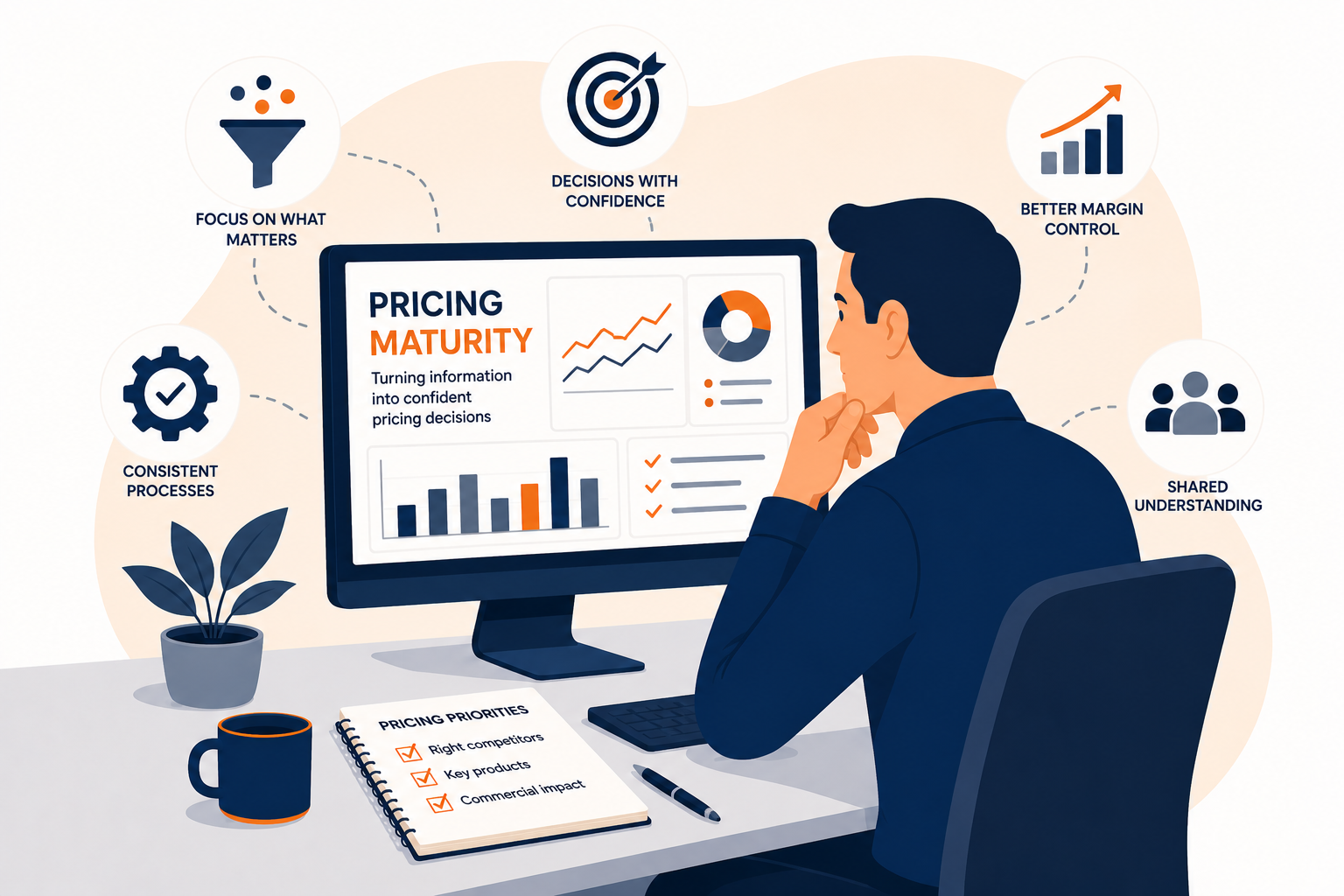
Across competitive retailers today, similar behaviours define maturity:
• Focus on perception-driving products rather than the entire range
• Replace anecdotal debate with shared evidence
• Shorten the gap between insight and execution
• Treat pricing intelligence as an ongoing operational discipline
This is constructive paranoia applied consistently.
Why Partnership Matters More Than Software
Grove warned against confusing activity with progress. Buying data is not the same as building capability. Installing software does not automatically improve outcomes.
Retailers that succeed treat pricing intelligence as an integrated discipline rather than a bolt-on tool.
Effective capability is:
• Embedded into existing workflows
• Trusted by commercial teams
• Designed for scale
• Focused on decisions rather than dashboards
Pricing capability is not implemented once. It is maintained and refined over time.
Only the Paranoid Win Market Share
Complacency in modern retail is expensive.
Assuming competitors behave rationally, believing prices are broadly correct, or trusting that customers are not comparing alternatives creates exposure.
Leaders who consistently win are not reckless. They are constructively paranoid. They accept that the market moves continuously and build the visibility, discipline, and commercial structures required to move with it.
In pricing, as in leadership, the principle still holds.
Only the paranoid survive.