
Manual pricing work is one of the least visible, yet most costly, parts of retail pricing.
If you work in pricing, this will sound familiar.
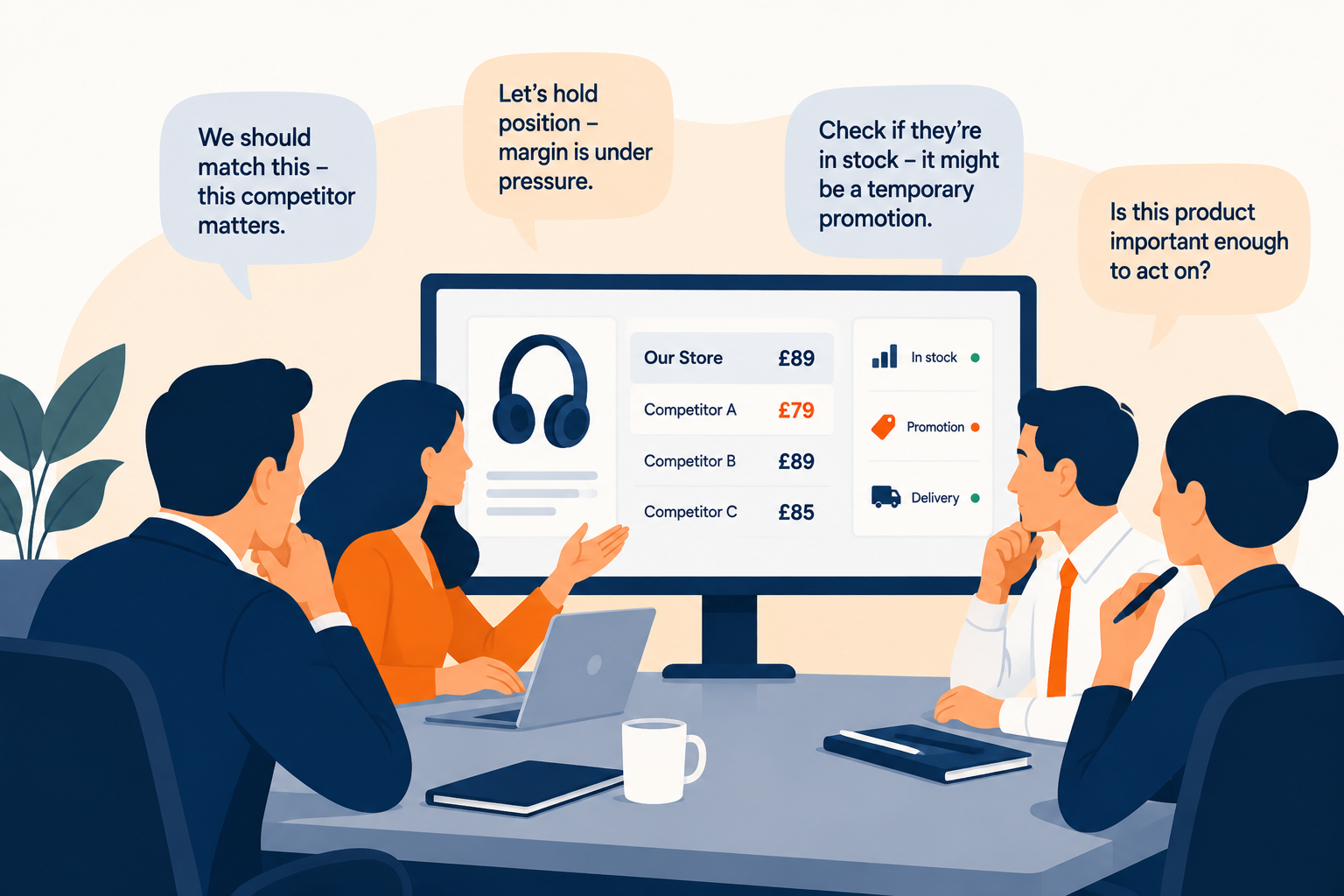
You start the day by manually checking competitor data because you do not fully trust it.
You reconcile prices across systems because something never quite lines up.
You explain the same pricing decision again because the original context has been lost.
You firefight exceptions that were never meant to exist in the first place.
None of this is strategic pricing work.
None of it improves value, margin, or positioning.
But it takes hours.
This is the hidden layer of manual effort that sits beneath every pricing decision. It is the work required just to make pricing feel safe enough to act on, before any real decision-making begins.
Why So Much Pricing Work Is Still Manual
Manual pricing work persists because it does not look like work from the outside.
It happens in spreadsheets, emails, Slack messages, and side conversations.
It is spread across people rather than owned by a clear process.
It becomes labelled as “just part of the job”.
From the outside, pricing decisions appear clean. Prices change. Promotions launch. Reports are shared.
What is missed is the manual validation required to get there.
By the time a pricing decision reaches leadership, most of the uncertainty has already been absorbed by the team doing the work.
The Hidden Cost of Manual Pricing Tasks
Over time, manual pricing work does more than consume hours.
It changes how pricing teams experience their role.
When large parts of the day are spent checking, reconciling, and explaining, it becomes harder to feel confident in decisions. Harder to feel proactive. Harder to feel that expertise is being used effectively.
Many pricing professionals quietly carry the weight of decisions they do not fully trust, because they know how fragile the underlying process can be.
That tension builds.
And it is exhausting.
This also explains why pricing roles carry a high cognitive load, even when team sizes stay the same.
How Firefighting Becomes Normal in Pricing Teams
One of the most damaging outcomes of manual pricing work is that firefighting becomes routine.
Exceptions stop feeling exceptional.
Manual checks become expected.
Last-minute changes are treated as standard.
Teams adapt. They compensate. They build workarounds.
From the outside, this looks like resilience.
From the inside, it feels like constant strain.
Because pricing teams are good at absorbing pressure, the cost of manual work remains largely invisible.
Manual Pricing Work Is a Structural Problem
This is not about individuals working inefficiently.
It is about process debt that has built up over time.
As retail pricing environments become more complex, the manual effort required to keep pricing stable increases faster than headcount or capability.
Channels multiply.
Promotions compress.
Competitive pressure intensifies.
Without processes designed to scale, manual pricing work fills the gaps.
The result is slower decisions, reduced confidence, and teams spending more time validating past actions than shaping future ones.
That is a strategic problem, even if it shows up as operational effort.
When Manual Effort Becomes Impossible to Ignore
There is usually a moment when pricing teams realise something is wrong.
Not when performance drops.
Not when a report looks bad.
It is when the effort required to make a “safe” pricing decision feels disproportionate.
When a simple price change requires multiple checks.
When promotions create anxiety rather than clarity.
When explaining decisions takes longer than making them.
That is when manual pricing work stops feeling manageable and starts feeling unsustainable.
What Reducing Manual Pricing Work Actually Looks Like
Reducing manual pricing effort does not mean removing complexity. It means changing how teams experience it.
In healthier pricing environments:
Data does not need to be constantly double-checked.
Exceptions are genuinely rare.
Context travels with insight.
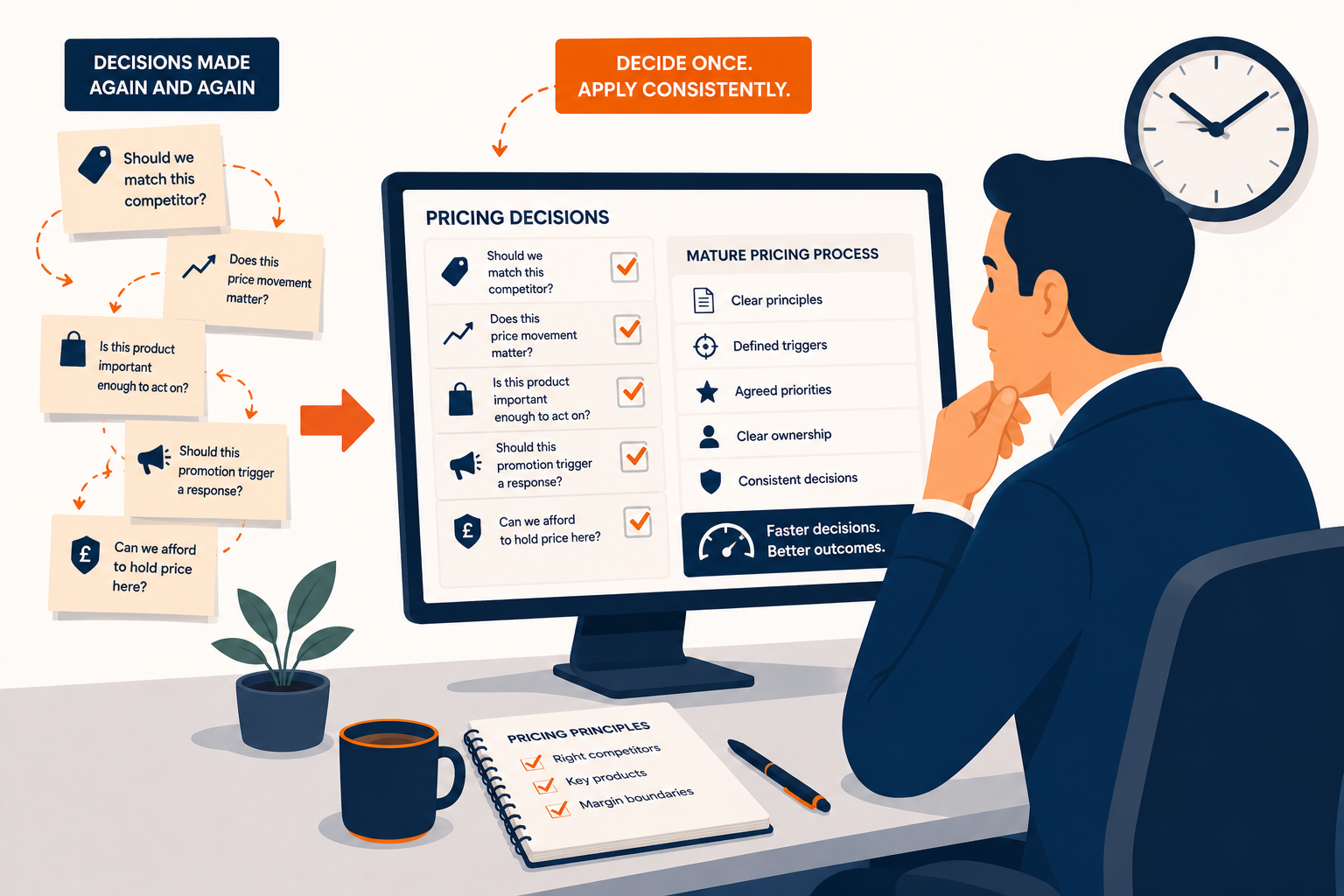
Pricing decisions are explained once, not repeatedly.
The work shifts from validation to judgement.
Pricing teams regain time. More importantly, they regain confidence.
Why This Matters for Pricing Teams
Pricing professionals are often measured on outcomes they only partially control.
When manual work dominates the day, it becomes harder to demonstrate impact, harder to feel valued, and harder to sustain momentum.
Addressing manual pricing work is not just about efficiency. It is about respecting the expertise of the people closest to the market.
When pricing teams are freed from constant reconciliation and firefighting, they can focus on what they were hired to do.
Make decisions.